


The Food and Drug Administration (FDA) has announced regulations to manage the advertising and promotion of food that is inappropriate for children’s health.
Beginning next month, commercials advertising unhealthy food are to be prohibited from broadcasting on children’s channels between 5pm to 9pm, and unhealthy meals aimed at children be prohibited from offering free toys, based on the Act Governing Food Safety and Sanitation (食品安全衛生管理法), that was passed on Nov. 20 and is to be implemented on Jan. 1.
“Snacks, candies, beverages, frozen treats and fast-food” that contain “trans fats, saturated fats, sodium or added sugar” exceeding regulation standards will be targeted by the new regulation, the FDA said.
The regulation stipulates that trans fats should not exceed 30 percent of the total daily calorie intake, saturated fats should not exceed 10 percent the total daily calorie intake, sodium should not exceed 400mg per serving and added sugars should not exceed 10 percent the total daily calorie intake.
FDA official Chih Lan-hui (遲蘭慧) said the targeted food products are to be banned from “airing commercials between 5pm to 9pm on children’s channels” and “show signs of using these food to replace nutritious meals in their advertising.”
Advertising of food products considered unhealthy for children are allowed to be aired in time slots when children are less likely to be watching television or on other channels, such as news channels, less often watched by children alone, she said.
Chih said the regulated food products are no longer allowed to offer free toys, or use toys as rewards for attracting children.
Fast food chain McDonald’s has already changed its menu late last month in response to the regulations, and kids’ meals are now served with fruit or salad and juice or milk, instead of fries and soda, she said.
Violations of the act face a fine between NT$40,000 and NT$4 million, (US$1211 to US$121,193) the FDA said, adding it will ask health departments to supervise companies and increase inspections when the regulation comes into effect.
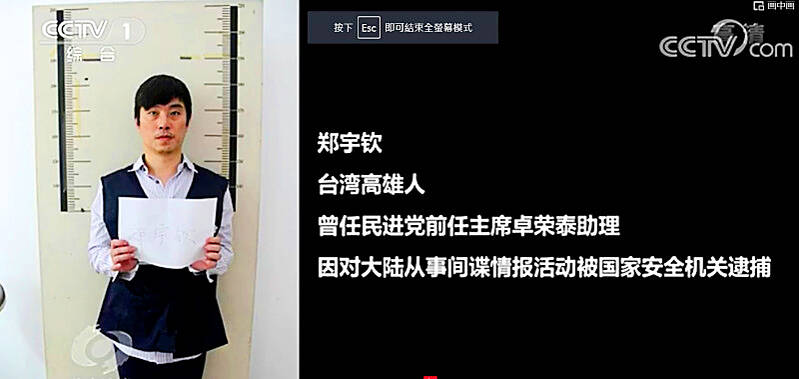
Former Czech Republic-based Taiwanese researcher Cheng Yu-chin (鄭宇欽) has been sentenced to seven years in prison on espionage-related charges, China’s Ministry of State Security announced yesterday. China said Cheng was a spy for Taiwan who “masqueraded as a professor” and that he was previously an assistant to former Cabinet secretary-general Cho Jung-tai (卓榮泰). President-elect William Lai (賴清德) on Wednesday last week announced Cho would be his premier when Lai is inaugurated next month. Today is China’s “National Security Education Day.” The Chinese ministry yesterday released a video online showing arrests over the past 10 years of people alleged to be

THE HAWAII FACTOR: While a 1965 opinion said an attack on Hawaii would not trigger Article 5, the text of the treaty suggests the state is covered, the report says NATO could be drawn into a conflict in the Taiwan Strait if Chinese forces attacked the US mainland or Hawaii, a NATO Defense College report published on Monday says. The report, written by James Lee, an assistant research fellow at Academia Sinica’s Institute of European and American Studies, states that under certain conditions a Taiwan contingency could trigger Article 5 of NATO, under which an attack against any member of the alliance is considered an attack against all members, necessitating a response. Article 6 of the North Atlantic Treaty specifies that an armed attack in the territory of any member in Europe,
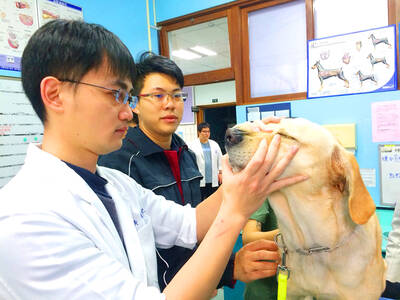
LIKE FAMILY: People now treat dogs and cats as family members. They receive the same medical treatments and tests as humans do, a veterinary association official said The number of pet dogs and cats in Taiwan has officially outnumbered the number of human newborns last year, data from the Ministry of Agriculture’s pet registration information system showed. As of last year, Taiwan had 94,544 registered pet dogs and 137,652 pet cats, the data showed. By contrast, 135,571 babies were born last year. Demand for medical care for pet animals has also risen. As of Feb. 29, there were 5,773 veterinarians in Taiwan, 3,993 of whom were for pet animals, statistics from the Animal and Plant Health Inspection Agency showed. In 2022, the nation had 3,077 pediatricians. As of last

XINJIANG: Officials are conducting a report into amending an existing law or to enact a special law to prohibit goods using forced labor Taiwan is mulling an amendment prohibiting the importation of goods using forced labor, similar to the Uyghur Forced Labor Prevention Act (UFLPA) passed by the US Congress in 2021 that imposed limits on goods produced using forced labor in China’s Xinjiang region. A government official who wished to remain anonymous said yesterday that as the US customs law explicitly prohibits the importation of goods made using forced labor, in 2021 it passed the specialized UFLPA to limit the importation of cotton and other goods from China’s Xinjiang Uyghur region. Taiwan does not have the legal basis to prohibit the importation of goods


 RSS
RSS