


National radio station Radio Taiwan International (RTI) is poised to enter a new era on July 1 when it starts domestic broadcasting in five foreign languages to the nation's 500,000 foreign workers and residents.
Over the course of 77 years, RTI has transformed itself from a government propaganda radio station targeting China and the world, to a public service station serving both local and international communities alike.
While some might question the popularity of radio stations in a multimedia age, Cheryl Lai (賴秀如), president of RTI, seemed upbeat about the future of the airwaves industry.
"There are three English-language newspapers in Taiwan but their target audiences are either white-collar office workers or intellectuals," she said. "We're more concerned about the blue-collar audiences, especially foreign workers and spouses, who have a hard time understanding Mandarin and some of them cannot even afford computers or Internet access," she said.
Emergency use
Lai added that foreign-language radio programs also provide foreigners with access to instant and immediate information, which can be quite useful, especially when natural disasters hit.
"With the increasing number of international marriages, what we're doing now is broadcasting not only to foreigners working or living here but also to the future children of Taiwan," she said.
Established in 1928 in Nanking, China, under the name the Central Broadcasting System, RTI was relocated to Taiwan after the Nationalist Party lost the civil war to the Communists in 1949.
In January 1998, the station was restructured to become a non-profit organization, and its services were expanded.
Currently, it has nine branch stations scattered island-wide. Its broadcasting area covers central and southern Taiwan, China and the rest of the world.
It broadcasts daily in 18 languages, including Mandarin, Taiwanese, Hakka, Cantonese, Tibetan, Mongolian, English, German, French, Russian, Spanish, Arabic, Japanese, Korean, Vietnamese, Thai, Indonesian and Burmese.
July start
From July 1, it will start broadcasting in five foreign languages aimed at local audiences nationwide and foreign communities, taking into account the increasing number of foreign workers and spouses. The five languages are English, Japanese, Indonesian, Vietnamese and Thai.
Statistics show that there were about 330,000 foreign spouses and 310,000 foreign workers in Taiwan as of December last year. Of the foreign husbands, Thais are the most numerous, accounting for 34 percent of the total, followed by Japanese, at 12 percent, and Americans at 11 percent. Vietnamese top the list of foreign brides with nearly 70 percent of the total, followed by Indonesians at 12 percent and Thais at 6 percent.
Unlike other countries' national radio broadcasters, such as the British Broadcasting Corporation (BBC) or Voice of America, which target both international and domestic audiences, Taiwan does not have a single national public radio station serving both the national audience and the international community.
So far, the only public radio stations targeting local audiences nationwide are the National Education Radio, Police Radio System and the Voice of Han Broadcasting Network.
As the government's airwave restructuring plan is due to be implemented on July 1, Voice of Han will move to another frequency to make room for RTI to broadcast 12 hours of foreign-language programs. The programs will be also be available online.
Altogether, the channel will offer programs in eight languages. While RTI will offer programs in five foreign languages, Voice of Han will offer programs in three languages: Mandarin, Taiwanese and Hakka.
Under the government's restructuring plan, specialized public radio stations such as the Police Radio Station, the National Education Radio and the Voice of Han Broadcasting Network will be consolidated into one public broadcasting group.
Public service
The group, along with other public radio stations, will operate in frequencies between 104.4 and 108. They will provide four different services nationwide, including public services (transportation, weather, disaster relief, etc.), multi-functional services (Hakka, Aborigines, foreign brides, foreign laborers, armed forces and language programs), and culture and education services.
Apart from government propaganda, RTI's five foreign-language programs will be mainly service-oriented.
A recent survey polling RTI audiences found that foreign listeners most desperately want to know what's going on in their home countries. They are also eager to know what happens here in Taiwan and what Taiwan's government and Taiwanese people are up to.
Making a difference
Maria Chen (
"I remember one of my audience members told me that she was very happy to have accidentally tuned into my program and that she had become happier and happier after listening to my program," she said. "Listening to the radio is one of the few pastimes she can enjoy, she told me, because she is only allowed to have one day off per week."
Chen's audience is mainly made up of homecare workers who take care of the elderly and the sick.
Another of her listeners told her that she was very surprised to find out that she could eat at the same table as her employer, because in Indonesia domestic maids are not allowed to do so.
"I'm so glad that my program can make a difference," she said.
Tao Yun-sheng's (
While Thai workers used to have the highest rate of job desertion, Tao said he has come up with an innovative idea to help solve the problem.
"I give away free telephone cards to absconders so they can call in to my program and tell me their personal stories," he said. "Now Thai workers have the lowest rate of running away from their jobs."
According to Tao, Thai listeners are most interested in news about their fellow workers and Taiwan.
Tao also appealed to the government to erect monuments for Thai workers who have lost their lives doing construction work. According to him, over 50 Thai workers died during the building of the Northern Second Freeway, 12 during the construction of the Taipei-Ilan freeway and two while working on the Taipei 101 skyscraper.
However, not a single monument has ever been erected in memory of their sacrifices and contributions.

Former president Ma Ying-jeou’s (馬英九) mention of Taiwan’s official name during a meeting with Chinese President Xi Jinping (習近平) on Wednesday was likely a deliberate political play, academics said. “As I see it, it was intentional,” National Chengchi University Graduate Institute of East Asian Studies professor Wang Hsin-hsien (王信賢) said of Ma’s initial use of the “Republic of China” (ROC) to refer to the wider concept of “the Chinese nation.” Ma quickly corrected himself, and his office later described his use of the two similar-sounding yet politically distinct terms as “purely a gaffe.” Given Ma was reading from a script, the supposed slipup
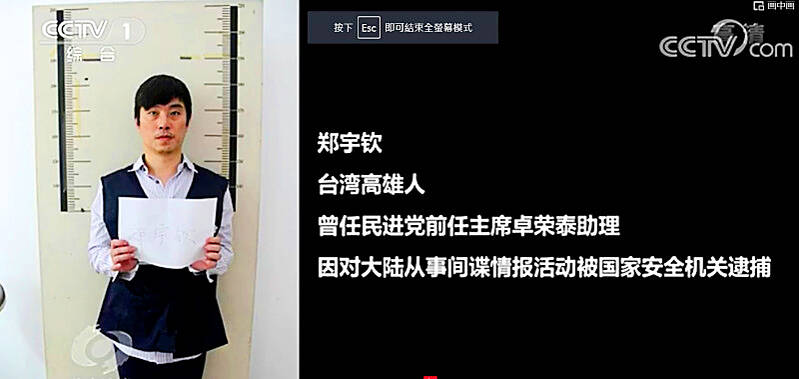
Former Czech Republic-based Taiwanese researcher Cheng Yu-chin (鄭宇欽) has been sentenced to seven years in prison on espionage-related charges, China’s Ministry of State Security announced yesterday. China said Cheng was a spy for Taiwan who “masqueraded as a professor” and that he was previously an assistant to former Cabinet secretary-general Cho Jung-tai (卓榮泰). President-elect William Lai (賴清德) on Wednesday last week announced Cho would be his premier when Lai is inaugurated next month. Today is China’s “National Security Education Day.” The Chinese ministry yesterday released a video online showing arrests over the past 10 years of people alleged to be
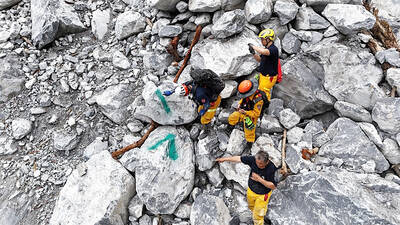
The bodies of two individuals were recovered and three additional bodies were discovered on the Shakadang Trail (砂卡礑) in Taroko National Park, eight days after the devastating earthquake in Hualien County, search-and-rescue personnel said. The rescuers reported that they retrieved the bodies of a man and a girl, suspected to be the father and daughter from the Yu (游) family, 500m from the entrance of the trail on Wednesday. The rescue team added that despite the discovery of the two bodies on Friday last week, they had been unable to retrieve them until Wednesday due to the heavy equipment needed to lift
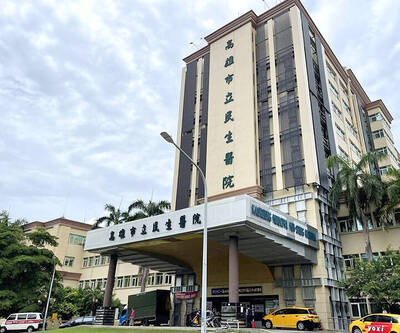
MIX-UP: Kaohsiung Municipal Min-Sheng Hospital director Yen Chia-chi was suspended from his duties after surgeons operated on the wrong patient last week The Kaohsiung Department of Health yesterday fined Kaohsiung Municipal Min-Sheng Hospital NT$500,0000 for misidentifying two patients and consequently causing one of them to undergo the wrong surgery last week. The hospital’s director Yen Chia-chi (顏家祺) was suspended from his duties. The surgeon who was scheduled to operate on the patient was given a major demerit and is subject to subsequent disciplinary actions. Demerits were given to the anesthesiologist, the nurse in the operation room, the nurse in the ward and the worker who helped transfer the patient from the ward to the operation room for having failed to verify the patient’s identity. Meanwhile, the


 RSS
RSS