


US Secretary of Defense Lloyd Austin on Saturday said he was traveling to Asia to boost military cooperation with US allies and foster “credible deterrence” against China.
Austin embarked on his first foreign visit as Pentagon chief via Hawaii, seat of the US military command for the Indo-Pacific region.
“This is all about alliances and partnerships,” Austin told reporters on the trip, which is to include meetings with key allies in Tokyo, New Delhi and Seoul.
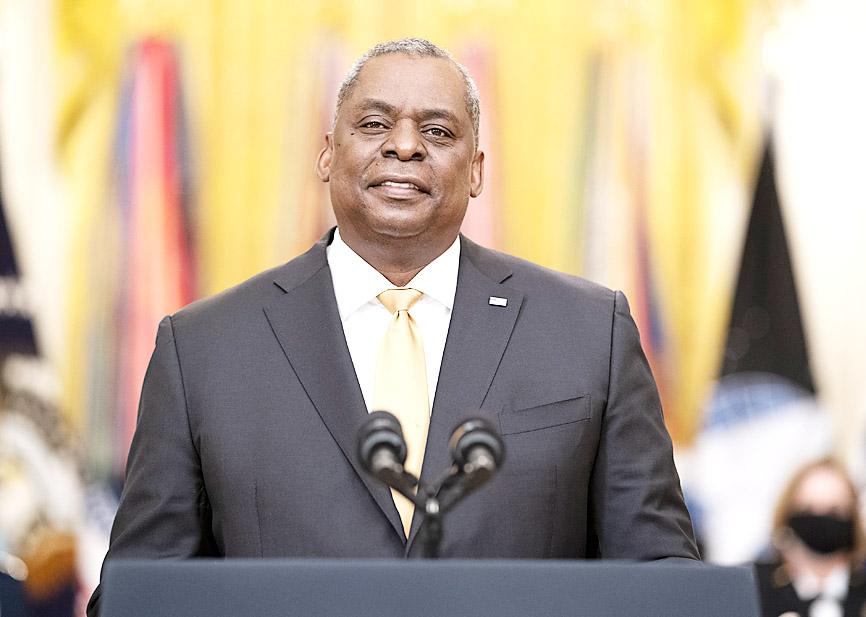
Photo: EPA-EFE
“It’s also about enhancing capabilities,” he said, adding that while the US was focused on the anti-extremist struggle in the Middle East, China was modernizing its army at high speed.
“That competitive edge that we’ve had has eroded,” Austin said. “We still maintain that edge. We are going to increase that edge going forward.”
“Our goal is to make sure that we have the capabilities and the operational plans ... to be able to offer a credible deterrence to China or anybody else who would want to take on the US,” he added.
Austin is to be joined in Tokyo and Seoul by US Secretary of State Antony Blinken.
“One of the things that the secretary of state and I want to do is begin to strengthen those alliances,” he said. “This will be more about listening and learning, getting their point of view.”
The tour in Asia follows an unprecedented summit of the Quadrilateral Security Dialogue, an informal alliance born in the 2000s between Australia, India, Japan and the US to counterbalance a rising China.
Blinken is to join US National Security Adviser Jake Sullivan in Anchorage, Alaska, on Thursday with Chinese Minister of Foreign Affairs Wang Yi (王毅) and Chinese Central Foreign Affairs Commission Director Yang Jiechi (楊潔篪).
The Alaska talks would be the first between the powers since Yang met Blinken’s hawkish predecessor, former US secretary of state Mike Pompeo, in June last year in Hawaii — a setting similarly far from the high-stakes glare of national capitals.
The administration of US President Joe Biden has generally backed the tougher approach to China initiated by former US president Donald Trump, but has also said that it can be more effective by shoring up alliances and seeking narrow ways to cooperate on priorities such as climate change.
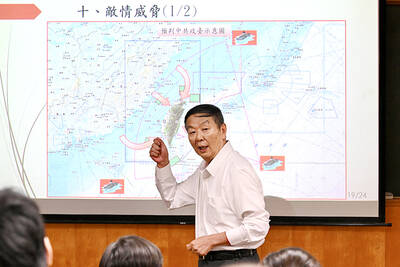
RETHINK? The defense ministry and Navy Command Headquarters could take over the indigenous submarine project and change its production timeline, a source said Admiral Huang Shu-kuang’s (黃曙光) resignation as head of the Indigenous Submarine Program and as a member of the National Security Council could affect the production of submarines, a source said yesterday. Huang in a statement last night said he had decided to resign due to national security concerns while expressing the hope that it would put a stop to political wrangling that only undermines the advancement of the nation’s defense capabilities. Taiwan People’s Party Legislator Vivian Huang (黃珊珊) yesterday said that the admiral, her older brother, felt it was time for him to step down and that he had completed what he
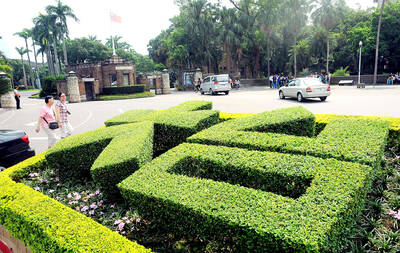
Taiwan has experienced its most significant improvement in the QS World University Rankings by Subject, data provided on Sunday by international higher education analyst Quacquarelli Symonds (QS) showed. Compared with last year’s edition of the rankings, which measure academic excellence and influence, Taiwanese universities made great improvements in the H Index metric, which evaluates research productivity and its impact, with a notable 30 percent increase overall, QS said. Taiwanese universities also made notable progress in the Citations per Paper metric, which measures the impact of research, achieving a 13 percent increase. Taiwanese universities gained 10 percent in Academic Reputation, but declined 18 percent
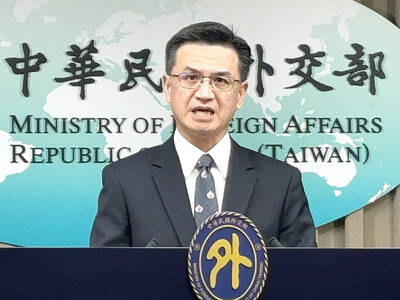
BULLY TACTICS: Beijing has continued its incursions into Taiwan’s airspace even as Xi Jinping talked about Taiwan being part of the Chinese family and nation China should stop its coercion of Taiwan and respect mainstream public opinion in Taiwan about sovereignty if its expression of goodwill is genuine, the Ministry of Foreign Affairs (MOFA) said yesterday. Ministry spokesman Jeff Liu (劉永健) made the comment in response to media queries about a meeting between former president Ma Ying-jeou (馬英九) and Chinese President Xi Jinping (習近平) the previous day. Ma voiced support for the so-called “1992 consensus,” while Xi said that although the two sides of the Taiwan Strait have “different systems,” this does not change the fact that they are “part of the same country,” and that “external
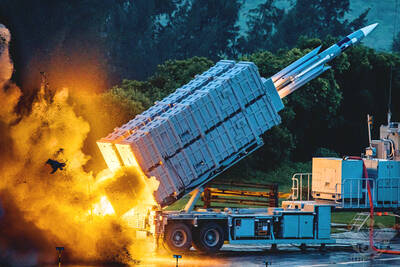
UNDER DISCUSSION: The combatant command would integrate fast attack boat and anti-ship missile groups to defend waters closest to the coastline, a source said The military could establish a new combatant command as early as 2026, which would be tasked with defending Taiwan’s territorial waters 24 nautical miles (44.4km) from the nation’s coastline, a source familiar with the matter said yesterday. The new command, which would fall under the Naval Command Headquarters, would be led by a vice admiral and integrate existing fast attack boat and anti-ship missile groups, along with the Naval Maritime Surveillance and Reconnaissance Command, said the source, who asked to remain anonymous. It could be launched by 2026, but details are being discussed and no final timetable has been announced, the source


 RSS
RSS