


The Philippines is to begin large-scale human testing of Russia’s COVID-19 vaccine in October, but Philippine President Rodrigo Duterte would not receive the inoculation until regulators guarantee its safety, his spokesman said yesterday.
Duterte had offered himself up as a guinea pig for the very first jab, expressing “huge trust” in the vaccine, despite growing skepticism about its effectiveness.
However, Philippine presidential spokesman Harry Roque said Duterte was scheduled to receive the vaccine no earlier than May 1 — weeks after the Russian-funded Phase 3 clinical trial in the nation is due to end in March.
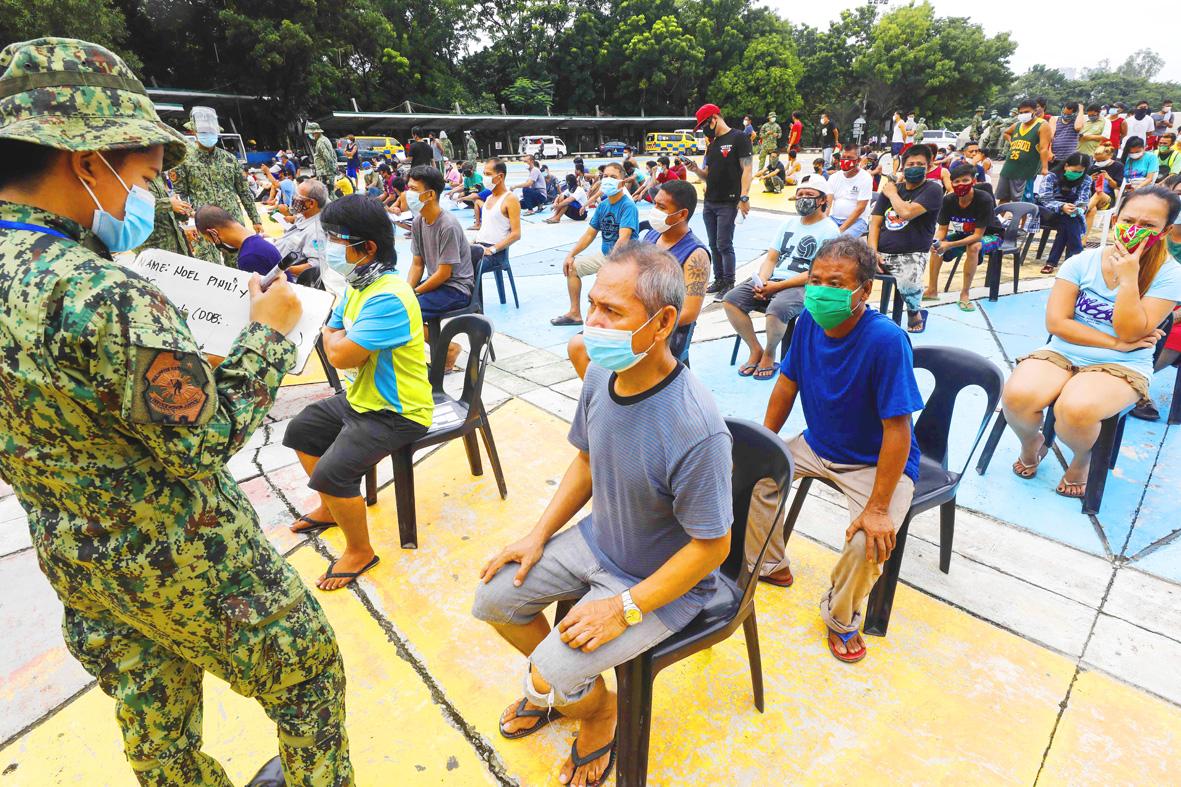
Photo: EPA-EFE
The Philippine Food and Drug Administration is expected to approve the vaccine — developed by the Gamaleya research institute and the Russian Ministry of Defense — in April.
“May 1 is when the PSG [presidential security group] may allow him, once all requisite tests have been finished,” Roque told reporters.
Moscow says it has developed the world’s first vaccine offering “sustainable immunity” against the novel coronavirus and is in the final stage of tests involving 2,000 people.
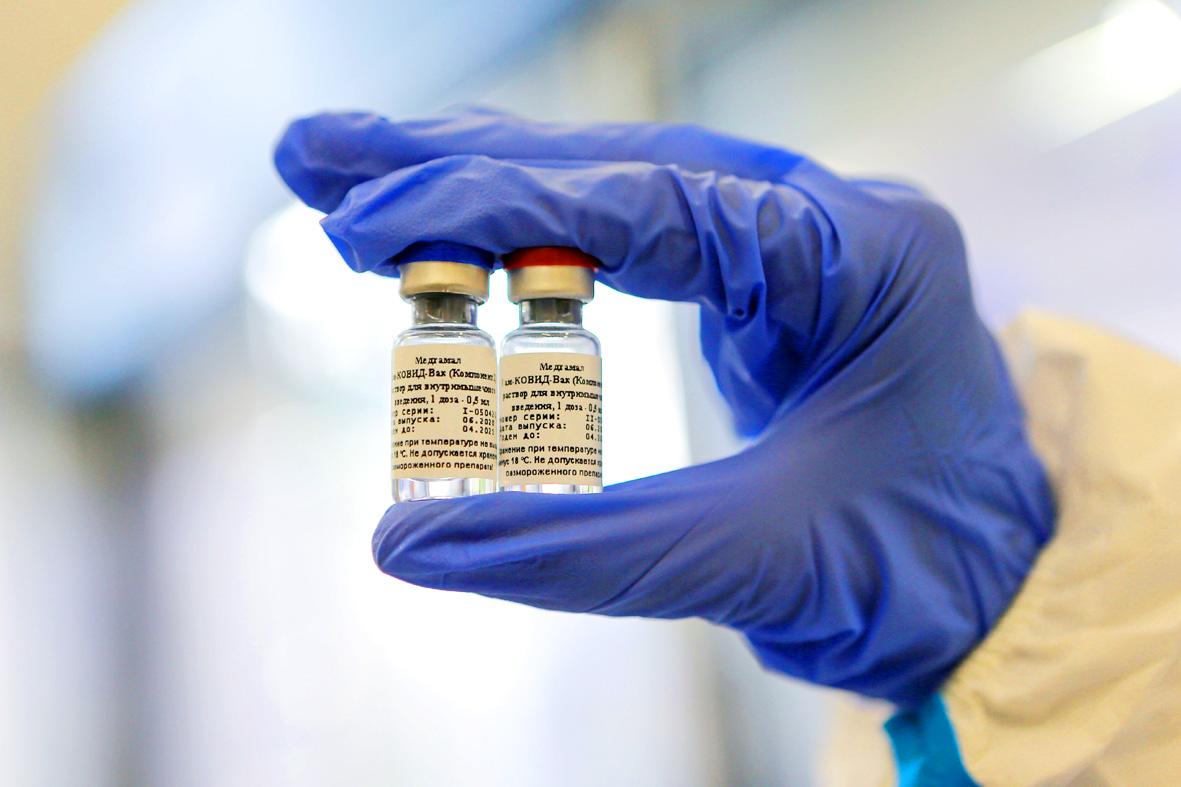
Photo: AFP / Russian Direct Investment Fund
Roque said Philippine experts would review next month the results of Russia’s Phase 1 and 2 clinical trials before the Southeast Asian nation starts its Phase 3 testing.
“We will do it simultaneously with Russia,” Roque said.
Officials from the Philippine Department of Science and Technology on Wednesday met with representatives of Gamaleya to discuss the protocols for the trial of the vaccine, which is dubbed “Sputnik V” after the pioneering Soviet satellite of the 1950s.
The Philippines, which is struggling to contain the virus, has accepted Russia’s offer to participate in production of the vaccine.
Anna Lisa Ong-Lim, an infectious disease professor at the University of the Philippines’ College of Medicine, said the government’s timeline to have a vaccine available by May was “very optimistic.”
The country is also set to start on Monday next week clinical trials for the Japanese antiviral drug Avigan to treat COVID-19 patients.
The Philippines has logged the highest number of confirmed infections in Southeast Asia, with more than 147,500 cases and more than 2,400 deaths.
RETHINK? The defense ministry and Navy Command Headquarters could take over the indigenous submarine project and change its production timeline, a source said Admiral Huang Shu-kuang’s (黃曙光) resignation as head of the Indigenous Submarine Program and as a member of the National Security Council could affect the production of submarines, a source said yesterday. Huang in a statement last night said he had decided to resign due to national security concerns while expressing the hope that it would put a stop to political wrangling that only undermines the advancement of the nation’s defense capabilities. Taiwan People’s Party Legislator Vivian Huang (黃珊珊) yesterday said that the admiral, her older brother, felt it was time for him to step down and that he had completed what he

Taiwan has experienced its most significant improvement in the QS World University Rankings by Subject, data provided on Sunday by international higher education analyst Quacquarelli Symonds (QS) showed. Compared with last year’s edition of the rankings, which measure academic excellence and influence, Taiwanese universities made great improvements in the H Index metric, which evaluates research productivity and its impact, with a notable 30 percent increase overall, QS said. Taiwanese universities also made notable progress in the Citations per Paper metric, which measures the impact of research, achieving a 13 percent increase. Taiwanese universities gained 10 percent in Academic Reputation, but declined 18 percent
UNDER DISCUSSION: The combatant command would integrate fast attack boat and anti-ship missile groups to defend waters closest to the coastline, a source said The military could establish a new combatant command as early as 2026, which would be tasked with defending Taiwan’s territorial waters 24 nautical miles (44.4km) from the nation’s coastline, a source familiar with the matter said yesterday. The new command, which would fall under the Naval Command Headquarters, would be led by a vice admiral and integrate existing fast attack boat and anti-ship missile groups, along with the Naval Maritime Surveillance and Reconnaissance Command, said the source, who asked to remain anonymous. It could be launched by 2026, but details are being discussed and no final timetable has been announced, the source
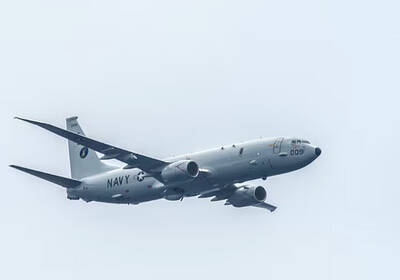
CHINA REACTS: The patrol and reconnaissance plane ‘transited the Taiwan Strait in international airspace,’ the 7th Fleet said, while Taipei said it saw nothing unusual The US 7th Fleet yesterday said that a US Navy P-8A Poseidon flew through the Taiwan Strait, a day after US and Chinese defense heads held their first talks since November 2022 in an effort to reduce regional tensions. The patrol and reconnaissance plane “transited the Taiwan Strait in international airspace,” the 7th Fleet said in a news release. “By operating within the Taiwan Strait in accordance with international law, the United States upholds the navigational rights and freedoms of all nations.” In a separate statement, the Ministry of National Defense said that it monitored nearby waters and airspace as the aircraft


 RSS
RSS