


Pakistani authorities have started dismissal proceedings against pilots and criminal charges are likely after reports that nearly one-third of its national airline’s pilots were holding fake or dubious licences, an official said on Friday.
Pakistan International Airlines (PIA) this week said it would immediately ground 141 of its 434 pilots after a Pakistani government review found them to have obtained “bogus” credentials or cheated on exams by having someone else take them.
The scandal comes in the wake of a crash in Karachi last month that killed 98 people — and which authorities have essentially blamed on the two pilots.
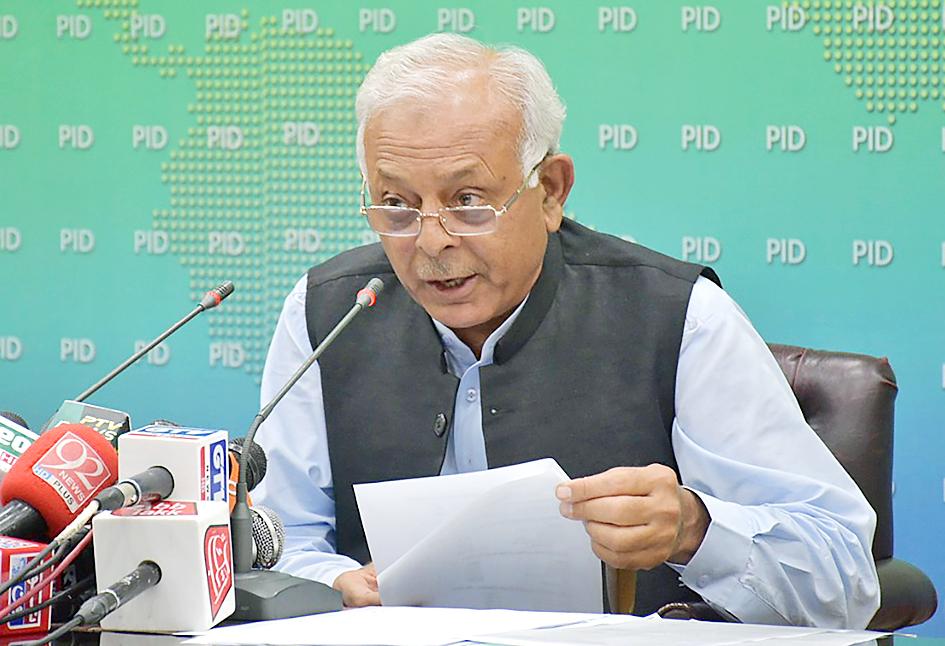
Photo: AP
Investigators said that the aviators were chatting about the COVID-19 pandemic while they attempted to land the Airbus A320 without putting its wheels down, catastrophically damaging the engines. The plane lost power and plunged into houses near the airport as it went around for a second landing attempt.
According to a government review last year, details of which were revealed on Thursday, 262 of Pakistan’s 860 active pilots hold fake licenses or cheated on exams. More than half of them were from state-run PIA.
Until the 1970s, Pakistan’s largest airline was considered a top regional carrier, but its reputation plummeted amid chronic mismanagement, frequent cancelations and financial woes.
So far, authorities have started dismissal proceedings against 28 of the 262 pilots and subsequent criminal charges are likely, Pakistani Minister of Aviation Ghulam Sarwar Khan said on Friday.
PIA would bring reforms aimed at restructuring the airline, Khan told reporters, adding that the “clean-up process” should be completed by the end of the year.
“People are saying this [revelation] will have a negative impact, but when you try to save a patient, you have to do major surgery, radiation — and even chemo,” he said.
He blamed PIA’s problems on “the wrongdoings of previous governments.”
“God willing, 2021 will be the year of the betterment of Pakistan’s institutions and, God willing, PIA will become the PIA of good times — the 1960s, ’70s and ’80s,” he said.
However, observers did not share the optimism and doubt whether the public will trust any promised reforms.
The scandal would “prove the last nail in the coffin of PIA,” said Ijaz Haroon, who was managing director at the airline until he resigned in 2011 amid a union protest.
“The world is not going to trust us anymore. No one would like to fly with pilots who have bogus licenses. [Khan’s] statement has further tarnished the image of the airline,” Haroon said.
Shahzad Chaudry, a retired Pakistani Air Force vice marshal, said that the government was unfairly scapegoating PIA, as it is Pakistan’s Civil Aviation Authority (CAA) that issues licenses.
“We not only need a complete overhauling of PIA, but CAA as well, as both go hand in hand,” Chaudry told reporters.
The government said that it had suspended five CAA officials in the scandal.
PIA, which is helmed by a serving air force officer, has a fleet of 31 planes and a payroll of about 14,500 workers. The high staff-to-plane ratio has seen long-standing accusations that the government and the military use the airline to dish out jobs to cronies and retired military officers.
“The current PIA economic model is under the vested interests of political parties and different pressure groups,” Chaudry said. “No airline has 500 staff per aircraft. Our economic model right from the foundation is unsustainable.”
Three PIA pilots who spoke to reporters on condition of anonymity outlined a series of issues, including pilots being forced to work lengthy shifts of up to 24 hours.
A PIA spokesman said that there was “no such case.”
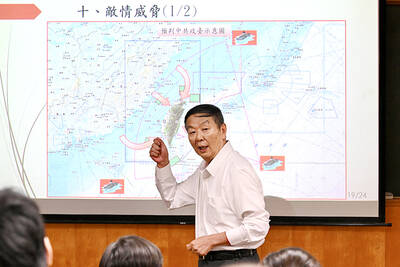
RETHINK? The defense ministry and Navy Command Headquarters could take over the indigenous submarine project and change its production timeline, a source said Admiral Huang Shu-kuang’s (黃曙光) resignation as head of the Indigenous Submarine Program and as a member of the National Security Council could affect the production of submarines, a source said yesterday. Huang in a statement last night said he had decided to resign due to national security concerns while expressing the hope that it would put a stop to political wrangling that only undermines the advancement of the nation’s defense capabilities. Taiwan People’s Party Legislator Vivian Huang (黃珊珊) yesterday said that the admiral, her older brother, felt it was time for him to step down and that he had completed what he
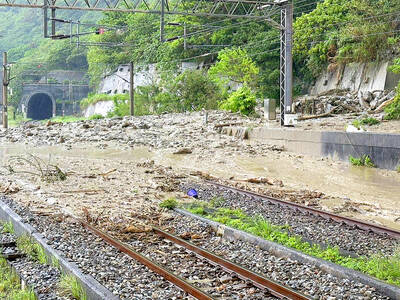
ROLLER-COASTER RIDE: More than five earthquakes ranging from magnitude 4.4 to 5.5 on the Richter scale shook eastern Taiwan in rapid succession yesterday afternoon Back-to-back weather fronts are forecast to hit Taiwan this week, resulting in rain across the nation in the coming days, the Central Weather Administration said yesterday, as it also warned residents in mountainous regions to be wary of landslides and rockfalls. As the first front approached, sporadic rainfall began in central and northern parts of Taiwan yesterday, the agency said, adding that rain is forecast to intensify in those regions today, while brief showers would also affect other parts of the nation. A second weather system is forecast to arrive on Thursday, bringing additional rain to the whole nation until Sunday, it

CONDITIONAL: The PRC imposes secret requirements that the funding it provides cannot be spent in states with diplomatic relations with Taiwan, Emma Reilly said China has been bribing UN officials to obtain “special benefits” and to block funding from countries that have diplomatic ties with Taiwan, a former UN employee told the British House of Commons on Tuesday. At a House of Commons Foreign Affairs Committee hearing into “international relations within the multilateral system,” former Office of the UN High Commissioner for Human Rights (OHCHR) employee Emma Reilly said in a written statement that “Beijing paid bribes to the two successive Presidents of the [UN] General Assembly” during the two-year negotiation of the Sustainable Development Goals. Another way China exercises influence within the UN Secretariat is
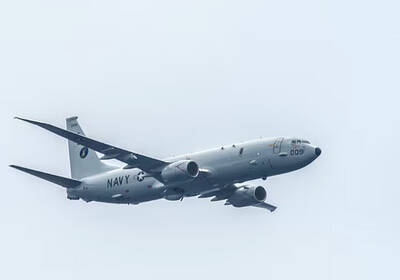
CHINA REACTS: The patrol and reconnaissance plane ‘transited the Taiwan Strait in international airspace,’ the 7th Fleet said, while Taipei said it saw nothing unusual The US 7th Fleet yesterday said that a US Navy P-8A Poseidon flew through the Taiwan Strait, a day after US and Chinese defense heads held their first talks since November 2022 in an effort to reduce regional tensions. The patrol and reconnaissance plane “transited the Taiwan Strait in international airspace,” the 7th Fleet said in a news release. “By operating within the Taiwan Strait in accordance with international law, the United States upholds the navigational rights and freedoms of all nations.” In a separate statement, the Ministry of National Defense said that it monitored nearby waters and airspace as the aircraft


 RSS
RSS