


Robin Dunbar sets out to offer nothing less than “an overarching theory for why and how humans are religious.” Unlike most writers on such themes, he is largely uninterested in the truth or otherwise of religious claims and has little to say about the damage caused by religions, although he does touch on their “militant violence” and the predatory promiscuity we find among the charismatic leaders of small cults.
But he is intrigued by the “seeming universality” of religions and their constant tendency to fragment. His stimulating and hugely ambitious book, therefore, uses a variety of different approaches to throw light on three really big questions: “the functions that religion has served,” “the psychological and neurobiological mechanisms that make this possible” and “the timing of the origins of religion.”
At the emotional heart of religion, as Dunbar sees it, is something he calls “the mystical stance,” which includes “a susceptibility to enter trance-like states,” “belief in a transcendental (or spirit) world” and “a belief that we can call on hidden power(s) to help us.”
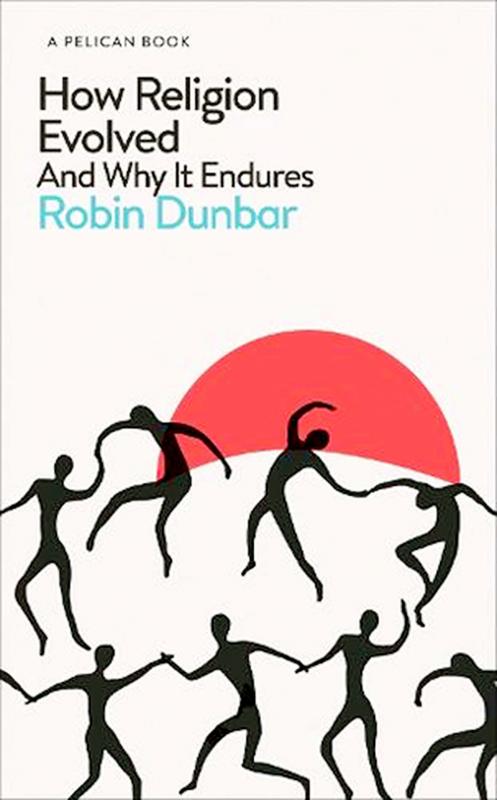
Though sophisticated systems of theology have obviously been built on these foundations, “beneath the surface veneer of doctrinal rectitude lurks an ancient foundation of pagan mystical religion.”
One of the key questions is how the original immersive or shamanic forms of religion develop into elaborate doctrinal religions.
Since Dunbar is emeritus professor of evolutionary psychology at the University of Oxford, his book is “firmly grounded in our current understanding of evolutionary theory.” Those who sign up to religions, he points out, “can incur serious costs in terms of self-imposed pain, celibacy and even self-sacrifice.”
This raises obvious moral issues, but it also makes little evolutionary sense for creatures struggling to survive and reproduce. So do religions offer some countervailing benefits to individuals or communities? Or are they “the maladaptive byproduct of traits or cognitive processes that evolved for other perfectly respectable biological purposes,” like the lower back pain we have to put up with in return for the advantages of walking upright?
Here, Dunbar surveys the key evolutionary explanations for religions, the evidence that they make people healthier and happier and their role in building a sense of cohesion (which apparently means that religious communities tend to be larger and longer-lasting than their secular equivalents). He also makes use of “nearly two decades of research… on the nature of sociality and the mechanisms of community bonding in primates and humans.”
One of the strange things Dunbar is famous for is the number 150. He has argued in several earlier books – such as How Many Friends Does One Person Need? — that this is a “natural” size for human groups, as large as possible while still allowing us to organize our social interactions by keeping track of all the individual members. Evidence for this claim, he suggests here, comes from research on “wedding guest lists,” Facebook friends and “egocentric social networks” (the number of friends and family we make a conscious effort to keep in touch with) and, more particularly, from “the typical size of hunter-gatherer communities, the form of society in which we have spent more than 95 percent of our existence as a species.”
While other primates resolve conflicts and maintain cohesion in much smaller groups largely by grooming each other, humans rely on laughing, singing, dancing and feasting — and the rituals of religion — to release endorphins and overcome the inevitable tensions. Yet as societies get bigger, we keep hitting a series of glass ceilings that require more and more elaborate and law-like forms of religion to prevent breakdown.
How Religion Evolved offers insights into why “all the great world religions emerged within the very narrow latitudinal band of the northern subtropical zone that lies immediately above the tropics.”
It also sketches in a four-phase model, taking us all the way from “informal, immersive… ancestral religions,” which were “designed to bond very small hunter-gatherer communities of 100-200 individuals living in dispersed camps of 35-50,” through to the much more formal styles of religion, incorporating temples, professional priests and complex rituals, which emerged about 4,000 years ago alongside “a dramatic rise in the size of settlements and the polities within which these are embedded.”
The result is a compelling intellectual workout. Dunbar offers a powerful central argument, an excellent survey of alternative theories and a wide range of vivid and illuminating examples. These take in extreme and painful rituals, wishing wells and malicious witches, experiments exploring the impact of synchrony in rowers and the common fears among those visiting spirit worlds while in a trance that they will never be able to find their way back to the real world. Many people today are, of course, indifferent, if not actively hostile, to religion. Yet it would be a pity if that led them to miss this book. If Dunbar is right that religion is “unlikely to have evolved before the appearance of anatomically modern humans around 200,000 years ago,” that also makes it “something that sets humans apart.” The story he tells is important to us all.

Last week Joseph Nye, the well-known China scholar, wrote on the Australian Strategic Policy Institute’s website about how war over Taiwan might be averted. He noted that years ago he was on a team that met with then-president Chen Shui-bian (陳水扁), “whose previous ‘unofficial’ visit to the US had caused a crisis in which China fired missiles into the sea and the US deployed carriers off the coast of Taiwan.” Yes, that’s right, mighty Chen caused that crisis all by himself. Neither the US nor the People’s Republic of China (PRC) exercised any agency. Nye then nostalgically invoked the comical specter

Relations between Taiwan and the Czech Republic have flourished in recent years. However, not everyone is pleased about the growing friendship between the two countries. Last month, an incident involving a Chinese diplomat tailing the car of vice president-elect Hsiao Bi-khim (蕭美琴) in Prague, drew public attention to the People’s Republic of China’s (PRC) operations to undermine Taiwan overseas. The trip was not Hsiao’s first visit to the Central European country. It was meant to be low-key, a chance to meet with local academics and politicians, until her police escort noticed a car was tailing her through the Czech capital. The

April 15 to April 21 Yang Kui (楊逵) was horrified as he drove past trucks, oxcarts and trolleys loaded with coffins on his way to Tuntzechiao (屯子腳), which he heard had been completely destroyed. The friend he came to check on was safe, but most residents were suffering in the town hit the hardest by the 7.1-magnitude Hsinchu-Taichung Earthquake on April 21, 1935. It remains the deadliest in Taiwan’s recorded history, claiming around 3,300 lives and injuring nearly 12,000. The disaster completely flattened roughly 18,000 houses and damaged countless more. The social activist and

Over the course of former President Ma Ying-jeou’s (馬英九) 11-day trip to China that included a meeting with Chinese Communist Party (CCP) leader Xi Jinping (習近平) a surprising number of people commented that the former president was now “irrelevant.” Upon reflection, it became apparent that these comments were coming from pro-Taiwan, pan-green supporters and they were expressing what they hoped was the case, rather than the reality. Ma’s ideology is so pro-China (read: deep blue) and controversial that many in his own Chinese Nationalist Party (KMT) hope he retires quickly, or at least refrains from speaking on some subjects. Regardless


 RSS
RSS