


The WHO is the bookies’ favorite to win the Nobel Peace Prize on Friday, though experts say Greta Thunberg or press freedom groups are also strong contenders. The peace prize — the highlight of the Nobel season and the only one of the six Nobels awarded in Oslo — always sparks wild guessing games, rendered especially tricky by the fact that the list of nominees is kept secret for at least 50 years.
Only their number is known: this year there are 318 nominees, including 211 individuals and 107 organizations, according to the Nobel Institute. That leaves much to the imagination of experts.
“In the absence of a very clear front-runner... I think that we could and should see a prize to either an umbrella organization for journalists or individual journalists working in the field,” suggested Henrik Urdal, the director of the Peace Research Institute of Oslo.
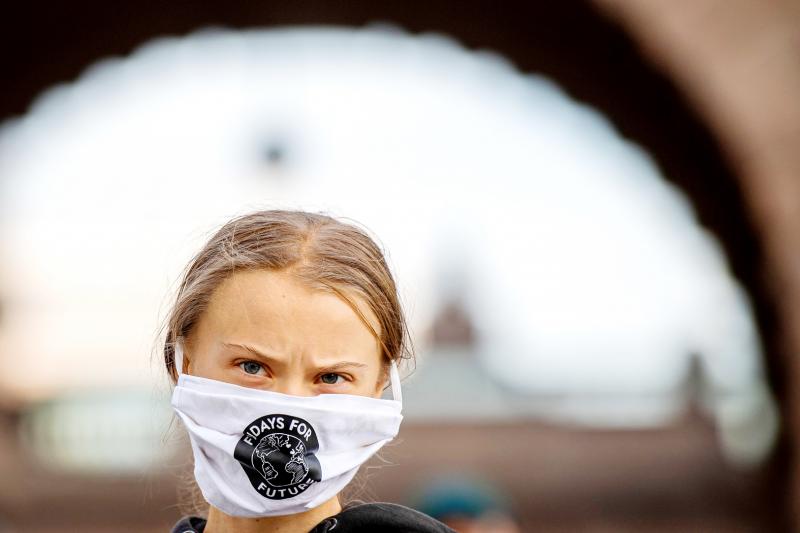
Photo: AFP
“During conflicts, it’s extremely important that journalists contribute to provide information about what’s happening, both in order to hold the conflict parties accountable for their actions as well as providing information to the outside world that allows governments an opportunity to assess the situation and possible measures,” he said.
Both Reporters Without Borders, known by its French acronym RSF, and the US-based Committee to Protect Journalists have been mentioned as possibilities.
Teenage climate activist Greta Thunberg is also a name on experts’ lips, either alone or with other activists.
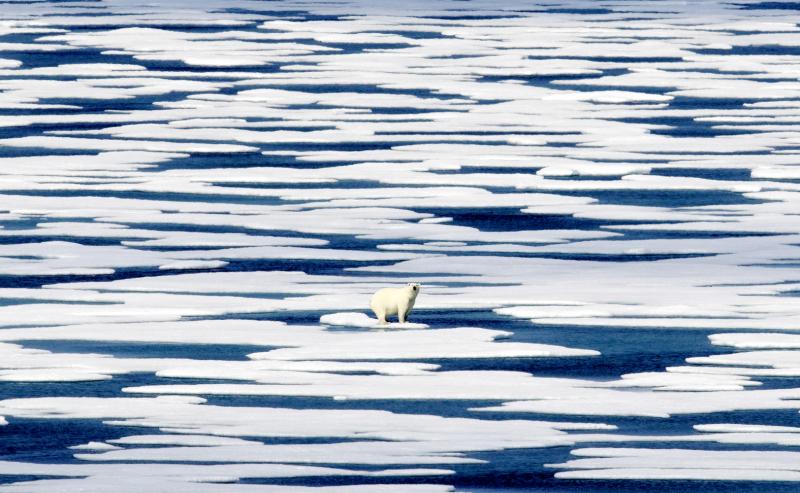
Photo: AP
She was favorite to win the prize last year, when it went to Ethiopian Prime Minister Abiy Ahmed for helping to end a 20-year postwar stalemate with Eritrea.
Nobel historian Asle Sveen said that while RSF was his first choice, Greta, as she is simply known, was “a possible candidate, absolutely.”
Greta would be the second-youngest laureate in the Nobel Prizes’ almost 120-year history, after the Pakistani advocate for girls’ education Malala Yousafzai.
“Even if you have this pandemic right now, climate change is in the long term much more serious,” Sveen noted.
NO NOBEL FOR TRUMP
Meanwhile, the new coronavirus pandemic has pushed the WHO to the top of online betting sites, just ahead of Greta.
That would be a way for the five-member Norwegian Nobel Committee to honor the UN agency’s multilateral approach to the virus.
But the WHO has also been sharply criticized for its slow response, while US President Donald Trump has accused it of yielding to Chinese influence.
It’s also not known whether the WHO was nominated in time. The new coronavirus was defined as a pandemic on March 11 — while the deadline for peace prize nominations was Jan. 31, and Nobel committee members can only add their own suggestions at their first meeting of the year in February.
Other names making the rounds in Oslo include German non-governmental organization Transparency International, the World Food Program (WFP), the UN and its secretary general Antonio Guterres, German Chancellor Angela Merkel and Afghan politician and women’s rights activist Fawzia Koofi. Those eligible to nominate candidates for the prize are also allowed to disclose their choice.
As a result, those believed to be on the list include the people of Hong Kong, NATO, indigenous Brazilian leader and environmentalist Raoni Metuktire, the whistleblower trio of Julian Assange, Edward Snowden and Chelsea Manning, as well as Greece’s ex-prime minister Alexis Tsipras and his Macedonian counterpart Zoran Zaev.
Whoever wins, COVID-19 will impact the prize this year.
Depending on the corona restrictions in place at the time, it will be awarded on Dec. 10 either in-person at a scaled-back ceremony in Oslo, or remotely in an online ceremony. While Trump has been nominated by two Scandinavian MPs, it is not known whether he is a candidate this year.
Trump seems to revel in the idea of being a Nobel laureate, given the number of tweets he has written about the possibility. But experts don’t think that will happen.
“Trump is more likely to get the Nobel prize in literature for his tweets than to get the Nobel Peace Prize,” said Urdal.
“And that’s not because he is Donald Trump, that’s because he hasn’t done anything that is deserving of the prize.”
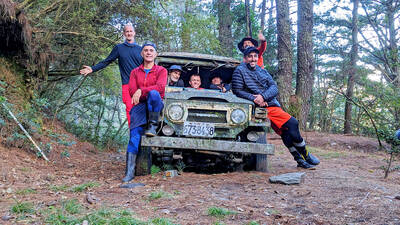
The year was 1991. A Toyota Land Cruiser set out on a 67km journey up the Junda Forest Road (郡大林道) toward an old loggers’ camp, at which point the hikers inside would get out and begin their ascent of Jade Mountain (玉山). Little did they know, they would be the last group of hikers to ever enjoy this shortcut into the mountains. An approaching typhoon soon wiped out the road behind them, trapping the vehicle on the mountain and forever changing the approach to Jade Mountain. THE CONTEMPORARY ROUTE Nowadays, the approach to Jade Mountain from the north side takes an

Last week Joseph Nye, the well-known China scholar, wrote on the Australian Strategic Policy Institute’s website about how war over Taiwan might be averted. He noted that years ago he was on a team that met with then-president Chen Shui-bian (陳水扁), “whose previous ‘unofficial’ visit to the US had caused a crisis in which China fired missiles into the sea and the US deployed carriers off the coast of Taiwan.” Yes, that’s right, mighty Chen caused that crisis all by himself. Neither the US nor the People’s Republic of China (PRC) exercised any agency. Nye then nostalgically invoked the comical specter

Relations between Taiwan and the Czech Republic have flourished in recent years. However, not everyone is pleased about the growing friendship between the two countries. Last month, an incident involving a Chinese diplomat tailing the car of vice president-elect Hsiao Bi-khim (蕭美琴) in Prague, drew public attention to the People’s Republic of China’s (PRC) operations to undermine Taiwan overseas. The trip was not Hsiao’s first visit to the Central European country. It was meant to be low-key, a chance to meet with local academics and politicians, until her police escort noticed a car was tailing her through the Czech capital. The
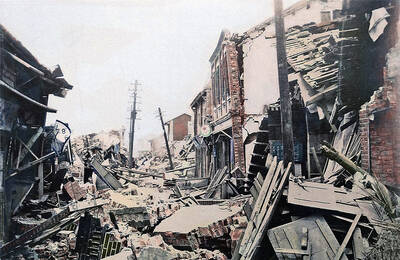
April 15 to April 21 Yang Kui (楊逵) was horrified as he drove past trucks, oxcarts and trolleys loaded with coffins on his way to Tuntzechiao (屯子腳), which he heard had been completely destroyed. The friend he came to check on was safe, but most residents were suffering in the town hit the hardest by the 7.1-magnitude Hsinchu-Taichung Earthquake on April 21, 1935. It remains the deadliest in Taiwan’s recorded history, claiming around 3,300 lives and injuring nearly 12,000. The disaster completely flattened roughly 18,000 houses and damaged countless more. The social activist and


 RSS
RSS