


These are some of the books I found most memorable this year.
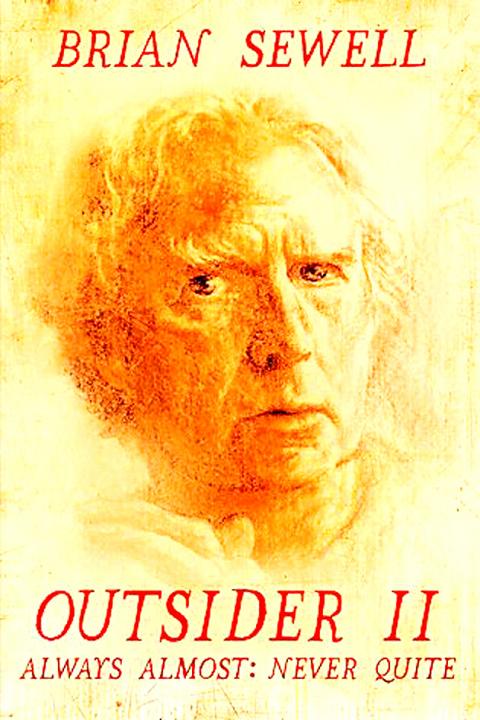
Outsider II: Always Almost, Never Quite (reviewed Jan. 9) by Brian Sewell [Quartet Books]. This is the concluding volume of the autobiography of the gay London-based art critic as well-known for his trenchantly traditionalist views on art as for his ability to name names and scandalize generally. A magnificent read, and my Number One choice for 2014.
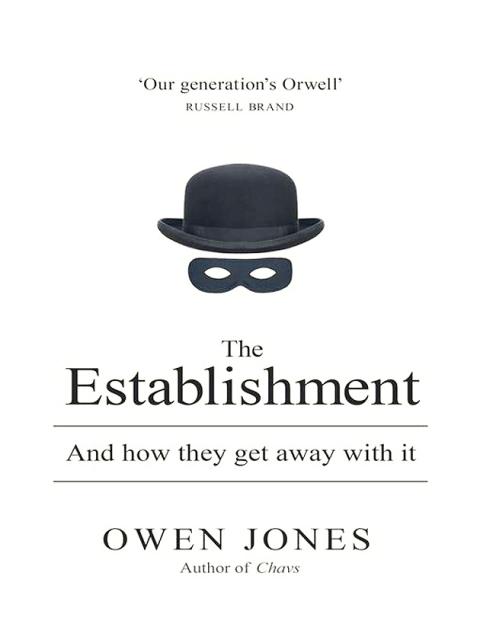
The Establishment: And how they get away with it (reviewed Oct. 16) by Owen Jones [Allen Lane]. Here a young UK journalist with strong left-wing sympathies analyzes how the rich, despite living in a democracy, continue to influence government for their own ends. Jones’s central point is that the right wing persuades the populace to put the blame on immigrants and the unemployed, instead of on the real culprits — bankers, high-end tax dodgers, and the wealthy in general. With his northern accent and youthful face, Jones is becoming well-known on TV in the UK, and he’s the just sort of polemicist the Labor Party, soon to face a crucial election, needs. This is his credo
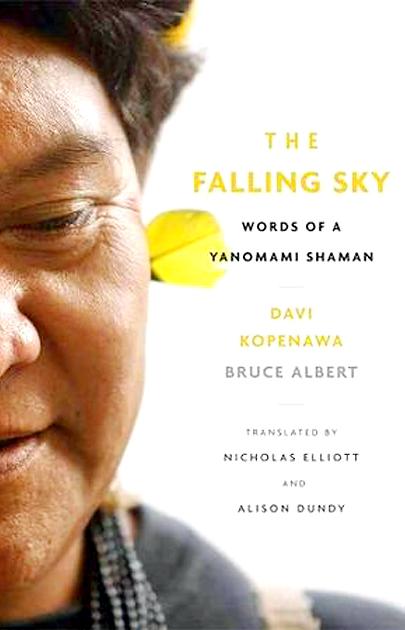
The Falling Sky: Words of a Yanomami Shaman (reviewed Aug. 21) by Davi Kopenawa and Bruce Albert [Belknap, Harvard University Press]. Not an easy read, but the descriptions of encountering dancing spirits and opposing foreigners intent on a land-grab makes it worth the effort. Claude Levi-Strauss helped Albert, a French anthropologist, in the book’s early stages.
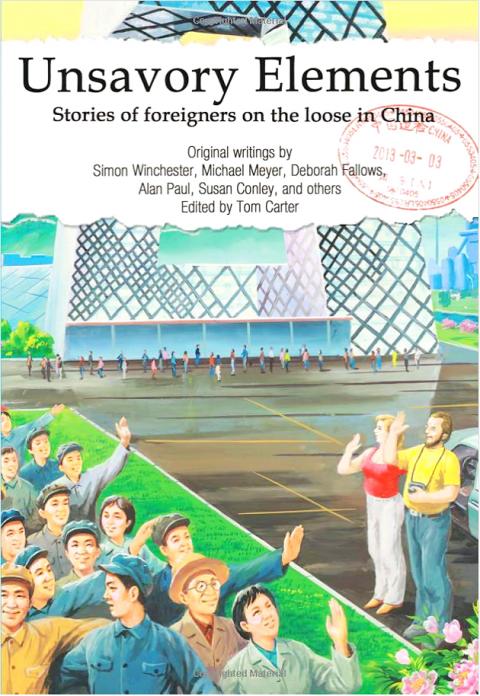
Unsavory Elements: Stories of Foreigners on the Loose in China (reviewed April 3), edited by Tom Carter [Earnshaw Books]. Here are 28 highly enjoyable tales of extraordinary variety — traveling by train from Urumqi to Hong Kong without a ticket, exploring the ancient Tea Horse Road from Lhasa to Yunnan, deciding whether to pen stories for students that will be presented as their own work in university applications, and visiting some not very prepossessing prostitutes along with even less prepossessing foreign colleagues. Unremittingly entertaining.
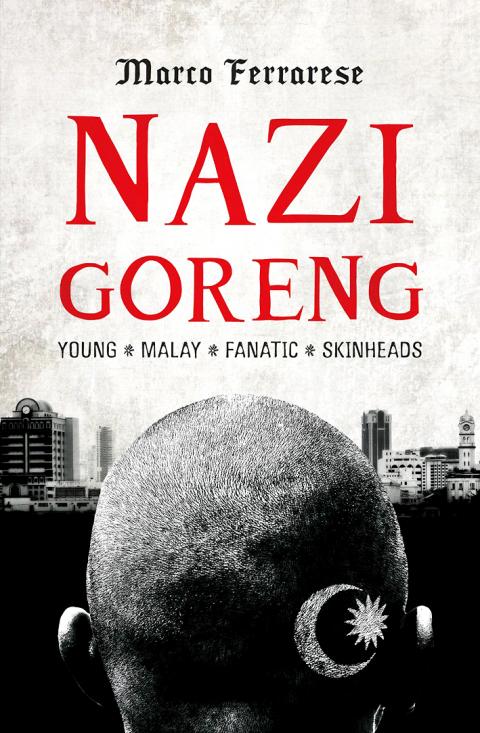
Nazi Goreng (reviewed March 6) by Marco Ferrarese [Monsoon Books]. This is an eminently readable and intelligent novel set in Penang, written by an Italian-born author resident in Asia. Ferrarese is also a punk-rock guitarist, and he met many of the “Malay supremacist” youths he describes at his gigs. They mouth anti-immigrant sentiments without having any knowledge of the people they so casually vilify, but they’re central to the plot which, though extensively concerned with drug dealing, also includes police corruption. I found the whole book astute and very insightful.
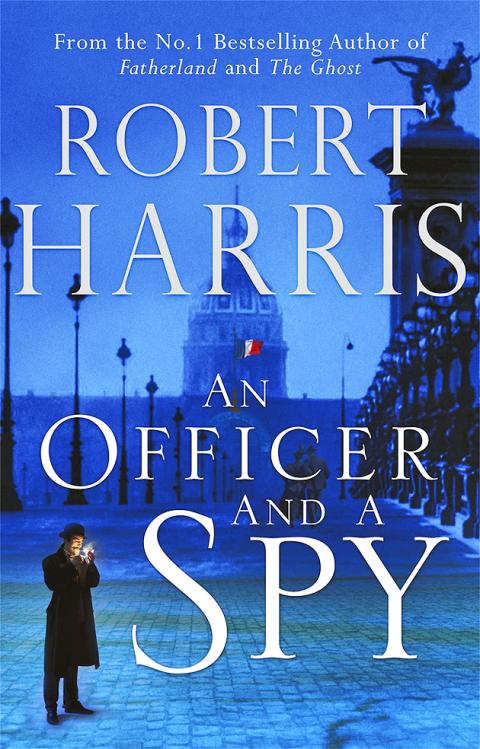
An Officer and a Spy (reviewed Dec. 11) by Robert Harris [Arrow Books]. This powerful novel is about the Dreyfus Case in 19th century France in which a Jewish army officer was wrongly convicted of passing state secrets to Germany. The campaign for his release quickly divided the country, and Harris presents a detailed picture of the characters within the state apparatus who worked against Dreyfus’s re-trial. This is a novel that looks like a blockbuster but is actually the work of an intelligent and gifted writer. I’m currently eagerly seeking out his other books.
In late October of 1873 the government of Japan decided against sending a military expedition to Korea to force that nation to open trade relations. Across the government supporters of the expedition resigned immediately. The spectacle of revolt by disaffected samurai began to loom over Japanese politics. In January of 1874 disaffected samurai attacked a senior minister in Tokyo. A month later, a group of pro-Korea expedition and anti-foreign elements from Saga prefecture in Kyushu revolted, driven in part by high food prices stemming from poor harvests. Their leader, according to Edward Drea’s classic Japan’s Imperial Army, was a samurai
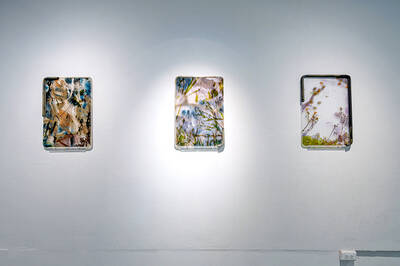
Located down a sideroad in old Wanhua District (萬華區), Waley Art (水谷藝術) has an established reputation for curating some of the more provocative indie art exhibitions in Taipei. And this month is no exception. Beyond the innocuous facade of a shophouse, the full three stories of the gallery space (including the basement) have been taken over by photographs, installation videos and abstract images courtesy of two creatives who hail from the opposite ends of the earth, Taiwan’s Hsu Yi-ting (許懿婷) and Germany’s Benjamin Janzen. “In 2019, I had an art residency in Europe,” Hsu says. “I met Benjamin in the lobby
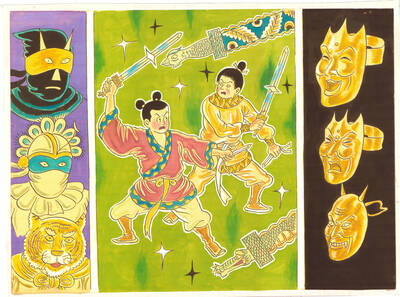
April 22 to April 28 The true identity of the mastermind behind the Demon Gang (魔鬼黨) was undoubtedly on the minds of countless schoolchildren in late 1958. In the days leading up to the big reveal, more than 10,000 guesses were sent to Ta Hwa Publishing Co (大華文化社) for a chance to win prizes. The smash success of the comic series Great Battle Against the Demon Gang (大戰魔鬼黨) came as a surprise to author Yeh Hung-chia (葉宏甲), who had long given up on his dream after being jailed for 10 months in 1947 over political cartoons. Protagonist

Peter Brighton was amazed when he found the giant jackfruit. He had been watching it grow on his farm in far north Queensland, and when it came time to pick it from the tree, it was so heavy it needed two people to do the job. “I was surprised when we cut it off and felt how heavy it was,” he says. “I grabbed it and my wife cut it — couldn’t do it by myself, it took two of us.” Weighing in at 45 kilograms, it is the heaviest jackfruit that Brighton has ever grown on his tropical fruit farm, located


 RSS
RSS