


The 28th annual meeting of the Association of Futures Markets (AFM), hosted by the Taiwan Futures Exchange (TAIFEX), was held at the Taipei Marriott Hotel last week. The meeting brought together representatives from exchanges, financial institutions, market infrastructure and information service providers from Asia, Europe, the Americas and Africa.
In addition to the US, Europe, and major Asian markets such as Hong Kong, Singapore, and Japan, the meeting was noteworthy for including representatives from numerous exchanges in Africa and Central Asia, such as South Africa, Kenya, Zambia, Malawi and Uzbekistan. The gathering facilitated exchanges on global derivatives market development trends and provided collaborative opportunities, demonstrating AFM’s important function as an international derivatives market exchange.
The meeting was opened by AFM chairman Pat Kenny and TAIFEX chairman Wu Tzu-hsin (吳自心), with Financial Supervisory Commission (FSC) Vice Chairman Chen Yen-liang (陳彥良) delivering a keynote speech. Wu said it was significant for the TAIFEX to host the AFM annual meeting again after a 15-year hiatus. In addition to helping delegates from around the world gain a deeper understanding of the Taiwanese market, the TAIFEX would continue to promote the development of Taiwan’s derivatives market toward greater resilience, diversification and international competitiveness through international exchanges and cooperation, based on the core principles of “development and innovation” and “financial security,” he said.
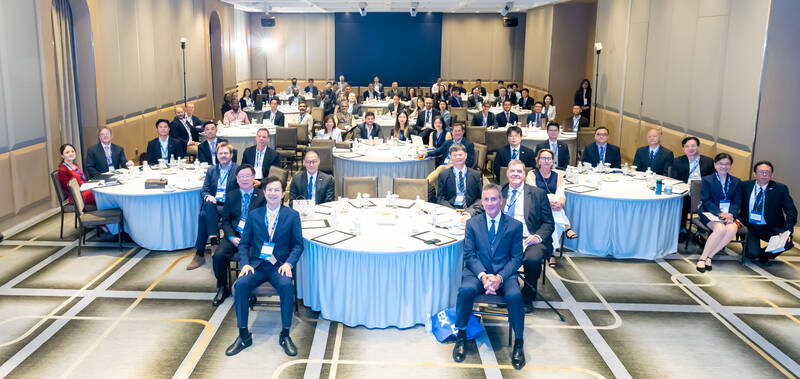
Photo courtesy of the Taiwan Futures Exchange
Chen said that the global financial market is facing structural changes such as escalating geopolitical risks, frequent policy adjustments by major economies, and the rapid development of artificial intelligence (AI) and digital technologies, leading to increased market volatility and uncertainty. Under these circumstances, the price discovery and risk management functions of the futures market become even more important. Besides providing effective hedging tools, the futures market has gradually developed into an important part of asset allocation and strategic trading, he added.
Chen showcased the FSC’s ongoing efforts to build an Asian asset management center with Taiwanese characteristics to foreign guests, focusing on “retaining capital and attracting investment” and “investing in Taiwan to support industrial development.” This is achieved through regulatory relaxation and system optimization to guide domestic and foreign capital into the Taiwanese market, he said.
Meanwhile, in response to the global AI wave and the development needs of innovative industries, the FSC is promoting policies such as the Asian Innovation Funding Platform to continuously enhance the market’s international competitiveness and resilience, he added.
This year’s meeting covered important topics, including opportunities and challenges for the development of the Asian futures market, the development of collateral and settlement mechanisms, enhancing market participation by individual traders, the impact of extended trading hours on the market and exchanges and AI and market infrastructure. Participants said that they gained valuable insights and looked forward to attending the event again in the future.
During the annual meeting, the AFM held its members’ meeting. With the support of its members, the TAIFEX was re-elected as the AFM supervisor, demonstrating the international market’s recognition of TAIFEX’s long-term participation in international affairs and its efforts to promote cross-market exchange and cooperation.
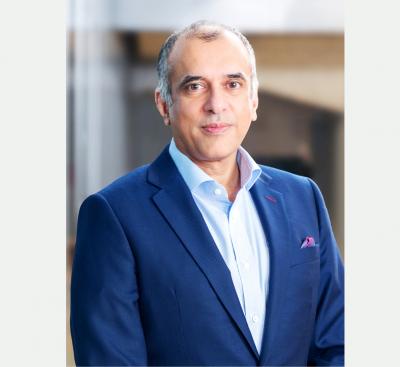
HSBC Holdings PLC is deepening its commitment to Taiwan as the economy emerges as one of the bank’s fastest-growing markets globally, driven by an artificial intelligence (AI) investment boom, expanding cross-border trade, and rising wealth creation. “The advantage that Taiwan has is a growth story linked to the semiconductor and broader AI industries, strong underlying corporate performance, and wealth creation,” said Surendra Rosha, HSBC’s co-chief executive for Asia and the Middle East, in an exclusive interview with the Taipei Times on June 2, during this year’s HSBC Taiwan Conference. That combination has helped HSBC cement its position as the most profitable international
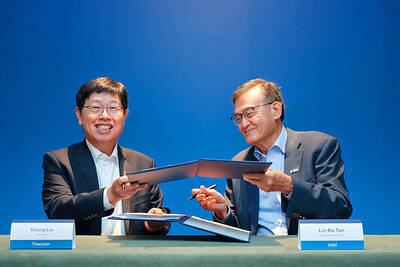
Hon Hai Precision Industry Co (鴻海精密) yesterday said it would work with US chipmaker Intel Corp to jointly develop and deploy next-generation artificial intelligence (AI) infrastructure and intelligent computing platforms in a move to capture booming demand for AI computing systems. Hon Hai, also known as Foxconn Technology Group (富士康), said in a statement that the partnership would combine its global manufacturing scale, system integration expertise and AI data center deployment capabilities with Intel’s strengths in processor architecture, silicon technologies and software ecosystem. The companies said they plan to work on equipment used in AI data centers, including server racks powered by
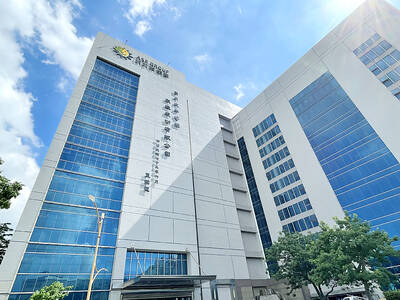
The average pay to employees by ASE Technology Holding Co (日月光投控) was the highest among the companies listed on the local main board last year, while contract chipmaker Taiwan Semiconductor Manufacturing Co (TSMC, 台積電) ranked seventh, the Taiwan Stock Exchange (TWSE) said on Monday. Data compiled by the exchange showed ASE Technology, the world’s largest chip packaging and testing services provider, paid its employees an average of NT$6.28 million (US$199,746) last year, up 40 percent from a year earlier. TSMC, the world’s largest contract chipmaker and the most profitable company in Taiwan, paid its employees NT$4.09 million on average, up
Taiwan Semiconductor Manufacturing Co (TSMC, 台積電) is now ranked ninth among the world’s 100 most valuable companies after its market capitalization more than doubled over the past year, PricewaterhouseCoopers (PwC) Taiwan said in a report last month. TSMC’s market capitalization surged 101 percent year-on-year to US$1.427 trillion as of March 31, the accounting and consulting firm’s 2026 Global Top 100 Companies by Market Capitalization report said. The gain catapulted the world’s largest contract chipmaker from 12th place to ninth in the rankings, and it was the fastest-growing among the global top 10, it said. TSMC was the only Taiwanese company among the top


 RSS
RSS