


Gigabyte Technology Co (技嘉) expects strong order visibility for its artificial intelligence (AI) servers to extend to next year, as major customers begin planning their new spending, chairman Dandy Yeh (葉培城) said after the company’s annual general meeting in Taoyuan’s Jhongli District (中壢) yesterday.
“All aspects of the business are moving in a positive direction at this stage,” Yeh said, adding that the company’s revenue growth this year could outpace last year’s pace.
Shareholders yesterday approved proposals to distribute cash dividends of NT$12 per share, representing a payout ratio of 65.93 percent based on the company’s earnings per share of NT$18.2 last year.
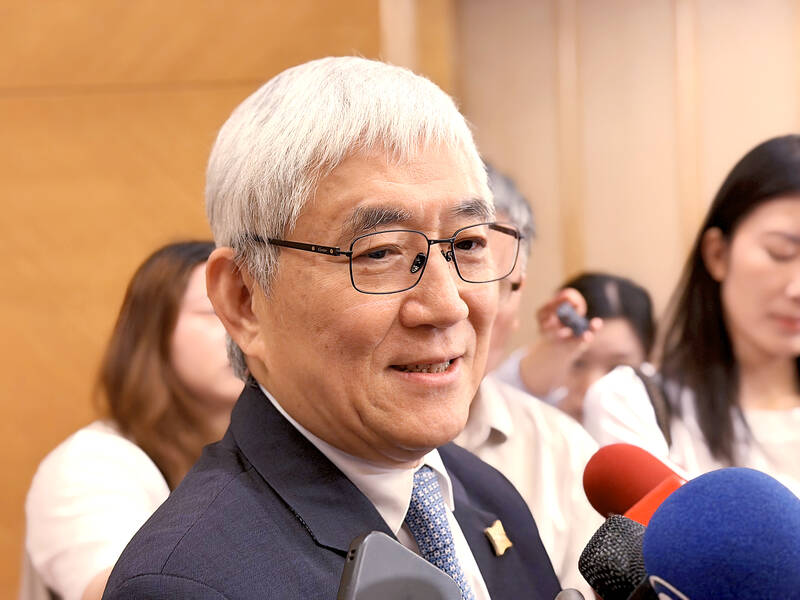
Photo: CNA
Gigabyte showcased its AI servers powered by Nvidia Corp’s graphics processors at the Computex trade show in Taipei last week.
Regarding speculation that Nvidia’s Vera Rubin platform could undergo specification changes due to a shortage of memory chips, Yeh said such adjustments are a normal part of new product development, which often involves specification refinements to address early-stage yield and power consumption issues.
In the second half of this year, Gigabyte’s AI servers would be primarily based on the Nvidia B300 and GB300 platforms, Yeh said. The company would begin small-volume shipments of Vera Rubin-based products, he said.
In contrast to strong growth in AI server shipments, PC shipments would grow more slowly this year amid memory shortages and rising component prices, Yeh said.
As customers are prioritizing supply availability over pricing, it is relatively easier to communicate with them and pass on higher costs, as long as Gigabyte can ensure stable supply, he said.
Asked about the trend of rising AI computing extending from the cloud to end-user devices, Yeh said AI PCs would serve as an important platform for agentic AI applications.
While more AI workloads are expected to be processed on local devices, cloud computing would still be needed, he said. A hybrid computing architecture that combines cloud and edge AI would open up new growth opportunities for the industry, he added.
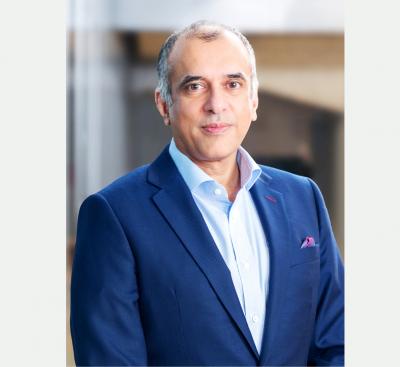
HSBC Holdings PLC is deepening its commitment to Taiwan as the economy emerges as one of the bank’s fastest-growing markets globally, driven by an artificial intelligence (AI) investment boom, expanding cross-border trade, and rising wealth creation. “The advantage that Taiwan has is a growth story linked to the semiconductor and broader AI industries, strong underlying corporate performance, and wealth creation,” said Surendra Rosha, HSBC’s co-chief executive for Asia and the Middle East, in an exclusive interview with the Taipei Times on June 2, during this year’s HSBC Taiwan Conference. That combination has helped HSBC cement its position as the most profitable international
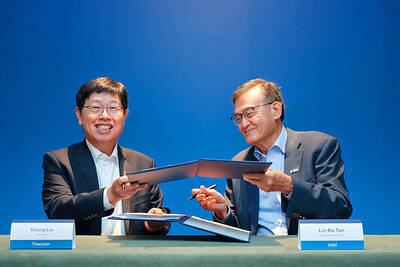
Hon Hai Precision Industry Co (鴻海精密) yesterday said it would work with US chipmaker Intel Corp to jointly develop and deploy next-generation artificial intelligence (AI) infrastructure and intelligent computing platforms in a move to capture booming demand for AI computing systems. Hon Hai, also known as Foxconn Technology Group (富士康), said in a statement that the partnership would combine its global manufacturing scale, system integration expertise and AI data center deployment capabilities with Intel’s strengths in processor architecture, silicon technologies and software ecosystem. The companies said they plan to work on equipment used in AI data centers, including server racks powered by
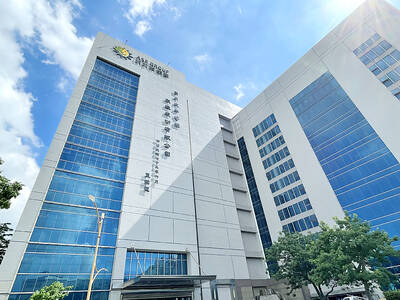
The average pay to employees by ASE Technology Holding Co (日月光投控) was the highest among the companies listed on the local main board last year, while contract chipmaker Taiwan Semiconductor Manufacturing Co (TSMC, 台積電) ranked seventh, the Taiwan Stock Exchange (TWSE) said on Monday. Data compiled by the exchange showed ASE Technology, the world’s largest chip packaging and testing services provider, paid its employees an average of NT$6.28 million (US$199,746) last year, up 40 percent from a year earlier. TSMC, the world’s largest contract chipmaker and the most profitable company in Taiwan, paid its employees NT$4.09 million on average, up
Taiwan Semiconductor Manufacturing Co (TSMC, 台積電) is now ranked ninth among the world’s 100 most valuable companies after its market capitalization more than doubled over the past year, PricewaterhouseCoopers (PwC) Taiwan said in a report last month. TSMC’s market capitalization surged 101 percent year-on-year to US$1.427 trillion as of March 31, the accounting and consulting firm’s 2026 Global Top 100 Companies by Market Capitalization report said. The gain catapulted the world’s largest contract chipmaker from 12th place to ninth in the rankings, and it was the fastest-growing among the global top 10, it said. TSMC was the only Taiwanese company among the top


 RSS
RSS