


A thundering thrash metal riff reverberated through a Hong Kong bar, but the music was being livestreamed from a studio across town to comply with COVID-19 pandemic rules that have outlawed small gigs for more than 650 days.
COVID-19 has battered live performances around the world, especially in the first 18 months of the pandemic, but nowhere has that hardship lasted longer than in Hong Kong.
While gigs, festivals and international touring have returned with a vengeance globally, Hong Kong’s musicians have had no such luck.
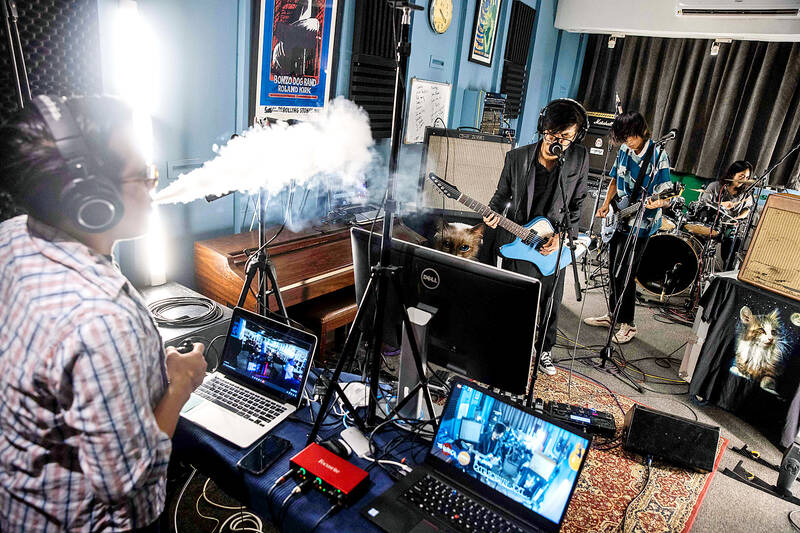
Photo: AFP
Warning: Smoking can damage your health
For the vast majority of the pandemic, the territory has banned live performances in any place that serves food or drink.
Venues such as The Wanch, one of Hong Kong’s oldest live music bars, have had to get creative.
“We’re just trying to do what we can to stay alive and keep the music going,” John Prymmer, the bar’s co-owner and a fixture of Hong Kong’s live music scene, said from Sunset Studios, from where the live music was being streamed.

Photo: AFP
In a soundproofed recording studio next door, local metal act Ozmium were careening through a mixture of their own tracks as well as covers of Iron Maiden and Metallica.
For now, a laptop screen perched in front of the band showing revelers inside The Wanch is the closest they can get to their fans.
Front man Ashish Jerry Justin said he had looked on with desperation as other businesses such as karaoke rooms, cinemas, banquets and hotpot restaurants have been allowed to resume.
“And still in a place like a bar or a club, you cannot have live music even if there is a plexiglass separating us from the people who are watching us,” he said. “I think it’s highly unfair.”
Hong Kong has stuck to a version of China’s “zero COVID-19” system throughout the pandemic, which has hammered the local economy.
While business hub rivals such as Singapore, London and Tokyo have reopened, Hong Kong has kept up mandatory hotel quarantine, currently at three days.
International acts including Billie Eilish, Justin Bieber, Maroon 5, Green Day and Guns N’ Roses have all added Singapore to their world tours, but Hong Kong remains a touring dead zone.
Live music has been classified as a high-risk activity by authorities, and banned for more than 650 of the slightly over 900 days since restrictions were first introduced in early April 2020.
Lito Castillo, head of the Hong Kong Musicians Union, said that the job losses were “in the thousands.”
A professional keyboardist who is married to a singer, he said his family’s income is 30 percent of what it was before the pandemic, mainly earned from working tables in restaurants.
“I’m down to my last dollar, at the moment we are just surviving, that’s all,” he said.
Others have pawned instruments and switched to the gig economy.
One of the territory’s most talented guitarists now works for an international courier company, Castillo said.
Many venues have closed, including Peel Fresco which shut its doors this month after 16 years.
“The past three years have made it impossible to run a live music business in Hong Kong,” the owners wrote on Facebook.
The mental toll has been intense. In a survey, the Hong Kong Musicians Foundation found that 11 percent of its members have had suicidal thoughts in the past year.
Ten percent were in debt to the tune of HK$100,000 (US$12,740) or more, and 13 percent had sold their instruments.
“I think ‘grim’ is an understatement,” said Adrian Fu (符致逸), a singer-songwriter and former Cantopop recording artist who is one of the foundation’s directors.
The foundation and Castillo’s union said letters and lobbying to the government had gone unnoticed.
Fu said he hoped authorities could see the importance of live performances to the economy, but also Hong Kong’s reputation as an international hub of culture.
“It is a huge, huge factor in the incubation of talent,” he said of small venues and live bars.
A spokesperson for Hong Kong Chief Executive John Lee (李家超) said the government “understands the ardent expectations of the live music sector for relaxing social distancing measures,” but gave no details on when or whether the ban would be lifted.
The Hong Kong Culture, Sports and Tourism Bureau — set up in July to promote the territory as a “center for international cultural exchange” — declined to comment.
Alicia Beale, owner of live music venue The Aftermath, said she had tried to focus on the positive creativity artists had shown.
Her venue has done livestreamed gigs, recorded fundraising albums and pivoted to whatever it can to draw people in, from quiz and game nights to support groups.
“It’s just been survival mode throughout the pandemic,” she said. “I want to get to thriving mode, hopefully soon.”

Taiwan Transport and Storage Corp (TTS, 台灣通運倉儲) yesterday unveiled its first electric tractor unit — manufactured by Volvo Trucks — in a ceremony in Taipei, and said the unit would soon be used to transport cement produced by Taiwan Cement Corp (TCC, 台灣水泥). Both TTS and TCC belong to TCC International Holdings Ltd (台泥國際集團). With the electric tractor unit, the Taipei-based cement firm would become the first in Taiwan to use electric vehicles to transport construction materials. TTS chairman Koo Kung-yi (辜公怡), Volvo Trucks vice president of sales and marketing Johan Selven, TCC president Roman Cheng (程耀輝) and Taikoo Motors Group

Among the rows of vibrators, rubber torsos and leather harnesses at a Chinese sex toys exhibition in Shanghai this weekend, the beginnings of an artificial intelligence (AI)-driven shift in the industry quietly pulsed. China manufactures about 70 percent of the world’s sex toys, most of it the “hardware” on display at the fair — whether that be technicolor tentacled dildos or hyper-realistic personalized silicone dolls. Yet smart toys have been rising in popularity for some time. Many major European and US brands already offer tech-enhanced products that can enable long-distance love, monitor well-being and even bring people one step closer to
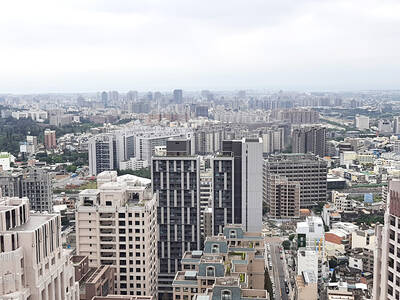
New apartments in Taiwan’s major cities are getting smaller, while old apartments are increasingly occupied by older people, many of whom live alone, government data showed. The phenomenon has to do with sharpening unaffordable property prices and an aging population, property brokers said. Apartments with one bedroom that are two years old or older have gained a noticeable presence in the nation’s six special municipalities as well as Hsinchu county and city in the past five years, Evertrust Rehouse Co (永慶房產集團) found, citing data from the government’s real-price transaction platform. In Taipei, apartments with one bedroom accounted for 19 percent of deals last

RECORD-BREAKING: TSMC’s net profit last quarter beat market expectations by expanding 8.9% and it was the best first-quarter profit in the chipmaker’s history Taiwan Semiconductor Manufacturing Co (TSMC, 台積電), which counts Nvidia Corp as a key customer, yesterday said that artificial intelligence (AI) server chip revenue is set to more than double this year from last year amid rising demand. The chipmaker expects the growth momentum to continue in the next five years with an annual compound growth rate of 50 percent, TSMC chief executive officer C.C. Wei (魏哲家) told investors yesterday. By 2028, AI chips’ contribution to revenue would climb to about 20 percent from a percentage in the low teens, Wei said. “Almost all the AI innovators are working with TSMC to address the


 RSS
RSS