


The Ministry of Finance yesterday raised the threshold for the basic living expenses deduction this year by NT$10,000 (US$357.97) to NT$192,000, which would ease the tax burden of more than 2 million people.
The ministry announced the adjustment — the biggest in the nation’s history — on its Web site, justifying the tax break by citing the 2017 Taxpayer Rights Protection Act (納稅者權利保護法), which stipulates that people should not be taxed on the amount they need to cover basic expenses.
Each year, the figure for basic expenses is set at 60 percent of the median disposable income from the preceding year.

Photo: Clare Cheng, Taipei Times
A survey of household incomes released on Aug. 13 by the Directorate-General of Budget, Accounting and Statistics (DGBAS) placed this year’s median disposable income at NT$320,000, making the basic living expense NT$192,000.
The deduction, which can be applied to taxpayers and each of their dependents, is NT$10,000 more than last year.
While the upward adjustment is expected to benefit 2.29 million people, it would lower the nation’s tax income by NT$14.64 billion, the ministry said.
Taxpayers would be able to see the difference in May next year, when filing their taxes for income earned this year, it added.
The extra tax break would amount to NT$40,000 for a family of four, the ministry said.
The savings could vary from NT$2,000 to NT$16,000, depending on a person’s tax bracket, which ranges from 5 percent to 40 percent, it added.
Later this year, the ministry is expected to increase other income tax deductions to reflect mounting inflationary pressure linked to the consumer price index (CPI).
The inflation gauge has risen more than 3 percent in the past three years, meriting bigger tax breaks so that people feel less of a pinch, accounting firms have said.
Income tax laws obligate the government to make adjustments based on the average CPI data for the year ending this month.
Last month, the CPI picked up 2.63 percent, and could remain high due to the soaring prices worldwide for fuel and raw materials, the DGBAS said previously.
Escalating inflation means that the government must allow more leeway for standard tax deductions, salary tax deductions and special deductions for people with disabilities.
The government must also make greater concessions on inheritance and gift taxes — from NT$12 million to NT$13.32 million per year on inheritance tax deductions and from NT$2.2 million to NT$2.44 million per year on gift tax deductions.
In related news, the ministry concurs with the Ministry of Economic Affairs that a sales tax exemption on electric vehicle purchases should be extended for four more years.
The tax break was due to expire by the end of this year, but the government aims to keep the incentive to encourage the migration to electric vehicles, Deputy Minister of Finance Lee Ching-hua (李慶華) said on the sidelines of a public function yesterday.
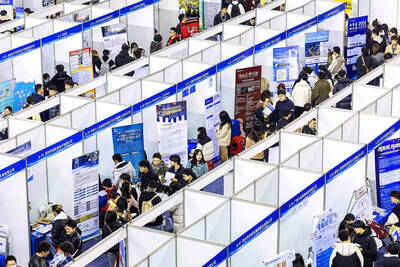
Stephen Garrett, a 27-year-old graduate student, always thought he would study in China, but first the country’s restrictive COVID-19 policies made it nearly impossible and now he has other concerns. The cost is one deterrent, but Garrett is more worried about restrictions on academic freedom and the personal risk of being stranded in China. He is not alone. Only about 700 American students are studying at Chinese universities, down from a peak of nearly 25,000 a decade ago, while there are nearly 300,000 Chinese students at US schools. Some young Americans are discouraged from investing their time in China by what they see
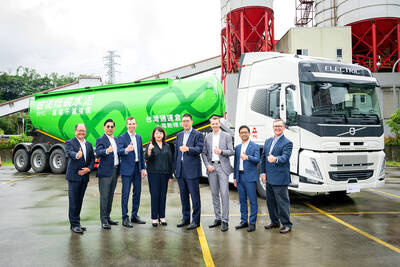
Taiwan Transport and Storage Corp (TTS, 台灣通運倉儲) yesterday unveiled its first electric tractor unit — manufactured by Volvo Trucks — in a ceremony in Taipei, and said the unit would soon be used to transport cement produced by Taiwan Cement Corp (TCC, 台灣水泥). Both TTS and TCC belong to TCC International Holdings Ltd (台泥國際集團). With the electric tractor unit, the Taipei-based cement firm would become the first in Taiwan to use electric vehicles to transport construction materials. TTS chairman Koo Kung-yi (辜公怡), Volvo Trucks vice president of sales and marketing Johan Selven, TCC president Roman Cheng (程耀輝) and Taikoo Motors Group

MAJOR DROP: CEO Tim Cook, who is visiting Hanoi, pledged the firm was committed to Vietnam after its smartphone shipments declined 9.6% annually in the first quarter Apple Inc yesterday said it would increase spending on suppliers in Vietnam, a key production hub, as CEO Tim Cook arrived in the country for a two-day visit. The iPhone maker announced the news in a statement on its Web site, but gave no details of how much it would spend or where the money would go. Cook is expected to meet programmers, content creators and students during his visit, online newspaper VnExpress reported. The visit comes as US President Joe Biden’s administration seeks to ramp up Vietnam’s role in the global tech supply chain to reduce the US’ dependence on China. Images on
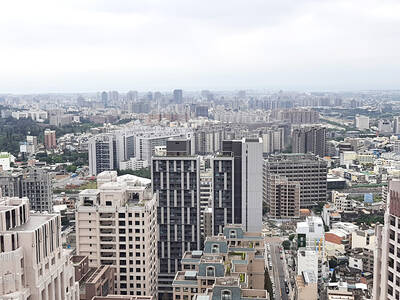
New apartments in Taiwan’s major cities are getting smaller, while old apartments are increasingly occupied by older people, many of whom live alone, government data showed. The phenomenon has to do with sharpening unaffordable property prices and an aging population, property brokers said. Apartments with one bedroom that are two years old or older have gained a noticeable presence in the nation’s six special municipalities as well as Hsinchu county and city in the past five years, Evertrust Rehouse Co (永慶房產集團) found, citing data from the government’s real-price transaction platform. In Taipei, apartments with one bedroom accounted for 19 percent of deals last


 RSS
RSS