


Global ports are growing more gridlocked as the COVID-19 pandemic era’s supply shocks intensify, threatening to spoil the Christmas shopping season, erode corporate profits and drive up consumer prices.
Bloomberg’s Port Congestion Tracker shows that a typhoon in Asia spawned another wild week for shipping in a year with multiple challenges — a vessel wedged in the Suez Canal, a dozen major storms, rolling COVID-19 lockdowns disrupting key manufacturing hubs in China and Vietnam, a shortage of truckers and dockworkers, and a resurgence of consumer demand.
As of Friday, at least 107 container ships were waiting off Hong Kong and Shenzhen, China. The pileup worsened when the storm brushed past Hong Kong in the middle of last week, shutting down its stock exchange and idling its ports.
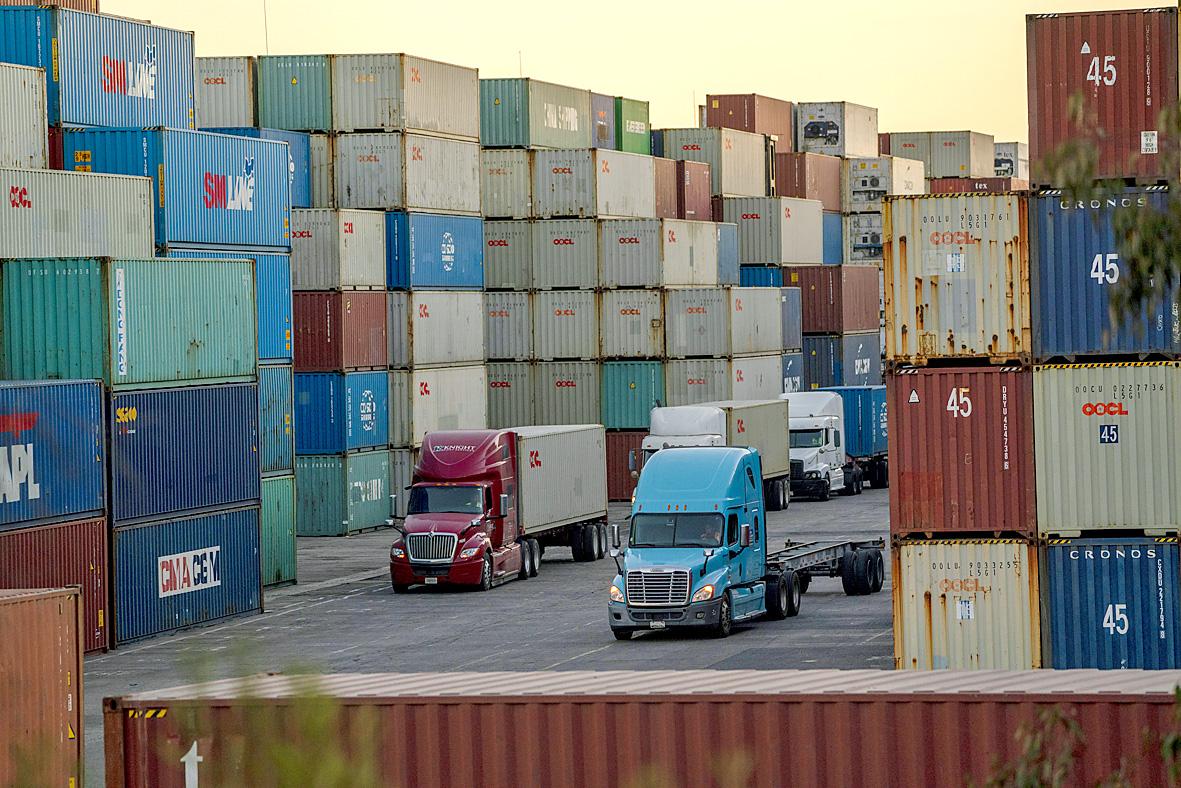
Photo: Bloomberg
Globally, RBC Capital Markets reckons that 77 percent of ports are experiencing abnormally long times to turnaround traffic.
The latest congestion is not expected to be isolated to Asia for long, as delayed ships loaded with merchandise soon start sailing for the US and Europe.
As this year’s big crunch has repeatedly demonstrated, a bottleneck in one corner of the globe eventually exacerbates a logjam or compounds shortages in another.
Even if shipping strains ease in China, that “could still mean new surges of vessels arriving at congested ports like Los Angeles-Long Beach, shifting the backlog to the destination ports,” said Judah Levine, head of research at Hong Kong-based Freightos.com, an online shipping marketplace.
US President Joe Biden last week urged the Los Angeles port to run an around-the-clock operation. In the UK, containers filled with goods and outbound empties were piling up so high at the key port of Felixstowe that at least one container carrier had reroute cargo through ports in mainland Europe.
That all spells trouble for the world economy. Concern is already mounting that holiday shoppers would not be able to buy the gifts they want, dealing a blow to retail sales.
Companies are worried about their bottom line with executives at Tesla Inc, Target Corp and other S&P 500 companies mentioning “supply chain” a record 3,000 times during presentations as of Tuesday last week. Additionally, a lack of goods and costlier shipping mean further upward pressure on already heady inflation.
“Data on sea and air shipping costs, container throughput and transport utilization point to an ongoing supply shock for the global economy,” Michael Hanson, a senior global economist at JPMorgan Chase & Co, told clients in a report on Thursday.
Friday’s queue of ships around Hong Kong and Shenzhen was the largest recorded there since Bloomberg News began tracking the area in April. The count surpassed highs reached in May, when Shenzhen’s Lantian Port was gripped by a COVID-19 outbreak.
The fallout from the storm was felt all the way to Singapore, a crossroads for goods transiting from east to west. Waiting container ships off that port reached their highest since July 21, when another storm, Typhoon In-fa, slammed into mainland China near Shanghai, further north of Hong Kong.
Typhoons in Asia have tested an already strained port infrastructure in the US, and the effects are rippling to logistics on land like trucking, rail and warehousing.
US ports have some of the highest congestion rates in the world, the data show.
The Port of Savannah, Georgia, on the east coast had 25 waiting ships versus just six in port late on Thursday, leading all major US ports with an 81 percent congestion rate.
On the west coast, the adjacent ports of Los Angeles and Long Beach on Friday had a combined congestion rate of 56 percent, as ships waiting outnumbered the ships in port.
In Europe, ports in Rotterdam, Netherlands, and Antwerp, Belgium, had blockage rates about half that level.
Ports are overwhelmed because they sit at the junctions of global trade where ocean freight gets transferred to some mode of land-based transportation. The supply snags are colliding with a demand surge — peak season for retailers to stock up before holiday shopping begins.
Consumer purchases of goods have stayed elevated in advanced economies and labor shortages have stretched trucking, rail and shipping liner capacity to their limits, creating bottlenecks of containers between factory loading docks and store shelves.
“Port congestion, equipment shortages and extreme container freight rates are just the symptoms of a deeper problem that includes trucking shortages and limited warehousing space,” said Simon Heaney, senior manager for container research at Drewry in London. “COVID has stressed all links in the chain and these issues take time to resolve as there is no latent capacity that can be turned on like a tap.”
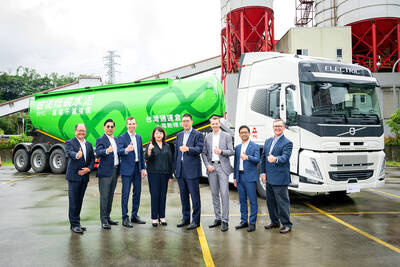
Taiwan Transport and Storage Corp (TTS, 台灣通運倉儲) yesterday unveiled its first electric tractor unit — manufactured by Volvo Trucks — in a ceremony in Taipei, and said the unit would soon be used to transport cement produced by Taiwan Cement Corp (TCC, 台灣水泥). Both TTS and TCC belong to TCC International Holdings Ltd (台泥國際集團). With the electric tractor unit, the Taipei-based cement firm would become the first in Taiwan to use electric vehicles to transport construction materials. TTS chairman Koo Kung-yi (辜公怡), Volvo Trucks vice president of sales and marketing Johan Selven, TCC president Roman Cheng (程耀輝) and Taikoo Motors Group

Among the rows of vibrators, rubber torsos and leather harnesses at a Chinese sex toys exhibition in Shanghai this weekend, the beginnings of an artificial intelligence (AI)-driven shift in the industry quietly pulsed. China manufactures about 70 percent of the world’s sex toys, most of it the “hardware” on display at the fair — whether that be technicolor tentacled dildos or hyper-realistic personalized silicone dolls. Yet smart toys have been rising in popularity for some time. Many major European and US brands already offer tech-enhanced products that can enable long-distance love, monitor well-being and even bring people one step closer to
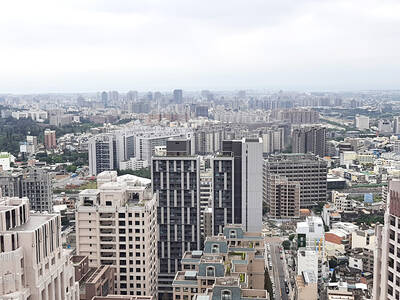
New apartments in Taiwan’s major cities are getting smaller, while old apartments are increasingly occupied by older people, many of whom live alone, government data showed. The phenomenon has to do with sharpening unaffordable property prices and an aging population, property brokers said. Apartments with one bedroom that are two years old or older have gained a noticeable presence in the nation’s six special municipalities as well as Hsinchu county and city in the past five years, Evertrust Rehouse Co (永慶房產集團) found, citing data from the government’s real-price transaction platform. In Taipei, apartments with one bedroom accounted for 19 percent of deals last

RECORD-BREAKING: TSMC’s net profit last quarter beat market expectations by expanding 8.9% and it was the best first-quarter profit in the chipmaker’s history Taiwan Semiconductor Manufacturing Co (TSMC, 台積電), which counts Nvidia Corp as a key customer, yesterday said that artificial intelligence (AI) server chip revenue is set to more than double this year from last year amid rising demand. The chipmaker expects the growth momentum to continue in the next five years with an annual compound growth rate of 50 percent, TSMC chief executive officer C.C. Wei (魏哲家) told investors yesterday. By 2028, AI chips’ contribution to revenue would climb to about 20 percent from a percentage in the low teens, Wei said. “Almost all the AI innovators are working with TSMC to address the


 RSS
RSS