


Gold traded little changed, heading for a weekly drop, after a regional US Federal Reserve president said high inflation might call for the US central bank to tighten its monetary policy next year.
It could be appropriate for the Fed to begin increasing interest rates next year given a forecast for inflation above the US central bank’s 2 percent target, St Louis Fed President James Bullard said.
“I put us starting in late 2022,” Bullard said on Friday during a TV interview on CNBC, referring to interest-rate projections published on Wednesday by the US central bank after a two-day policy meeting.
Higher rates dampen demand for non-interest-bearing gold as an alternative asset.
The Bloomberg Dollar Spot Index advanced to a more than two-month high after Bullard’s comments, hurting demand for greenback-denominated bullion.
Gold posted its biggest weekly loss in 15 months, weighed down by concerns over tighter monetary policy.
Still, US Fed Chair Jerome Powell has cautioned that discussions about raising interest rates would be “highly premature.”
The central bank also signaled it was alive to threats of runaway price increases sparked by persistently higher-than-forecast inflation readings.
“Absent inflation expectations threatening to become unanchored — with the Fed unwilling or unable to calm things — gold will struggle to return to a bull market,” Macquarie Group Ltd strategists wrote in a note.
The bank expects gold to slide to US$1,600 an ounce by the end of the year.
Having broken through several key technical levels in just two days, prices would probably struggle to mount a quick recovery, Commerzbank AG analyst Carsten Fritsch said.
Spot gold was down 0.61 percent at US$1,762.63 per ounce, with prices down about 5.7 percent on the week, the most since March last year.
Gold for August delivery fell US$5.80 to $1,769 an ounce.
Other commodities:
‧ Silver for July delivery rose US$0.11 to US$25.97 an ounce and July copper fell US$0.02 to US$4.16 a pound.
Additional reporting by agencies

Stephen Garrett, a 27-year-old graduate student, always thought he would study in China, but first the country’s restrictive COVID-19 policies made it nearly impossible and now he has other concerns. The cost is one deterrent, but Garrett is more worried about restrictions on academic freedom and the personal risk of being stranded in China. He is not alone. Only about 700 American students are studying at Chinese universities, down from a peak of nearly 25,000 a decade ago, while there are nearly 300,000 Chinese students at US schools. Some young Americans are discouraged from investing their time in China by what they see

MAJOR DROP: CEO Tim Cook, who is visiting Hanoi, pledged the firm was committed to Vietnam after its smartphone shipments declined 9.6% annually in the first quarter Apple Inc yesterday said it would increase spending on suppliers in Vietnam, a key production hub, as CEO Tim Cook arrived in the country for a two-day visit. The iPhone maker announced the news in a statement on its Web site, but gave no details of how much it would spend or where the money would go. Cook is expected to meet programmers, content creators and students during his visit, online newspaper VnExpress reported. The visit comes as US President Joe Biden’s administration seeks to ramp up Vietnam’s role in the global tech supply chain to reduce the US’ dependence on China. Images on

Taiwan Transport and Storage Corp (TTS, 台灣通運倉儲) yesterday unveiled its first electric tractor unit — manufactured by Volvo Trucks — in a ceremony in Taipei, and said the unit would soon be used to transport cement produced by Taiwan Cement Corp (TCC, 台灣水泥). Both TTS and TCC belong to TCC International Holdings Ltd (台泥國際集團). With the electric tractor unit, the Taipei-based cement firm would become the first in Taiwan to use electric vehicles to transport construction materials. TTS chairman Koo Kung-yi (辜公怡), Volvo Trucks vice president of sales and marketing Johan Selven, TCC president Roman Cheng (程耀輝) and Taikoo Motors Group
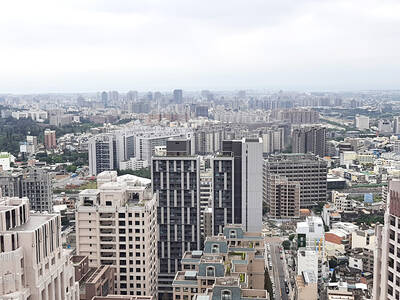
New apartments in Taiwan’s major cities are getting smaller, while old apartments are increasingly occupied by older people, many of whom live alone, government data showed. The phenomenon has to do with sharpening unaffordable property prices and an aging population, property brokers said. Apartments with one bedroom that are two years old or older have gained a noticeable presence in the nation’s six special municipalities as well as Hsinchu county and city in the past five years, Evertrust Rehouse Co (永慶房產集團) found, citing data from the government’s real-price transaction platform. In Taipei, apartments with one bedroom accounted for 19 percent of deals last


 RSS
RSS