


The Taiwan manufacturing purchasing managers’ index (PMI) climbed to a decade high of 60.4 last month on the back of improvements at home and abroad, while inventory and container shortages threatened production capability, an IHS Markit survey showed yesterday.
The latest PMI reading, the strongest since April 2010, advanced 60.2 from January, signaling further improvement in operating conditions.
“Taiwan’s manufacturing sector [last month] continued to enjoy its best period of growth for a decade,” IHS Markit associate director Annabel Fiddes said in a statement.
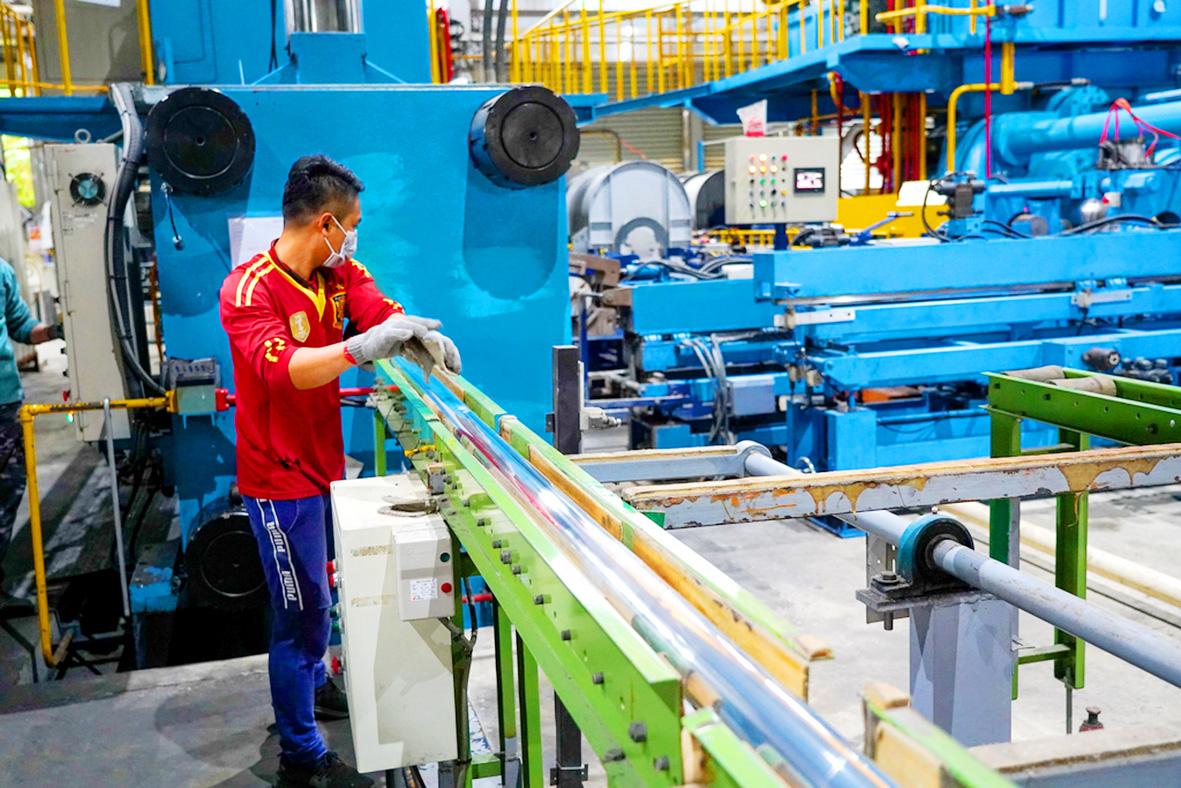
Photo courtesy of the New Taipei City Government via CNA
“Activity across the sector will continue to expand in the months ahead given the steep increases in new work and purchasing activity,” Fiddes said.
PMI figures aim to capture the health of the manufacturing industry, with figures above 50 indicating business expansion and values below the threshold suggesting contraction.
A rapid increase in new work accounted for the upturn last month and firms said that there was a rise in demand, particularly from China, Europe and the US, Fiddes said.
That explained why new orders and export sales expanded at the second-quickest rates since January 2011, she said, adding that output and employment improved, as new work and efforts to expand production lines helped boost staff numbers.
Despite additional workers, companies said that there was sustained pressure on capacity, as unfinished work continued to increase at a marked rate, the report said.
Input costs continued to spike, leading to higher selling prices as firms passed part of the added cost on to customers, it said.
Still, supply chain delays deteriorated at the fastest pace on record amid stock shortages and shipping-related delays, it said, adding that companies frequently complained about suppliers’ low stock levels, freight container shortages and delayed shipping schedules.
Supply chain difficulties and rising demand prompted manufacturers to continue to build up stock levels, it said.
Inventories of inputs expanded at the quickest pace for nearly a decade, while stocks of finished goods increased at the fastest rate in more than four years, the survey said.
Firms were generally optimistic that customer demand would rise further once the COVID-19 pandemic ends, although the degree of confidence slipped to a three-month low, it said.
Despite the improving PMI data, there remain some areas of concern that could weigh on overall performance, Fiddes said.
If container shortages and supply chain delays persist, it could limit production capabilities and delay the delivery of products to clients, she said.
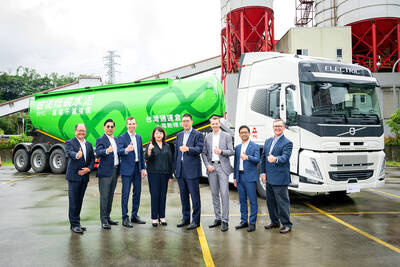
Taiwan Transport and Storage Corp (TTS, 台灣通運倉儲) yesterday unveiled its first electric tractor unit — manufactured by Volvo Trucks — in a ceremony in Taipei, and said the unit would soon be used to transport cement produced by Taiwan Cement Corp (TCC, 台灣水泥). Both TTS and TCC belong to TCC International Holdings Ltd (台泥國際集團). With the electric tractor unit, the Taipei-based cement firm would become the first in Taiwan to use electric vehicles to transport construction materials. TTS chairman Koo Kung-yi (辜公怡), Volvo Trucks vice president of sales and marketing Johan Selven, TCC president Roman Cheng (程耀輝) and Taikoo Motors Group

Among the rows of vibrators, rubber torsos and leather harnesses at a Chinese sex toys exhibition in Shanghai this weekend, the beginnings of an artificial intelligence (AI)-driven shift in the industry quietly pulsed. China manufactures about 70 percent of the world’s sex toys, most of it the “hardware” on display at the fair — whether that be technicolor tentacled dildos or hyper-realistic personalized silicone dolls. Yet smart toys have been rising in popularity for some time. Many major European and US brands already offer tech-enhanced products that can enable long-distance love, monitor well-being and even bring people one step closer to
RECORD-BREAKING: TSMC’s net profit last quarter beat market expectations by expanding 8.9% and it was the best first-quarter profit in the chipmaker’s history Taiwan Semiconductor Manufacturing Co (TSMC, 台積電), which counts Nvidia Corp as a key customer, yesterday said that artificial intelligence (AI) server chip revenue is set to more than double this year from last year amid rising demand. The chipmaker expects the growth momentum to continue in the next five years with an annual compound growth rate of 50 percent, TSMC chief executive officer C.C. Wei (魏哲家) told investors yesterday. By 2028, AI chips’ contribution to revenue would climb to about 20 percent from a percentage in the low teens, Wei said. “Almost all the AI innovators are working with TSMC to address the

Malaysia’s leader yesterday announced plans to build a massive semiconductor design park, aiming to boost the Southeast Asian nation’s role in the global chip industry. A prominent player in the semiconductor industry for decades, Malaysia accounts for an estimated 13 percent of global back-end manufacturing, according to German tech giant Bosch. Now it wants to go beyond production and emerge as a chip design powerhouse too, Malaysian Prime Minister Anwar Ibrahim said. “I am pleased to announce the largest IC (integrated circuit) Design Park in Southeast Asia, that will house world-class anchor tenants and collaborate with global companies such as Arm [Holdings PLC],”


 RSS
RSS