


Tesla Inc’s factory near Berlin faces no major hurdles before getting the final green light to start producing electric vehicles next year, the premier of the state where it is being built said.
Public hearings into the plant in Brandenburg were off to a rocky start and have taken nearly two weeks instead of two days.
Environmentalists and local residents have grilled authorities on hundreds of issues from deforestation and water usage to increased truck traffic and noise pollution.
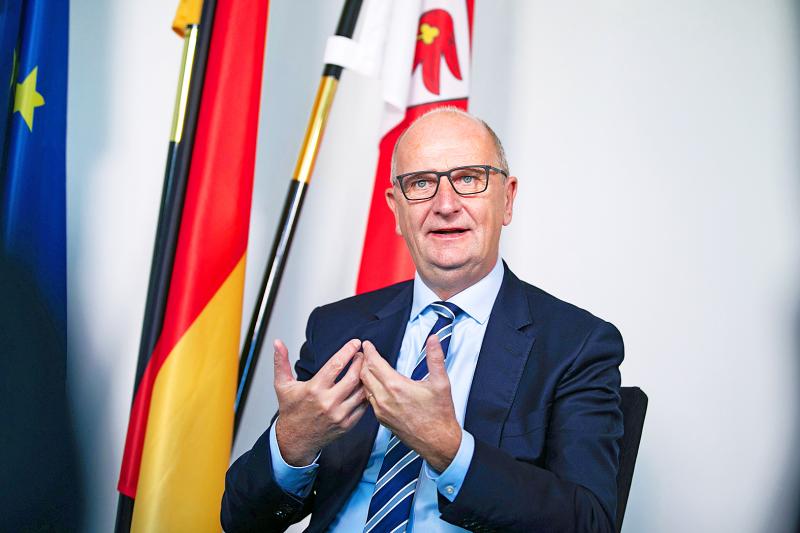
Photo: Bloomberg
Despite the drawn-out process, Brandenburg Premier Dietmar Woidke said that he is not concerned and expects the project to progress as planned.
“As of now, I know of no problem that would stand in the way of the construction permit,” Woidke told Bloomberg News at the state government’s headquarters in Potsdam.
“My assumption is that a legally sound permission is possible here,” he said.
The plant, Tesla’s first in Europe, is slated to start production next summer and could assemble as many as 500,000 vehicles per year. Several structures have already been erected at the site in Gruenheide, which Tesla chief executive officer Elon Musk visited last month.
The factory is a major investment in the former communist region and a test for Germany’s efforts to speed up its notoriously slow-moving bureaucracy.
Musk announced the plan to challenge the likes of Volkswagen AG, BMW AG and Daimler AG’s Mercedes-Benz in their own back yard less than a year ago. Despite hurdles, including concerns about wildlife, the project has remained on track.
Tesla’s investment dovetails with the state’s growing focus on cleaner transport and renewable energy. Rolls-Royce Holdings PLC is developing low-emissions aircraft engines in the state surrounding Berlin, and BASF SE is producing components for vehicle batteries there.
Talks are under way to bring more big-name companies to Brandenburg, Woidke said, declining to provide specifics.
“We don’t go public with the beginning of every talks,” he said.
The state has renewable energy capacity — predominantly wind power — equivalent to 130 percent of its needs, an incentive for manufacturers that are under pressure to lower their carbon footprint, Woidke said.
To be in position to better leverage its clean-energy resources, the state is lobbying German Chancellor Angela Merkel’s government to reduce a mandatory “green levy.”
Consumers and companies in Germany pay mandatory charges on all power used to support the build out of clean energy.
The surcharge has helped make German electricity the most expensive in Europe and is pushing up the potential costs of companies like Tesla to tap wind and solar, Woidke said.
Brandenburg and EON SE’s Edis unit are in talks with Tesla to supply the plant with renewable energy, the premier said.
Using green power locally to support industry would cut the costs of Merkel’s sweeping plan to build a “super highway” grid taking green power from Germany’s Baltic and North sea coasts to industrial areas in the south, he said.
Furthermore, fostering local consumption would counter resistance to local wind parks, he said.
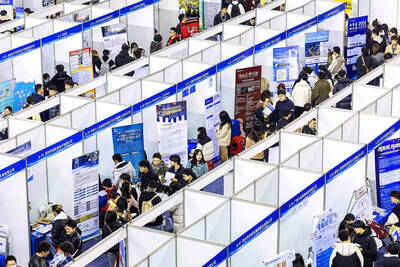
Stephen Garrett, a 27-year-old graduate student, always thought he would study in China, but first the country’s restrictive COVID-19 policies made it nearly impossible and now he has other concerns. The cost is one deterrent, but Garrett is more worried about restrictions on academic freedom and the personal risk of being stranded in China. He is not alone. Only about 700 American students are studying at Chinese universities, down from a peak of nearly 25,000 a decade ago, while there are nearly 300,000 Chinese students at US schools. Some young Americans are discouraged from investing their time in China by what they see
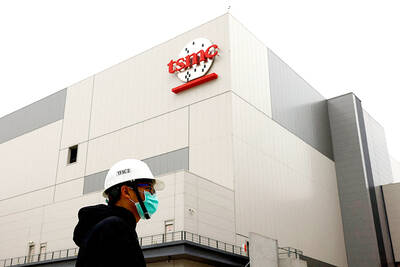
Taiwan Semiconductor Manufacturing Co (TSMC, 台積電), the world’s largest contract chipmaker, yesterday reported record sales for the first quarter, which analysts attributed to solid demand for emerging technologies. Consolidated revenue totaled NT$592.64 billion (US$18.51 billion) in the January-to-March period, up 16.5 percent from a year earlier, but down 5.26 percent from the previous quarter, TSMC said in a statement. The first-quarter revenue beat analysts’ average projection of NT$579.5 billion, Bloomberg News reported. That performance lends weight to expectations that the world’s most valuable chipmaker would return to solid growth this year after weathering a post-COVID-19-pandemic cratering of smartphone and computer sales. TSMC is budgeting

MAJOR DROP: CEO Tim Cook, who is visiting Hanoi, pledged the firm was committed to Vietnam after its smartphone shipments declined 9.6% annually in the first quarter Apple Inc yesterday said it would increase spending on suppliers in Vietnam, a key production hub, as CEO Tim Cook arrived in the country for a two-day visit. The iPhone maker announced the news in a statement on its Web site, but gave no details of how much it would spend or where the money would go. Cook is expected to meet programmers, content creators and students during his visit, online newspaper VnExpress reported. The visit comes as US President Joe Biden’s administration seeks to ramp up Vietnam’s role in the global tech supply chain to reduce the US’ dependence on China. Images on
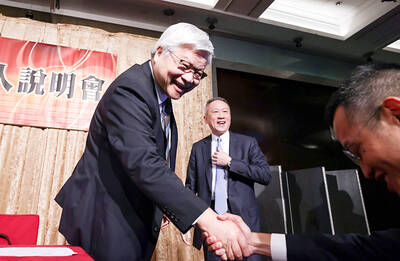
US CONSCULTANT: The US Department of Commerce’s Ursula Burns is a rarely seen US government consultant to be put forward to sit on the board, nominated as an independent director Taiwan Semiconductor Manufacturing Co (TSMC, 台積電), the world’s largest contract chipmaker, yesterday nominated 10 candidates for its new board of directors, including Ursula Burns from the US Department of Commerce. It is rare that TSMC has nominated a US government consultant to sit on its board. Burns was nominated as one of seven independent directors. She is vice chair of the department’s Advisory Council on Supply Chain Competitiveness. Burns is to stand for election at TSMC’s annual shareholders’ meeting on June 4 along with the rest of the candidates. TSMC chairman Mark Liu (劉德音) was not on the list after in December last


 RSS
RSS