


US President Donald Trump on Thursday moved to reimpose 10 percent tariffs on some Canadian aluminum products to protect US industry from a “surge” in imports, angering Ottawa and some US business groups.
Canada pledged retaliation as tensions heightened between the close allies just weeks after a new continental trade deal between the US, Mexico and Canada came into effect.
During a speech at a Whirlpool Corp washing machine factory in Ohio to tout his “America First” trade agenda, Trump said he signed a proclamation reimposing the “Section 232” national security tariffs.

Photo: Reuters
The step was “absolutely necessary to defend our aluminum industry,” he said.
Ohio is a critical swing state that Trump won in 2016. Polling shows a tight race with former US vice president Joe Biden, the presumptive Democratic presidential candidate, in the state ahead of the Nov. 3 presidential election. Trump trails Biden in national polls and is competing with him for blue-collar working class voters.
The tariff announcement could be aimed at showing those voters he intends to fight for their jobs and upend trade policy further if he remains in office.
However, some prominent business groups criticized the move as counterproductive and unhelpful to US interests.
The Office of the US Trade Representative said the 10 percent tariffs apply to raw, unalloyed aluminum produced at smelters. The tariffs do not apply to downstream aluminum products.
“Several months ago, my administration agreed to lift those tariffs in return for a promise from the Canadian government that its aluminum industry would not flood our country with exports and kill all our aluminum jobs, which is exactly what they’ve done,” Trump said. “Canadian aluminum producers have broken their commitment.”
Canada has a natural advantage in primary aluminum production because of its ample supply of hydroelectric power.
Canadian Deputy Prime Minister Chrystia Freeland said the tariffs would hurt workers and regional economies already hit by the COVID-19 pandemic and pledged Ottawa would retaliate as it had done in 2018, when Trump first imposed punitive measures on Canadian steel and aluminum.
“In response to the American tariffs, Canada intends to swiftly impose dollar-for-dollar countermeasures,” Freeland said in a statement.
Freeland, in charge of overall relations with Washington, would formally respond to the tariffs at 11am yesterday, her office said in a statement.
Rio Tinto, Canada’s largest aluminum producer, said the tariffs are “unfortunate” as they only increase prices for US consumers and undermine market confidence in secure supplies of aluminium in North America.
In 2018, Canada slapped tariffs on C$16.6 billion (US$12.44 billion) of US goods ranging from bourbon to ketchup. Trump lifted the sanctions last year.
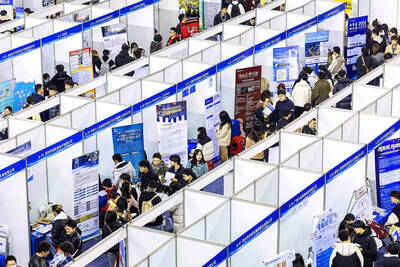
Stephen Garrett, a 27-year-old graduate student, always thought he would study in China, but first the country’s restrictive COVID-19 policies made it nearly impossible and now he has other concerns. The cost is one deterrent, but Garrett is more worried about restrictions on academic freedom and the personal risk of being stranded in China. He is not alone. Only about 700 American students are studying at Chinese universities, down from a peak of nearly 25,000 a decade ago, while there are nearly 300,000 Chinese students at US schools. Some young Americans are discouraged from investing their time in China by what they see
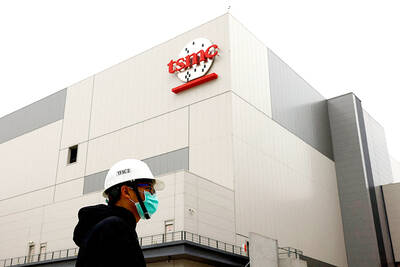
Taiwan Semiconductor Manufacturing Co (TSMC, 台積電), the world’s largest contract chipmaker, yesterday reported record sales for the first quarter, which analysts attributed to solid demand for emerging technologies. Consolidated revenue totaled NT$592.64 billion (US$18.51 billion) in the January-to-March period, up 16.5 percent from a year earlier, but down 5.26 percent from the previous quarter, TSMC said in a statement. The first-quarter revenue beat analysts’ average projection of NT$579.5 billion, Bloomberg News reported. That performance lends weight to expectations that the world’s most valuable chipmaker would return to solid growth this year after weathering a post-COVID-19-pandemic cratering of smartphone and computer sales. TSMC is budgeting
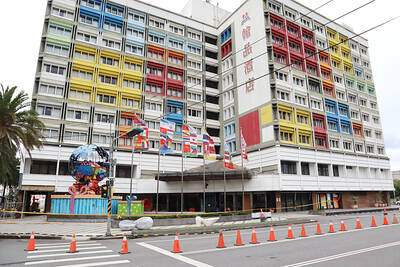
HUALIEN BRANCH: The company had been planning to rebuild the hotel before it was damaged in the quake and vowed to give affected employees the option to transfer The owner of Chateau de Chine Hualien (花蓮翰品酒店) is planning to lay off 86 workers after shutting down the hotel due to damage it sustained in a powerful earthquake on Wednesday last week, the Ministry of Labor said yesterday. The hotel has submitted a layoff report to the Hualien County Government and expects to let 69 workers go this month and 17 next month, the ministry said. LDC Hotels & Resorts Group (雲朗觀光集團), the owner of Chateau de Chine Hualien, confirmed the layoff plan in a statement yesterday. LDC said the hotel has been closed since Wednesday last week when the temblor occurred
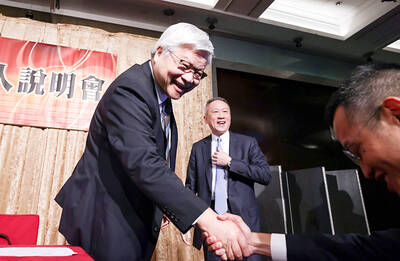
US CONSCULTANT: The US Department of Commerce’s Ursula Burns is a rarely seen US government consultant to be put forward to sit on the board, nominated as an independent director Taiwan Semiconductor Manufacturing Co (TSMC, 台積電), the world’s largest contract chipmaker, yesterday nominated 10 candidates for its new board of directors, including Ursula Burns from the US Department of Commerce. It is rare that TSMC has nominated a US government consultant to sit on its board. Burns was nominated as one of seven independent directors. She is vice chair of the department’s Advisory Council on Supply Chain Competitiveness. Burns is to stand for election at TSMC’s annual shareholders’ meeting on June 4 along with the rest of the candidates. TSMC chairman Mark Liu (劉德音) was not on the list after in December last


 RSS
RSS