


The US dollar on Friday firmed against major currencies for a third straight day as investors took shelter in the US currency amid worsening economic fallout from the COVID-19 pandemic.
“As we see poor data coming in from Europe, UK, Italy, if you’re trying to be rushing anywhere, it would be US Treasuries and the US dollar as a safe haven,” said John Doyle, vice president of dealing and trading at Tempus Inc in Washington.
The US dollar largely shrugged off the US non-farm payrolls report that showed massive job losses of 701,000 last month, compared with expectations of 100,000 lost jobs.
Last month’s contraction abruptly ended a historic 113 straight months of employment growth in the US.
The unemployment rate rose to 4.4 percent from 3.5 percent the previous month.
The US Department of Labor also revised February’s number upward to 275,000 job gains.
“The plunge in non-farm payrolls in March, which is already close to the worst monthly declines during the global financial crisis, suggests the coronavirus pandemic started to decimate the economy even sooner than we thought,” Capital Economics Ltd senior US economist Andrew Hunter said.
The non-farm payrolls report followed Thursday’s data showing initial claims for US unemployment benefits rose to 6.65 million in the latest week from an unrevised 3.3 million the previous week.
In Taipei, the New Taiwan dollar fell against the US dollar on Wednesday, losing NT$0.054 to close at NT$30.308, down 0.2 percent from Friday last week. Markets in Taiwan were closed on Thursday and Friday for the Tomb Sweeping Day long weekend.
The US dollar index rose 0.5 percent to 100.68 on Friday. The index posted a 2.4 percent gain on the week, having whipsawed last month from highs on a scramble for cash before slumping as the US Federal Reserve flooded the market with liquidity.
The euro fell 0.4 percent against the US dollar at US$1.0810, for a 2.9 percent weekly loss. Indecision among eurozone governments about a rescue package for the region’s hobbled economies has weakened the euro.
The Japanese yen, Swiss franc, sterling, as well as the Australian and New Zealand dollars all lost ground as the US dollar strengthened across the board.
The US dollar rose 0.5 percent to ¥108.42, up 0.6 percent for the week.
As lockdowns continue, the economic impact of the pandemic is becoming more marked, with purchasing managers’ indices across the eurozone and the UK on Friday showing a slump in business activity.
“The complication is that while all the things that the governments have done are very positive, they’re like extra welfare payments and they can’t do anything more than that,” Adrian Lee & Partners president and chief investment officer Adrian Lee said.
Additional reporting by staff writer, with CNA

Stephen Garrett, a 27-year-old graduate student, always thought he would study in China, but first the country’s restrictive COVID-19 policies made it nearly impossible and now he has other concerns. The cost is one deterrent, but Garrett is more worried about restrictions on academic freedom and the personal risk of being stranded in China. He is not alone. Only about 700 American students are studying at Chinese universities, down from a peak of nearly 25,000 a decade ago, while there are nearly 300,000 Chinese students at US schools. Some young Americans are discouraged from investing their time in China by what they see

MAJOR DROP: CEO Tim Cook, who is visiting Hanoi, pledged the firm was committed to Vietnam after its smartphone shipments declined 9.6% annually in the first quarter Apple Inc yesterday said it would increase spending on suppliers in Vietnam, a key production hub, as CEO Tim Cook arrived in the country for a two-day visit. The iPhone maker announced the news in a statement on its Web site, but gave no details of how much it would spend or where the money would go. Cook is expected to meet programmers, content creators and students during his visit, online newspaper VnExpress reported. The visit comes as US President Joe Biden’s administration seeks to ramp up Vietnam’s role in the global tech supply chain to reduce the US’ dependence on China. Images on
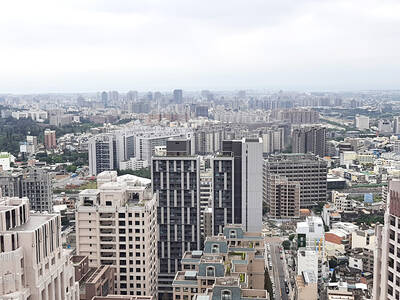
New apartments in Taiwan’s major cities are getting smaller, while old apartments are increasingly occupied by older people, many of whom live alone, government data showed. The phenomenon has to do with sharpening unaffordable property prices and an aging population, property brokers said. Apartments with one bedroom that are two years old or older have gained a noticeable presence in the nation’s six special municipalities as well as Hsinchu county and city in the past five years, Evertrust Rehouse Co (永慶房產集團) found, citing data from the government’s real-price transaction platform. In Taipei, apartments with one bedroom accounted for 19 percent of deals last
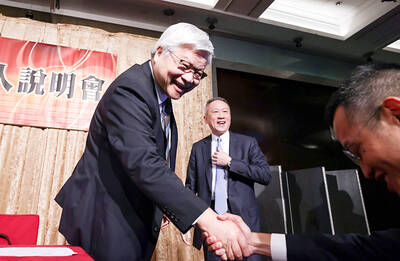
US CONSCULTANT: The US Department of Commerce’s Ursula Burns is a rarely seen US government consultant to be put forward to sit on the board, nominated as an independent director Taiwan Semiconductor Manufacturing Co (TSMC, 台積電), the world’s largest contract chipmaker, yesterday nominated 10 candidates for its new board of directors, including Ursula Burns from the US Department of Commerce. It is rare that TSMC has nominated a US government consultant to sit on its board. Burns was nominated as one of seven independent directors. She is vice chair of the department’s Advisory Council on Supply Chain Competitiveness. Burns is to stand for election at TSMC’s annual shareholders’ meeting on June 4 along with the rest of the candidates. TSMC chairman Mark Liu (劉德音) was not on the list after in December last


 RSS
RSS