


It is not just oil taking a hit from the COVID-19 pandemic, forecasts for energy generated from wind and solar are being pummeled, too.
Reports issued this month by Morgan Stanley, Wood Mackenzie and Rystad Energy project sharp cutbacks for wind, solar and battery growth in the US and beyond this year as cities impose lockdowns and economies stagnate.
It is a reversal for sectors that were expected to have banner years. Declining battery costs have made energy storage more attractive to US businesses, while solar was poised to benefit from mounting demand from homeowners who live in California and other places prone to wildfires, dangerous storms and power shut-offs.
Rystad Energy expects global growth of wind and solar energy will be wiped out this year as the US dollar rises and other currencies fall amid the pandemic, driving up project costs.
Projects in Australia, Brazil, Mexico and South Africa would be hardest hit as their currencies depreciate against the US dollar, Rystad said in a report on Friday.
The Oslo-based research company forecast that wind and solar growth would be cut by an additional 10 percent next year.
Morgan Stanley projected that US residential-solar volumes might plummet 48 percent in the second quarter.
The pain is expected to linger.
Analysts at the investment bank estimated year-over-year declines of 28 percent and 17 percent in the third and fourth quarters respectively.
It is not just lockdowns slowing sales of rooftop panels.
Morgan Stanley said that the industry is being hurt by a slump in housing starts and by people indicating that they might postpone or cancel home renovations.
Wood Mackenzie has scaled back its forecast for behind-the-meter batteries in the US by 31 percent. It previously expected 632 megawatts would be installed this year; now it forecasts 436 megawatts.
That is still up from the 272 megawatts installed last year.
Among the reasons the research company cites for the reduced forecast are supply issues, travel bans and lockdowns that present hurdles for projects that need workers on site. If delays drag on long enough, they could make some projects ineligible for tax credits and destroy their economics.
Separately, GCL System Integration Technology Co (協鑫集成科技) plans to build the world’s biggest solar-panel manufacturing plant, with capacity to meet half of global demand.
The Chinese manufacturer plans to invest 18 billion yuan (US$2.54 billion) to construct a facility in eastern Hebei Province that would produce enough solar panels each year to generate 60 gigawatts, GCL System said in a filing with the Shenzhen Stock Exchange on Friday.
It did not provide a timeline.
The plant’s maximum output is double the 30 gigawatts of capacity installed in China last year and would be able to supply almost 51 percent of solar installations worldwide.
The project would boost GCL System’s ability to produce panels more than ninefold from 7.2 gigawatts, Bloomberg New Energy Finance data showed.
The world’s biggest solar-panel maker, JinkoSolar Holding Co (晶科能源), has 16 gigawatts of capacity.
Chinese solar manufacturers have announced expansion plans in recent months amid a push to boost market share and reduce costs, which analysts say could signal more pain ahead for the industry.
GCL System said it would spend 5 billion yuan on the first phase of the project, for 15 gigawatts of production capacity.
Three phases would be implemented later, with the timing based on sales and utilization of the facility, it said.
The company said it wants to seize opportunities that are emerging with solar-power costs now closer to coal power and meet demand for larger photovoltaic panels.
GCL System would use loans and its own funds to finance the investment, it said.
The company had a market value of almost 17 billion yuan as of Friday. It had 4.03 billion yuan in cash as of the end of the third quarter last year.

Stephen Garrett, a 27-year-old graduate student, always thought he would study in China, but first the country’s restrictive COVID-19 policies made it nearly impossible and now he has other concerns. The cost is one deterrent, but Garrett is more worried about restrictions on academic freedom and the personal risk of being stranded in China. He is not alone. Only about 700 American students are studying at Chinese universities, down from a peak of nearly 25,000 a decade ago, while there are nearly 300,000 Chinese students at US schools. Some young Americans are discouraged from investing their time in China by what they see
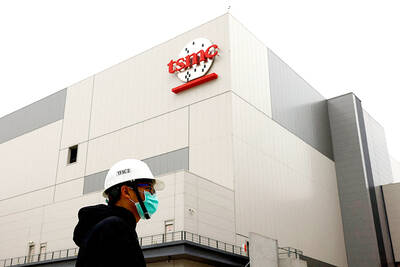
Taiwan Semiconductor Manufacturing Co (TSMC, 台積電), the world’s largest contract chipmaker, yesterday reported record sales for the first quarter, which analysts attributed to solid demand for emerging technologies. Consolidated revenue totaled NT$592.64 billion (US$18.51 billion) in the January-to-March period, up 16.5 percent from a year earlier, but down 5.26 percent from the previous quarter, TSMC said in a statement. The first-quarter revenue beat analysts’ average projection of NT$579.5 billion, Bloomberg News reported. That performance lends weight to expectations that the world’s most valuable chipmaker would return to solid growth this year after weathering a post-COVID-19-pandemic cratering of smartphone and computer sales. TSMC is budgeting
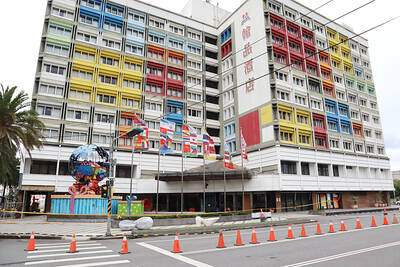
HUALIEN BRANCH: The company had been planning to rebuild the hotel before it was damaged in the quake and vowed to give affected employees the option to transfer The owner of Chateau de Chine Hualien (花蓮翰品酒店) is planning to lay off 86 workers after shutting down the hotel due to damage it sustained in a powerful earthquake on Wednesday last week, the Ministry of Labor said yesterday. The hotel has submitted a layoff report to the Hualien County Government and expects to let 69 workers go this month and 17 next month, the ministry said. LDC Hotels & Resorts Group (雲朗觀光集團), the owner of Chateau de Chine Hualien, confirmed the layoff plan in a statement yesterday. LDC said the hotel has been closed since Wednesday last week when the temblor occurred
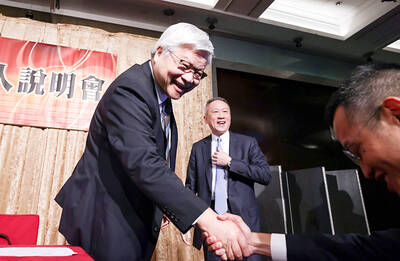
US CONSCULTANT: The US Department of Commerce’s Ursula Burns is a rarely seen US government consultant to be put forward to sit on the board, nominated as an independent director Taiwan Semiconductor Manufacturing Co (TSMC, 台積電), the world’s largest contract chipmaker, yesterday nominated 10 candidates for its new board of directors, including Ursula Burns from the US Department of Commerce. It is rare that TSMC has nominated a US government consultant to sit on its board. Burns was nominated as one of seven independent directors. She is vice chair of the department’s Advisory Council on Supply Chain Competitiveness. Burns is to stand for election at TSMC’s annual shareholders’ meeting on June 4 along with the rest of the candidates. TSMC chairman Mark Liu (劉德音) was not on the list after in December last


 RSS
RSS