


DBS Bank Ltd yesterday hacked its GDP growth forecast for Taiwan this year to 0.9 percent, down from its estimate of 2.3 percent two months earlier, in light of the COVID-19 pandemic and increasing financial market volatility.
The bank’s latest forecast was even lower than London-based IHS Markit Ltd’s estimate of 1 percent, while other research institutes’ projections range from 1.6 percent to 2.6 percent.
Taiwan’s economic momentum is being negatively affected by the pandemic, DBS said.
The rapid spread of the disease from Asia to Europe and the US has dampened the bank’s previous expectation of a “V-shaped” global rebound in the second quarter aided by China’s supply chain being restored and a pick-up in demand, DBS economist Ma Tieying (馬鐵英) said in the report.
“Despite China’s recovery, weakness in production and consumption outside of China will likely continue to weigh on the global economy next quarter,” Ma said.
The pandemic has also triggered turbulence in global financial markets, which would negatively affect the real economy, she added.
In Taiwan, an economic downcycle began this quarter due to disruptions to its China-centered supply chain, while outlook for the second quarter is also deteriorating due to decreasing demand from the US and Europe, Ma said.
“The risk of a technical recession is looming,” she said.
DBS also trimmed its GDP growth forecast for South Korea from 2.2 percent to 0.8 percent for the same reason.
If the predictions are accurate, they would be the lowest figures in Taiwan and South Korea since 2009, Ma said.
Japan’s economy, which reported a quarterly contraction of 7.1 percent last quarter, is predicted to enter a recession this year with an annual decline of 0.6 percent due to the effects of COVID-19, Ma said.
Given the negative short-term rates in Japan and lowered rates in South Korea and Taiwan following rate cuts by central banks last week, “the room for further monetary easing is very limited in these three economies,” Ma said.
“Fiscal policy will need to play a bigger role in cushioning the fallout of COVID-19 and supporting growth going forward,” she said.
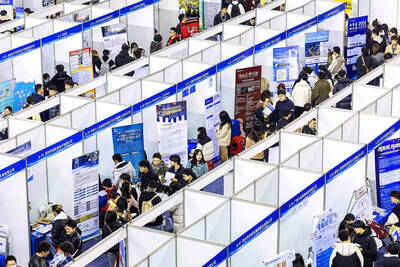
Stephen Garrett, a 27-year-old graduate student, always thought he would study in China, but first the country’s restrictive COVID-19 policies made it nearly impossible and now he has other concerns. The cost is one deterrent, but Garrett is more worried about restrictions on academic freedom and the personal risk of being stranded in China. He is not alone. Only about 700 American students are studying at Chinese universities, down from a peak of nearly 25,000 a decade ago, while there are nearly 300,000 Chinese students at US schools. Some young Americans are discouraged from investing their time in China by what they see

MAJOR DROP: CEO Tim Cook, who is visiting Hanoi, pledged the firm was committed to Vietnam after its smartphone shipments declined 9.6% annually in the first quarter Apple Inc yesterday said it would increase spending on suppliers in Vietnam, a key production hub, as CEO Tim Cook arrived in the country for a two-day visit. The iPhone maker announced the news in a statement on its Web site, but gave no details of how much it would spend or where the money would go. Cook is expected to meet programmers, content creators and students during his visit, online newspaper VnExpress reported. The visit comes as US President Joe Biden’s administration seeks to ramp up Vietnam’s role in the global tech supply chain to reduce the US’ dependence on China. Images on
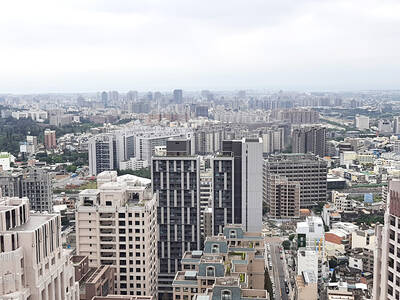
New apartments in Taiwan’s major cities are getting smaller, while old apartments are increasingly occupied by older people, many of whom live alone, government data showed. The phenomenon has to do with sharpening unaffordable property prices and an aging population, property brokers said. Apartments with one bedroom that are two years old or older have gained a noticeable presence in the nation’s six special municipalities as well as Hsinchu county and city in the past five years, Evertrust Rehouse Co (永慶房產集團) found, citing data from the government’s real-price transaction platform. In Taipei, apartments with one bedroom accounted for 19 percent of deals last
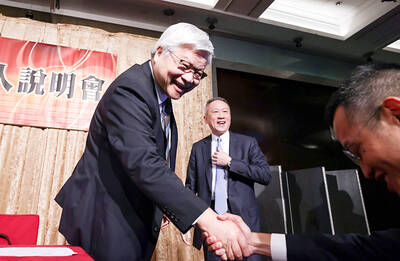
US CONSCULTANT: The US Department of Commerce’s Ursula Burns is a rarely seen US government consultant to be put forward to sit on the board, nominated as an independent director Taiwan Semiconductor Manufacturing Co (TSMC, 台積電), the world’s largest contract chipmaker, yesterday nominated 10 candidates for its new board of directors, including Ursula Burns from the US Department of Commerce. It is rare that TSMC has nominated a US government consultant to sit on its board. Burns was nominated as one of seven independent directors. She is vice chair of the department’s Advisory Council on Supply Chain Competitiveness. Burns is to stand for election at TSMC’s annual shareholders’ meeting on June 4 along with the rest of the candidates. TSMC chairman Mark Liu (劉德音) was not on the list after in December last


 RSS
RSS