


It is a toxic economic mix the US has not seen in three decades: Prices are speeding upward at the fastest pace in a quarter century, even as the economy loses steam.
Economists call the disease "stagflation," and they are worried it might be coming back.
Already, paychecks are not stretching as far, and jobs are harder to find, threatening to set off a vicious cycle that could make things even worse.
The economy nearly stalled in the final three months of last year and probably is barely growing or even shrinking now. That is the "stagnation" part of the ailment. Typically, that slowdown should slow inflation as well -- the second part of the diagnosis -- but prices are still marching higher.
The latest worrisome news came on Tuesday -- a government report showing wholesale prices climbed 7.4 percent in the past year. That was the biggest annual leap since 1981.
slowdown
"We're in a slowdown," Press Secretary Dana Perino said at the White House, where the economics talk was still upbeat until recently.
Once the twin evils of stagflation take hold, it can be hard to break the grip. People cut back on their spending as they are stung by rising prices and shriveling wages. Businesses, also socked by rising costs and declining demand from customers, clamp down on hiring and capital investment.
That would be a nightmare scenario for Wall Street investors, businesses, politicians and most everyone else. They're already looking to the US Federal Reserve for help, but the Fed's job is complicated by the situation.
The mission of Fed Chairman Ben Bernanke and his colleagues is to nurture economic growth and keep inflation under control. To brace the teetering economy, the Fed since September has been ratcheting down its key interest rate. Another cut is expected next month.
However, to combat inflation, the Fed would be expected to boost rates instead.
"The Fed has its hands full. It is preoccupied with the economic slowdown at the front door, but inflation looks to be sneaking in the back door," said Greg McBride, senior financial analyst at Bankrate.com.
"If that trend continues, the Fed would need to show the economy some tough love, meaning higher interest rates to keep inflation from getting out of hand," McBride said.
On the other hand, Brian Bethune, an economist at Global Insight, said Bernanke can fight only one war at a time, and the more pressing issue right now is to shore up the ailing economy.
"That's the war that needs to be fought. The war on inflation will have to come another day," Bethune said.
Maybe things won't be so bad. Stock prices rose on Tuesday, continuing a recent mini-rally. And Fed Vice Chairman Donald Kohn said in a speech that he did not expect the recent elevated inflation readings to persist.
"But the recent information on prices underlines the need to continue to monitor the inflation situation very carefully," he added.
concerns
Some numbers underscore the concerns:
Prices paid by consumers were up 4.1 percent over the past year, the biggest increase in 17 years. Those higher prices -- especially for heating homes and filling up gas tanks -- are taking an ever bigger bite out of paychecks. Workers' weekly earnings were down 1.4 percent from a year ago when adjusted for that inflation.
Oil prices galloped past US$100 a barrel to close at a record US$100.88 on Tuesday. Those lofty energy prices are a double-edged sword: They can spread inflation through the economy by boosting the prices of lots of other goods and services, and they can leave people with less money to spend on other things, thus slowing overall economic activity. There are signs high energy prices are causing some damage on both of those fronts.
People are hunkering down. Earlier this month, nervous shoppers handed the nation's retailers their worst January in almost four decades. High gas and food prices, the toll of the housing bust, the credit crunch and a tougher job market all were to blame.
Can a serious bout of stagflation be avoided? Many economists believe the Fed's aggressive rate cuts along with tax rebates for people and tax breaks for businesses will lift the US economy in the second half of the year.
Until then, analysts warn that it could feel like country is suffering through a mild case of stagflation -- even if technically that is not the case.
"It could feel like a bad flu," Bethune said.
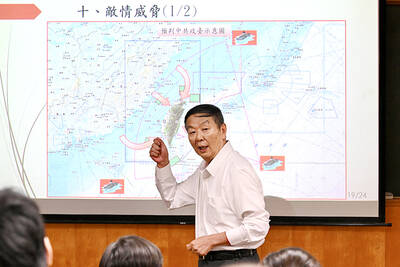
RETHINK? The defense ministry and Navy Command Headquarters could take over the indigenous submarine project and change its production timeline, a source said Admiral Huang Shu-kuang’s (黃曙光) resignation as head of the Indigenous Submarine Program and as a member of the National Security Council could affect the production of submarines, a source said yesterday. Huang in a statement last night said he had decided to resign due to national security concerns while expressing the hope that it would put a stop to political wrangling that only undermines the advancement of the nation’s defense capabilities. Taiwan People’s Party Legislator Vivian Huang (黃珊珊) yesterday said that the admiral, her older brother, felt it was time for him to step down and that he had completed what he
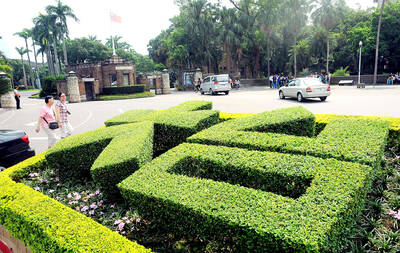
Taiwan has experienced its most significant improvement in the QS World University Rankings by Subject, data provided on Sunday by international higher education analyst Quacquarelli Symonds (QS) showed. Compared with last year’s edition of the rankings, which measure academic excellence and influence, Taiwanese universities made great improvements in the H Index metric, which evaluates research productivity and its impact, with a notable 30 percent increase overall, QS said. Taiwanese universities also made notable progress in the Citations per Paper metric, which measures the impact of research, achieving a 13 percent increase. Taiwanese universities gained 10 percent in Academic Reputation, but declined 18 percent
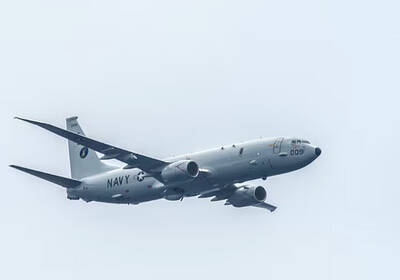
CHINA REACTS: The patrol and reconnaissance plane ‘transited the Taiwan Strait in international airspace,’ the 7th Fleet said, while Taipei said it saw nothing unusual The US 7th Fleet yesterday said that a US Navy P-8A Poseidon flew through the Taiwan Strait, a day after US and Chinese defense heads held their first talks since November 2022 in an effort to reduce regional tensions. The patrol and reconnaissance plane “transited the Taiwan Strait in international airspace,” the 7th Fleet said in a news release. “By operating within the Taiwan Strait in accordance with international law, the United States upholds the navigational rights and freedoms of all nations.” In a separate statement, the Ministry of National Defense said that it monitored nearby waters and airspace as the aircraft
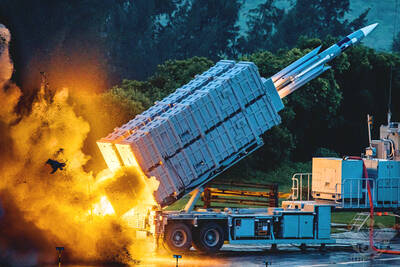
UNDER DISCUSSION: The combatant command would integrate fast attack boat and anti-ship missile groups to defend waters closest to the coastline, a source said The military could establish a new combatant command as early as 2026, which would be tasked with defending Taiwan’s territorial waters 24 nautical miles (44.4km) from the nation’s coastline, a source familiar with the matter said yesterday. The new command, which would fall under the Naval Command Headquarters, would be led by a vice admiral and integrate existing fast attack boat and anti-ship missile groups, along with the Naval Maritime Surveillance and Reconnaissance Command, said the source, who asked to remain anonymous. It could be launched by 2026, but details are being discussed and no final timetable has been announced, the source


 RSS
RSS