


Intel Corp is betting on a big expansion of "ultra-mobile" computing, an idea that could hinge on how many gadgets people are willing to tote around.
In an interview on Monday at the International Consumer Electronics Show (CES), Intel CEO Paul Otellini said energy-efficient, Web-connected computers with full keyboards and screens in the 10cm (4-inch) neighborhood can give people more of what they want from the Internet than cellphones can.
To help stimulate the technology, Intel plans in the next few months to begin shipping processors and associated "chipsets" that demand relatively little power and are smaller than standard PC processors, allowing them to be crammed into tinier devices, which would be built by other companies.
Eyeing a similar market, wireless chip maker Qualcomm Inc also has built prototypes of little Web devices.
Its chief operating officer, Sanjay Jha, said he expects manufacturers to take up the blueprints and begin selling what he calls "pocketable computers" by the end of this year.
So far, so-called ultra-mobile computers, smaller than average laptops but bigger and more fully featured than most cellphones, have gotten a tepid response.
With the devices' prices often beyond US$1,000, many potential buyers have found little reason to scale down from their notebook computers or up from cellphones that have been improving their Web browsing experience.
"How do you make people realize that this is something advantageous to them and different from the notebook experience?" said Richard Shim, an analyst with market researcher IDC.
"That's the trick. Nobody's been very good at that yet. ... It's not as widely compelling as it needs to be if they want it to compete on the level of a phone or a PC," Shim said.
But Otellini said such distinctions will cease to matter, especially since small Web devices can incorporate cellphone functions. And he said Apple Inc's iPhone showed that combination devices can be elegant.
"You're projecting an end stage on an early technology," he said. "That's a risky thing to do."
To be sure, even with cellphones in nearly every pocket or purse, another gadget could be appealing if it does something particularly compelling. For example, more and more cellphones play music, but plenty of people also carry MP3 players that do the job better.
In a keynote speech on Monday at CES, Otellini tried to show that ultra-mobile PCs -- he prefers the name "mobile Internet devices" to better distinguish them from laptops -- offer a new kind of information-on-the-go bliss.
He demonstrated how a US traveler to Beijing might use a pocket computer to get real-time navigation tips and instant translations of signs, menus and conversation from Chinese.
Otellini acknowledged that this vision for ultra-mobile computing might not be fully realized for a few years.
For one thing, little PCs need longer battery lives so people can tote them around and use them all day.
Intel also expects wireless broadband networks based on the WiMAX standard will develop much further to enable connectivity on the devices. But Otellini said the computers could also make use of cellular networks.
That is the connectivity route favored by Qualcomm, which is a major supplier to the wireless industry. Jha said wireless carriers first will need to come up with more enticing data pricing plans.
Proof that wireless carriers will be crucial is in the weak reception for Sony Corp's Mylo handheld messaging device. Though it has a full keyboard and sells for around US$300, it can go online only in Wi-Fi hot spots, which have limited range.
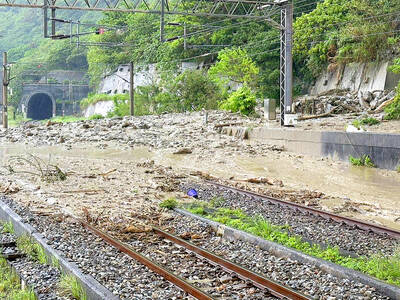
ROLLER-COASTER RIDE: More than five earthquakes ranging from magnitude 4.4 to 5.5 on the Richter scale shook eastern Taiwan in rapid succession yesterday afternoon Back-to-back weather fronts are forecast to hit Taiwan this week, resulting in rain across the nation in the coming days, the Central Weather Administration said yesterday, as it also warned residents in mountainous regions to be wary of landslides and rockfalls. As the first front approached, sporadic rainfall began in central and northern parts of Taiwan yesterday, the agency said, adding that rain is forecast to intensify in those regions today, while brief showers would also affect other parts of the nation. A second weather system is forecast to arrive on Thursday, bringing additional rain to the whole nation until Sunday, it
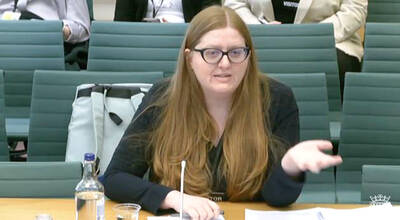
CONDITIONAL: The PRC imposes secret requirements that the funding it provides cannot be spent in states with diplomatic relations with Taiwan, Emma Reilly said China has been bribing UN officials to obtain “special benefits” and to block funding from countries that have diplomatic ties with Taiwan, a former UN employee told the British House of Commons on Tuesday. At a House of Commons Foreign Affairs Committee hearing into “international relations within the multilateral system,” former Office of the UN High Commissioner for Human Rights (OHCHR) employee Emma Reilly said in a written statement that “Beijing paid bribes to the two successive Presidents of the [UN] General Assembly” during the two-year negotiation of the Sustainable Development Goals. Another way China exercises influence within the UN Secretariat is
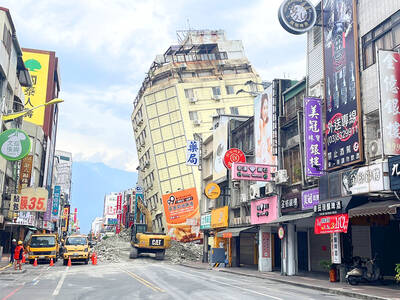
LANDSLIDES POSSIBLE: The agency advised the public to avoid visiting mountainous regions due to more expected aftershocks and rainfall from a series of weather fronts A series of earthquakes over the past few days were likely aftershocks of the April 3 earthquake in Hualien County, with further aftershocks to be expected for up to a year, the Central Weather Administration (CWA) said yesterday. Based on the nation’s experience after the quake on Sept. 21, 1999, more aftershocks are possible over the next six months to a year, the agency said. A total of 103 earthquakes of magnitude 4 on the local magnitude scale or higher hit Hualien County from 5:08pm on Monday to 10:27am yesterday, with 27 of them exceeding magnitude 5. They included two, of magnitude
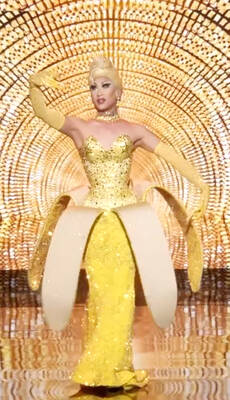
Taiwan’s first drag queen to compete on the internationally acclaimed RuPaul’s Drag Race, Nymphia Wind (妮妃雅), was on Friday crowned the “Next Drag Superstar.” Dressed in a sparkling banana dress, Nymphia Wind swept onto the stage for the final, and stole the show. “Taiwan this is for you,” she said right after show host RuPaul announced her as the winner. “To those who feel like they don’t belong, just remember to live fearlessly and to live their truth,” she said on stage. One of the frontrunners for the past 15 episodes, the 28-year-old breezed through to the final after weeks of showcasing her unique


 RSS
RSS