


Global financial company Citigroup was cleared yesterday of insider trading and conflict of interest charges in Australia, in a case that challenged measures investment banks around the world use to separate their share trading and adviser roles.
Federal Court Judge Peter Jacobson rejected allegations by the Australian government's corporate watchdog that Citigroup broke the law when it bought and sold shares in a company that it was advising another company about taking over.
The judge also rejected the watchdog's charge that actions stemming from a trader's conversation with his boss during a cigarette break on the street amounted to insider trading -- and by extension that so-called Chinese walls do not work.
The civil case, the first of its kind in Australia, was closely watched by regulators and investment banks around the world.
It was considered a test case on conflict of interest laws and the effectiveness of Chinese walls, which separate a broker's trading activities from its corporate advisory and finance operations.
Citigroup and investor groups welcomed the ruling as settling uncertainty.
Other analysts said that the ruling raised concern that the law still allowed suspect practices to occur.
"It is certainly an enormous setback for the regulator, which staked its reputation in taking a case which had a strong moral foundation but a weak legal one," Justin O'Brien, an expert in corporate governance and ethics at the Australian National University, told Dow Jones Newswires.
The Australian Securities and Investment Commission (ASIC), which launched the case, did not immediately comment.
The case centered on two Australian transport logistics companies and a single day's trading.
New York-based Citigroup was advising one of the companies -- Toll Holdings Ltd -- on the possible takeover of the other, Patrick Corp.
On Aug. 19, 2005, Citigroup trader Andrew Manchee bought more than 1 million Patrick shares, helping to drive the price higher, the court heard.
Manchee's supervisor Paul Darwell then invited Manchee to join him for a cigarette outside, where he told Manchee to stop buying Patrick shares. When he returned to the office, Manchee sold 193,000 Patrick shares before trading closed.
The next business day, Toll launched a hostile A$6 billion (US$5 billion) bid for Patrick.
ASIC alleged Darwell had supposed that Citigroup was advising Toll after hearing a comment from another executive, Malcolm Sinclair. Citigroup argued there was no evidence that key information had crossed from Sinclair to Darwell, and then to Manchee.
ASIC alleged that Darwell and Manchee's actions were clumsy attempts to resolve a conflict of interest, and that Citigroup did not have adequate measures to deal with the situation.
Key to ASIC's case was its claim that Citigroup had a fiduciary relationship with Toll that obligated the bank to get permission from the company before trading in Patrick shares.
Citigroup's defense was that the letter of engagement Toll used to hire Citigroup as its adviser "specifically excluded the existence" of a fiduciary relationship.
Jacobson agreed.
"The court held that the law doesn't prevent an investment bank from contracting out of a fiduciary capacity; whether it should be able to do so is a matter for the legislature, not the courts," he said.
The judge said the insider trading charges failed because Manchee could not be considered an officer of Citicorp under the Corporations Act, and that Citigroup's measures to prevent key information being communicated were adequate under the law.
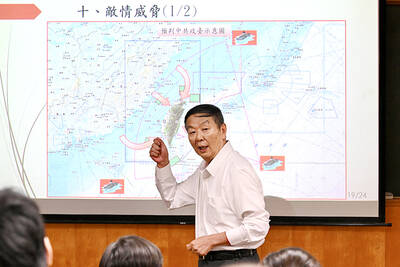
RETHINK? The defense ministry and Navy Command Headquarters could take over the indigenous submarine project and change its production timeline, a source said Admiral Huang Shu-kuang’s (黃曙光) resignation as head of the Indigenous Submarine Program and as a member of the National Security Council could affect the production of submarines, a source said yesterday. Huang in a statement last night said he had decided to resign due to national security concerns while expressing the hope that it would put a stop to political wrangling that only undermines the advancement of the nation’s defense capabilities. Taiwan People’s Party Legislator Vivian Huang (黃珊珊) yesterday said that the admiral, her older brother, felt it was time for him to step down and that he had completed what he
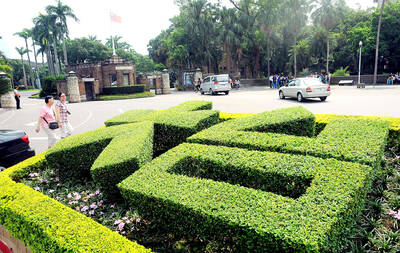
Taiwan has experienced its most significant improvement in the QS World University Rankings by Subject, data provided on Sunday by international higher education analyst Quacquarelli Symonds (QS) showed. Compared with last year’s edition of the rankings, which measure academic excellence and influence, Taiwanese universities made great improvements in the H Index metric, which evaluates research productivity and its impact, with a notable 30 percent increase overall, QS said. Taiwanese universities also made notable progress in the Citations per Paper metric, which measures the impact of research, achieving a 13 percent increase. Taiwanese universities gained 10 percent in Academic Reputation, but declined 18 percent
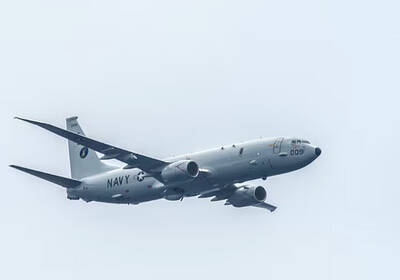
CHINA REACTS: The patrol and reconnaissance plane ‘transited the Taiwan Strait in international airspace,’ the 7th Fleet said, while Taipei said it saw nothing unusual The US 7th Fleet yesterday said that a US Navy P-8A Poseidon flew through the Taiwan Strait, a day after US and Chinese defense heads held their first talks since November 2022 in an effort to reduce regional tensions. The patrol and reconnaissance plane “transited the Taiwan Strait in international airspace,” the 7th Fleet said in a news release. “By operating within the Taiwan Strait in accordance with international law, the United States upholds the navigational rights and freedoms of all nations.” In a separate statement, the Ministry of National Defense said that it monitored nearby waters and airspace as the aircraft
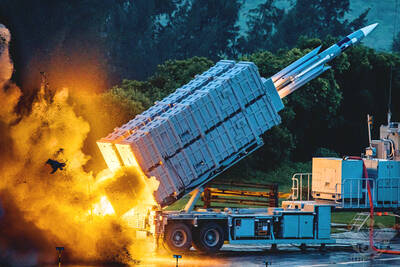
UNDER DISCUSSION: The combatant command would integrate fast attack boat and anti-ship missile groups to defend waters closest to the coastline, a source said The military could establish a new combatant command as early as 2026, which would be tasked with defending Taiwan’s territorial waters 24 nautical miles (44.4km) from the nation’s coastline, a source familiar with the matter said yesterday. The new command, which would fall under the Naval Command Headquarters, would be led by a vice admiral and integrate existing fast attack boat and anti-ship missile groups, along with the Naval Maritime Surveillance and Reconnaissance Command, said the source, who asked to remain anonymous. It could be launched by 2026, but details are being discussed and no final timetable has been announced, the source


 RSS
RSS