


Joe Nacchio, a former AT&T executive tapped to transform Qwest Communications into a major telecommunications competitor, was convicted of 19 of 42 insider trading charges after one-time top executives described his relentless drive to meet revenue projections without revealing financial risks.
A federal jury deliberated six days before concluding on Thursday on 19 counts that the former Qwest chief executive illegally sold US$52 million worth of stock in April and May of 2001, when he knew the company faced financial challenges and relied heavily on one-time sales to meet revenue targets. The jury acquitted him on the other 23 counts stemming from sales in January and February.
US District Judge Edward Nottingham set a July 27 sentencing date for Nacchio, who is free on US$2 million bail. Each count carries a potential penalty of 10 years in prison and a US$1 million fine. Nacchio also could be required to forfeit the US$52 million, although the exact amount will be determined by the judge at sentencing.

PHOTO: AP
"`Convicted felon Joe Nacchio' has a very nice ring to it," said Troy Eid, the US attorney for Colorado.
Prosecutor Cliff Stricklin, who headed the government's team, said he planned to seek prison time for Nacchio.
"We certainly will appeal," defense attorney Herbert Stern said.
Nacchio, who still faces a civil fraud lawsuit, declined to comment. A smile sometimes crossed his face as he left the courthouse arm-in-arm with his wife. They walked away together on a busy downtown street.
The 12 jurors left the courthouse without commenting.
Nacchio, 57, was accused of selling US$101 million worth of stock in the first five months of 2001 based on inside information that Qwest faced financial risks. With the decision, the eight men and four women on the jury turned away Nacchio's claim that he believed in the company's future despite concerns voiced by business managers.
The criminal case stemmed from a years-long government investigation into an accounting scandal at Qwest Communications International Inc, a Denver-based primary telephone service provider in 14 mostly Western states.
Federal regulators have said Qwest falsely reported fiber-optic capacity sales as recurring instead of one-time revenue between April 1999 and March 2002. The practice allowed Qwest to improperly report about US$3 billion in revenue, which helped pave the way for its acquisition of former Baby Bell US West Inc, regulators have alleged. Qwest later restated about US$2.2 billion in revenue.
Jurors convicted Nacchio on counts involving trades he made after April 24, 2001. Those were the first trades that occurred after Qwest released its financial results for the first quarter but did not reveal how much of the revenue came from one-time sales.
"Insider trading is not a victimless crime. It's a crime about fairness," Stricklin said. "Many lost their hopes and dreams while others at Qwest took the easy way out."
Many former US West and Qwest employees and retirees lost savings as Qwest's share price fell precipitously starting in 2001. Some of them applauded the verdict.
Prosecutors wove a circumstantial case against Nacchio based on the testimony of those who worked closely with him -- a former company president, a one-time chief financial officer, an investor relations executive and business unit managers.
Most testified either under grants of immunity in exchange for cooperation or after pleading guilty to a crime, saying they repeatedly warned Nacchio that Qwest would not meet aggressive financial targets for 2001 without relying heavily on revenue from one-time sales that came from a waning market.
Despite their warnings, Nacchio refused to lower forecasts and did not tell the public how much one-time revenue was included in earnings, the witnesses said.
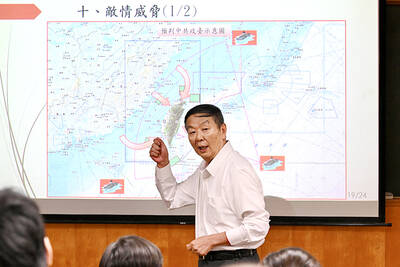
RETHINK? The defense ministry and Navy Command Headquarters could take over the indigenous submarine project and change its production timeline, a source said Admiral Huang Shu-kuang’s (黃曙光) resignation as head of the Indigenous Submarine Program and as a member of the National Security Council could affect the production of submarines, a source said yesterday. Huang in a statement last night said he had decided to resign due to national security concerns while expressing the hope that it would put a stop to political wrangling that only undermines the advancement of the nation’s defense capabilities. Taiwan People’s Party Legislator Vivian Huang (黃珊珊) yesterday said that the admiral, her older brother, felt it was time for him to step down and that he had completed what he
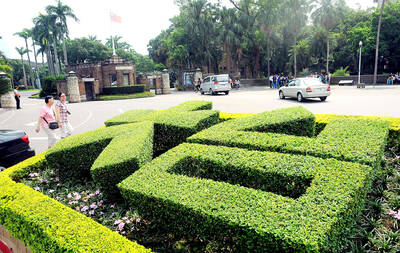
Taiwan has experienced its most significant improvement in the QS World University Rankings by Subject, data provided on Sunday by international higher education analyst Quacquarelli Symonds (QS) showed. Compared with last year’s edition of the rankings, which measure academic excellence and influence, Taiwanese universities made great improvements in the H Index metric, which evaluates research productivity and its impact, with a notable 30 percent increase overall, QS said. Taiwanese universities also made notable progress in the Citations per Paper metric, which measures the impact of research, achieving a 13 percent increase. Taiwanese universities gained 10 percent in Academic Reputation, but declined 18 percent
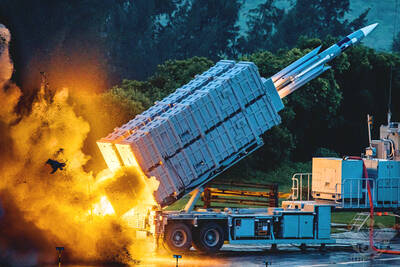
UNDER DISCUSSION: The combatant command would integrate fast attack boat and anti-ship missile groups to defend waters closest to the coastline, a source said The military could establish a new combatant command as early as 2026, which would be tasked with defending Taiwan’s territorial waters 24 nautical miles (44.4km) from the nation’s coastline, a source familiar with the matter said yesterday. The new command, which would fall under the Naval Command Headquarters, would be led by a vice admiral and integrate existing fast attack boat and anti-ship missile groups, along with the Naval Maritime Surveillance and Reconnaissance Command, said the source, who asked to remain anonymous. It could be launched by 2026, but details are being discussed and no final timetable has been announced, the source
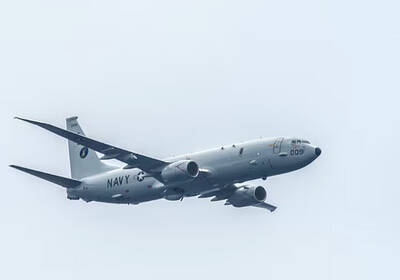
CHINA REACTS: The patrol and reconnaissance plane ‘transited the Taiwan Strait in international airspace,’ the 7th Fleet said, while Taipei said it saw nothing unusual The US 7th Fleet yesterday said that a US Navy P-8A Poseidon flew through the Taiwan Strait, a day after US and Chinese defense heads held their first talks since November 2022 in an effort to reduce regional tensions. The patrol and reconnaissance plane “transited the Taiwan Strait in international airspace,” the 7th Fleet said in a news release. “By operating within the Taiwan Strait in accordance with international law, the United States upholds the navigational rights and freedoms of all nations.” In a separate statement, the Ministry of National Defense said that it monitored nearby waters and airspace as the aircraft


 RSS
RSS