


Asia's developing economies must act quickly to contain overheating and move toward more flexible currencies to ensure sustainable growth, Asian Development Bank's chief economist said yesterday.
"Macroeconomic stabilization is the immediate priority," Ifzal Ali said as the ADB unveiled its annual outlook report forecasting robust growth for developing Asia of 7.6 percent this year and 7.7 percent next year.
Rapid growth
"To stay on this high growth path, Asian countries will have to quickly address macroeconomic stresses that are arising because of the very rapid [8.3 percent] rate of growth in 2006," he told reporters in Tokyo.
Fast growth wa fueling sharp increases in house, equity and consumer prices. The huge foreign currency reserves built up in developing Asia were also inflating their money supplies, leading to asset market bubbles, he said.
"These overheating pressures which are simmering will need to be addressed," Ali said.
"I think the time has now come for developing Asian countries to take a more open view on allowing greater flexibility in exchange rates," he added.
Falling oil prices and monetary tightening should help to take some steam out of the economies, Ali said. However, unless their currencies are allowed to rise, interest rates will have to go up, choking off investment, he said.
The ADB economist said developing Asia should also make better use of its foreign exchange reserves which are together worth almost US$2.3 trillion.
He said about half of that could be invested in higher yielding assets than at present -- believed to be mostly US-dollar instruments - -- with the returns used to pay down debt or invest in infrastructure and other projects.
Active management
One country that already has a policy of actively managing its reserves is Singapore, which set up an investment management company in 1981.
"The potential is there. It is a question of realizing risk in an orderly and in a prudent manner. It is a step, I think, which all countries in the region will move towards in the next few years," Ali said.
East Asia as a whole will see growth of 8.0 percent this year and next following 8.7 percent in 2006, the Manila-based ADB said.
China's economy is seen expanding 10 percent this year and India by 8 percent. In 2008, China's expansion will slow slightly to 9.8 percent but India is likely to grow 8.3 percent.
US effect
South Korea's export-led economy is likely to cool this year with growth slowing to 4.5 percent from 5 percent because of a moderate slowdown in the US, the ADB said. But it predicted an uptick in growth next year.
"As 2007 progresses, the external environment could turn more favorable with the global downturn bottoming in the second half," it said.
In Southeast Asia, growth should broadly maintain its pace from 2006, the ADB said.
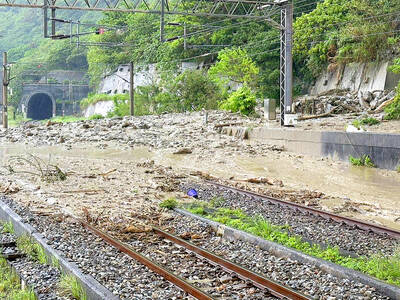
ROLLER-COASTER RIDE: More than five earthquakes ranging from magnitude 4.4 to 5.5 on the Richter scale shook eastern Taiwan in rapid succession yesterday afternoon Back-to-back weather fronts are forecast to hit Taiwan this week, resulting in rain across the nation in the coming days, the Central Weather Administration said yesterday, as it also warned residents in mountainous regions to be wary of landslides and rockfalls. As the first front approached, sporadic rainfall began in central and northern parts of Taiwan yesterday, the agency said, adding that rain is forecast to intensify in those regions today, while brief showers would also affect other parts of the nation. A second weather system is forecast to arrive on Thursday, bringing additional rain to the whole nation until Sunday, it

CONDITIONAL: The PRC imposes secret requirements that the funding it provides cannot be spent in states with diplomatic relations with Taiwan, Emma Reilly said China has been bribing UN officials to obtain “special benefits” and to block funding from countries that have diplomatic ties with Taiwan, a former UN employee told the British House of Commons on Tuesday. At a House of Commons Foreign Affairs Committee hearing into “international relations within the multilateral system,” former Office of the UN High Commissioner for Human Rights (OHCHR) employee Emma Reilly said in a written statement that “Beijing paid bribes to the two successive Presidents of the [UN] General Assembly” during the two-year negotiation of the Sustainable Development Goals. Another way China exercises influence within the UN Secretariat is
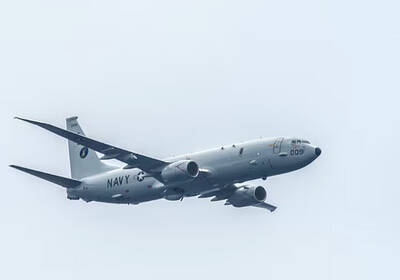
CHINA REACTS: The patrol and reconnaissance plane ‘transited the Taiwan Strait in international airspace,’ the 7th Fleet said, while Taipei said it saw nothing unusual The US 7th Fleet yesterday said that a US Navy P-8A Poseidon flew through the Taiwan Strait, a day after US and Chinese defense heads held their first talks since November 2022 in an effort to reduce regional tensions. The patrol and reconnaissance plane “transited the Taiwan Strait in international airspace,” the 7th Fleet said in a news release. “By operating within the Taiwan Strait in accordance with international law, the United States upholds the navigational rights and freedoms of all nations.” In a separate statement, the Ministry of National Defense said that it monitored nearby waters and airspace as the aircraft

Taiwan’s first drag queen to compete on the internationally acclaimed RuPaul’s Drag Race, Nymphia Wind (妮妃雅), was on Friday crowned the “Next Drag Superstar.” Dressed in a sparkling banana dress, Nymphia Wind swept onto the stage for the final, and stole the show. “Taiwan this is for you,” she said right after show host RuPaul announced her as the winner. “To those who feel like they don’t belong, just remember to live fearlessly and to live their truth,” she said on stage. One of the frontrunners for the past 15 episodes, the 28-year-old breezed through to the final after weeks of showcasing her unique


 RSS
RSS