


Internet startup Livedoor Co was hit with the largest fine ever in corporate Japanese history for violating securities laws yesterday, the latest blow in a scandal that has led to seven convictions for former executives and accountants.
The Tokyo District Court fined Livedoor ¥280 million (US$2.4 million) and its subsidiary Livedoor Marketing ¥40 million (US$338,000), a court official said on customary condition of anonymity.
Earlier yesterday, two accountants were convicted in the same court for fabricating earnings in the latest verdicts in a series of criminal trials involving Livedoor, once one of Japan's flashiest dotcoms.
The tough fines and prison terms being doled out to those at the center of the scandal are sending a strong message about the growing effort to crack down on companies testing what are still gray areas in this nation for regulations on stock trading.
In the past, executives charged with tampering with earnings reports, even at companies far bigger than Livedoor, had generally avoided prison terms and got suspended sentences.
In announcing the fine, the court said that the crime at Livedoor was "systematic" in its attempts to mislead individual investors, and that it had failed to live to up to its responsibility as a listed company, Kyodo News said.
The fine against Livedoor was a record high, surpassing the previous record, a ¥200 million fine imposed in 2005 on major railroad Seibu Railway for falsifying financial statements, Japanese media reports said.
In a separate session earlier yesterday for the two accountants, Taishin Hisano was sentenced to 10 months in prison and his supervisor, Motoshi Kobayashi, received one year in prison suspended for four years, meaning that he avoided time, a court official said.
Kyodo News reported that it was the first time in Japan that a certified accountant had received a prison term in a court case involving securities laws violations. Hisano appealed later yesterday, a court official said.
Their convictions bring the number of people judged guilty in the case to seven, beginning with former chief executive Takafumi Horie, who was sentenced to two-and-a-half years last Friday.
The Livedoor scandal broke in January last year, when prosecutors arrested Horie and other top executives, setting off a selloff in the Tokyo stock market dubbed "Livedoor shock."
Horie had been a celebrity for his gutsy takeover attempts and flamboyant lifestyle and had drawn a large number of individual investors to buy shares in the Internet company.
The Livedoor case has prompted calls for clearer laws about stock trading as well as heavier penalties for falsifying earnings reports. Horie is widely perceived as having tested the legal loopholes and limits of Japanese securities laws.
Livedoor was delisted from a Tokyo exchange for startups, but has been trying to rebuild its business under new management.
Like Horie, both accountants had pleaded not guilty -- a rarity in Japan where many charged with white-collar crime plead guilty, often to win lighter sentences.
On Thursday, four former Livedoor executives were found guilty of securities laws violations.
While three of the former officials got suspended sentences, Ryoji Miyauchi, Livedoor's former chief financial officer, was sentenced to 20 months in prison. Those four pleaded guilty to most of the charges.
The executives are accused of setting up a number of funds that prosecutors alleged were "dummy" entities to do stock swaps and other stock trading to pad their books.
Presiding judge Toshiyuki Kosaka said Miyauchi was the chief architect of some of the schemes as No. 2 at Livedoor, but said Horie shared much of the blame because he was the chief executive.
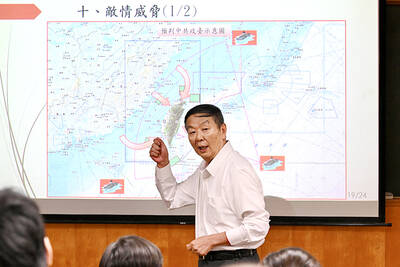
RETHINK? The defense ministry and Navy Command Headquarters could take over the indigenous submarine project and change its production timeline, a source said Admiral Huang Shu-kuang’s (黃曙光) resignation as head of the Indigenous Submarine Program and as a member of the National Security Council could affect the production of submarines, a source said yesterday. Huang in a statement last night said he had decided to resign due to national security concerns while expressing the hope that it would put a stop to political wrangling that only undermines the advancement of the nation’s defense capabilities. Taiwan People’s Party Legislator Vivian Huang (黃珊珊) yesterday said that the admiral, her older brother, felt it was time for him to step down and that he had completed what he

Taiwan has experienced its most significant improvement in the QS World University Rankings by Subject, data provided on Sunday by international higher education analyst Quacquarelli Symonds (QS) showed. Compared with last year’s edition of the rankings, which measure academic excellence and influence, Taiwanese universities made great improvements in the H Index metric, which evaluates research productivity and its impact, with a notable 30 percent increase overall, QS said. Taiwanese universities also made notable progress in the Citations per Paper metric, which measures the impact of research, achieving a 13 percent increase. Taiwanese universities gained 10 percent in Academic Reputation, but declined 18 percent

UNDER DISCUSSION: The combatant command would integrate fast attack boat and anti-ship missile groups to defend waters closest to the coastline, a source said The military could establish a new combatant command as early as 2026, which would be tasked with defending Taiwan’s territorial waters 24 nautical miles (44.4km) from the nation’s coastline, a source familiar with the matter said yesterday. The new command, which would fall under the Naval Command Headquarters, would be led by a vice admiral and integrate existing fast attack boat and anti-ship missile groups, along with the Naval Maritime Surveillance and Reconnaissance Command, said the source, who asked to remain anonymous. It could be launched by 2026, but details are being discussed and no final timetable has been announced, the source
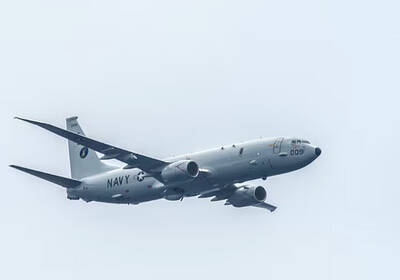
CHINA REACTS: The patrol and reconnaissance plane ‘transited the Taiwan Strait in international airspace,’ the 7th Fleet said, while Taipei said it saw nothing unusual The US 7th Fleet yesterday said that a US Navy P-8A Poseidon flew through the Taiwan Strait, a day after US and Chinese defense heads held their first talks since November 2022 in an effort to reduce regional tensions. The patrol and reconnaissance plane “transited the Taiwan Strait in international airspace,” the 7th Fleet said in a news release. “By operating within the Taiwan Strait in accordance with international law, the United States upholds the navigational rights and freedoms of all nations.” In a separate statement, the Ministry of National Defense said that it monitored nearby waters and airspace as the aircraft


 RSS
RSS