


Asian economies face new threats that could destabilize the region, despite the current boom that resulted from success in overcoming the 1997 financial crisis, a top UN official said yesterday.
Some of the risks now facing the region are similar to those that preceded the 1997 crisis, which began in Thailand and spread around Southeast and East Asia, said Kim Hak-su, the head of the UN Economic and Social Commission for Asia and the Pacific.
A global liquidity bonanza, inflated asset values and tremendous speculative pressures on regional currencies could again destabilize regional economies, Kim said.
"Globalization, along with its many benefits, exposes economies to quick and harsh risks from the constantly shifting international environment," he said in a speech opening a conference on the 10 years since the 1997 Asian meltdown.
Kim urged governments around the region to ensure flexibility in exchange rates, adding that central banks should also be clear about their exchange rate policies.
"Greater flexibility would help take away the `one-way bet' that encourages even more capital inflows than would otherwise take place, since markets would quickly realize that the currency could move in either direction," he said.
Kim said countries throughout the region could weather future shocks by ensuring solid macroeconomic fundamentals, developing healthy financial sectors, ensuring robust microeconomic foundations and improving regional cooperation.
Thailand was the epicenter of the 1997 meltdown when excessive borrowings in US dollars coupled with high interest rates forced the Thai government to float the currency, which then promptly collapsed along with the economy.
The baht nosedived to 56 to the dollar from 25, took the Thai economy with it and then sent a tidal wave of debt and default sweeping across the region.
The problems spread unchecked, hitting Southeast Asia first, with Malaysia and Indonesia the worst affected.
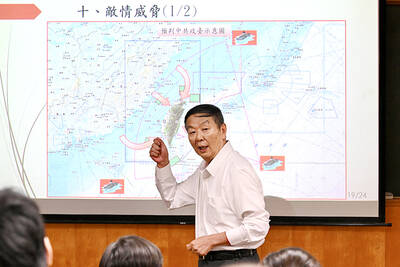
RETHINK? The defense ministry and Navy Command Headquarters could take over the indigenous submarine project and change its production timeline, a source said Admiral Huang Shu-kuang’s (黃曙光) resignation as head of the Indigenous Submarine Program and as a member of the National Security Council could affect the production of submarines, a source said yesterday. Huang in a statement last night said he had decided to resign due to national security concerns while expressing the hope that it would put a stop to political wrangling that only undermines the advancement of the nation’s defense capabilities. Taiwan People’s Party Legislator Vivian Huang (黃珊珊) yesterday said that the admiral, her older brother, felt it was time for him to step down and that he had completed what he

Taiwan has experienced its most significant improvement in the QS World University Rankings by Subject, data provided on Sunday by international higher education analyst Quacquarelli Symonds (QS) showed. Compared with last year’s edition of the rankings, which measure academic excellence and influence, Taiwanese universities made great improvements in the H Index metric, which evaluates research productivity and its impact, with a notable 30 percent increase overall, QS said. Taiwanese universities also made notable progress in the Citations per Paper metric, which measures the impact of research, achieving a 13 percent increase. Taiwanese universities gained 10 percent in Academic Reputation, but declined 18 percent
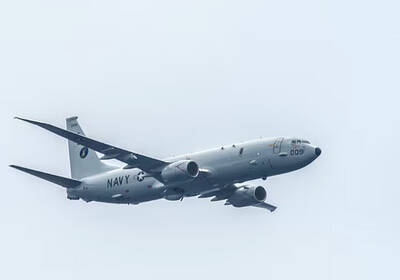
CHINA REACTS: The patrol and reconnaissance plane ‘transited the Taiwan Strait in international airspace,’ the 7th Fleet said, while Taipei said it saw nothing unusual The US 7th Fleet yesterday said that a US Navy P-8A Poseidon flew through the Taiwan Strait, a day after US and Chinese defense heads held their first talks since November 2022 in an effort to reduce regional tensions. The patrol and reconnaissance plane “transited the Taiwan Strait in international airspace,” the 7th Fleet said in a news release. “By operating within the Taiwan Strait in accordance with international law, the United States upholds the navigational rights and freedoms of all nations.” In a separate statement, the Ministry of National Defense said that it monitored nearby waters and airspace as the aircraft
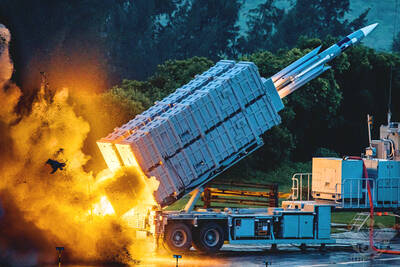
UNDER DISCUSSION: The combatant command would integrate fast attack boat and anti-ship missile groups to defend waters closest to the coastline, a source said The military could establish a new combatant command as early as 2026, which would be tasked with defending Taiwan’s territorial waters 24 nautical miles (44.4km) from the nation’s coastline, a source familiar with the matter said yesterday. The new command, which would fall under the Naval Command Headquarters, would be led by a vice admiral and integrate existing fast attack boat and anti-ship missile groups, along with the Naval Maritime Surveillance and Reconnaissance Command, said the source, who asked to remain anonymous. It could be launched by 2026, but details are being discussed and no final timetable has been announced, the source


 RSS
RSS