


Microsoft's new Windows Vista operating system comes with integrated speech recognition software. This allows users to perform standard tasks without using their keyboard, including writing e-mails.
Those who find the hands-free life enjoyable may want to consider more comprehensive specialist software, however.
Kolokythas Panagiotis has already spent some time talking to his computer.
"When I'm not in the mood to click on the Start button with the mouse and look for the program, I just say `Open Word' or `Write Mail,'" explained the editor from Munich-based PC Welt magazine.
Users must first complete a one-hour acclimation program before the computer can understand commands. Vista also runs a piece of software in the background to handle speech recognition tasks.
Vista's speech recognition works relatively reliably, the experts claim. It is not really suited to professional users, however, meaning that users who frequently dictate texts as part of the working day are better served with special applications.
For one, higher-end software requires no break-in time, as the "software secretaries" come ready to handle various voices and dialects. Indeed, when creating "Voice Pro," now in its 11th version, Linguatec invited numerous people into the IBM development lab to read texts aloud.
"We made sure that the speakers came from various regions where the language is spoken," said Rieke Bacher, a computer linguist employed by Linguatec.
Each word is compared with a pattern known to the system, explained Martin Held, a developer at Nuance in Munich.
"If the system is confronted with a word it doesn't know, then there can be no recognition," Held said.
That means that no recognition software will ever be 100 percent effective.
It's an entirely different matter in situations where there is only a limited pool of vocabulary.
"Doctors or lawyers do very well when dictating within a restricted set of topics," Held said.
Those target groups are even offered programs pre-loaded with vocabulary pertinent to their discipline.
Yet even in cases where a computer is faced with highly unusual jargon, such as an archeologist, it's not a lost cause.
"The vocabulary analysis tools can take your written texts and analyse them to establish your personal vocabulary," Bacher said.
That applies to "Dragon Naturally Speaking 9" from Nuance as well.
Both "Dragon Naturally Speaking" and "Voice Pro" work with digital dictation devices and wireless headsets. This lets drivers talk while on the road, with their spoken notes automatically converted into writing.
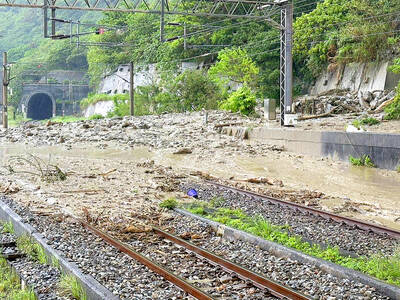
ROLLER-COASTER RIDE: More than five earthquakes ranging from magnitude 4.4 to 5.5 on the Richter scale shook eastern Taiwan in rapid succession yesterday afternoon Back-to-back weather fronts are forecast to hit Taiwan this week, resulting in rain across the nation in the coming days, the Central Weather Administration said yesterday, as it also warned residents in mountainous regions to be wary of landslides and rockfalls. As the first front approached, sporadic rainfall began in central and northern parts of Taiwan yesterday, the agency said, adding that rain is forecast to intensify in those regions today, while brief showers would also affect other parts of the nation. A second weather system is forecast to arrive on Thursday, bringing additional rain to the whole nation until Sunday, it
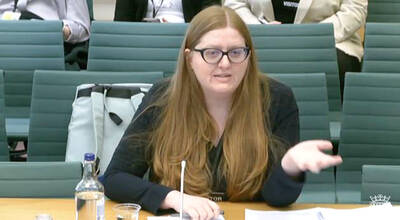
CONDITIONAL: The PRC imposes secret requirements that the funding it provides cannot be spent in states with diplomatic relations with Taiwan, Emma Reilly said China has been bribing UN officials to obtain “special benefits” and to block funding from countries that have diplomatic ties with Taiwan, a former UN employee told the British House of Commons on Tuesday. At a House of Commons Foreign Affairs Committee hearing into “international relations within the multilateral system,” former Office of the UN High Commissioner for Human Rights (OHCHR) employee Emma Reilly said in a written statement that “Beijing paid bribes to the two successive Presidents of the [UN] General Assembly” during the two-year negotiation of the Sustainable Development Goals. Another way China exercises influence within the UN Secretariat is

LANDSLIDES POSSIBLE: The agency advised the public to avoid visiting mountainous regions due to more expected aftershocks and rainfall from a series of weather fronts A series of earthquakes over the past few days were likely aftershocks of the April 3 earthquake in Hualien County, with further aftershocks to be expected for up to a year, the Central Weather Administration (CWA) said yesterday. Based on the nation’s experience after the quake on Sept. 21, 1999, more aftershocks are possible over the next six months to a year, the agency said. A total of 103 earthquakes of magnitude 4 on the local magnitude scale or higher hit Hualien County from 5:08pm on Monday to 10:27am yesterday, with 27 of them exceeding magnitude 5. They included two, of magnitude

Taiwan’s first drag queen to compete on the internationally acclaimed RuPaul’s Drag Race, Nymphia Wind (妮妃雅), was on Friday crowned the “Next Drag Superstar.” Dressed in a sparkling banana dress, Nymphia Wind swept onto the stage for the final, and stole the show. “Taiwan this is for you,” she said right after show host RuPaul announced her as the winner. “To those who feel like they don’t belong, just remember to live fearlessly and to live their truth,” she said on stage. One of the frontrunners for the past 15 episodes, the 28-year-old breezed through to the final after weeks of showcasing her unique


 RSS
RSS