


The Bank of Japan (BOJ) decided against raising its ultra-low interest rates yesterday in the face of fierce political pressure, backing down in a standoff that has put its credibility into question.
After a week during which government officials had lined up to publicly urge the central bank not to gamble the economy's future with a premature rate rise, the BOJ left its key rate steady at 0.25 percent.
But the policy board was split for the first time in almost a year, with three of the nine members voting against the decision, which was widely seen as a case of the Bank caving in to government pressure.
"Basically the politicians have hijacked a pretty well communicated agenda and timetable by the BOJ," said Stefan Rheinwald, head of research at the investment bank CLSA Asia-Pacific Markets.
"I think it's an unnecessary mess. It will harm sentiment," he warned. "Everybody will see that the reason for the delay is politically driven."
The BOJ, which has independence in setting monetary policy, raised interest rates to 0.25 percent in July, ending its five-year policy of keeping borrowing costs effectively at zero in a bid to boost the economy.
Bank Governor Toshihiko Fukui has since warned of the dangers of continuing too long with what he sees as such extraordinary measures, arguing for a need to return to a more normal monetary policy stance.
But the central bank faced a chorus of calls from the government not to act too hastily for fear of derailing the economic recovery.
The result was a topsy turvy week for financial markets as investors reacted to conflicting reports saying first that the BOJ would raise interest rates this month and then that it had decided not to.
"The BOJ suffered from government pressure," said Toru Umemoto, chief foreign exchange strategist at Barclays Capital in Tokyo, adding that it would also be hard for the central bank to raise interest rates next month.
He said the BOJ's decision had "weakened its credibility."
Economic and Fiscal Policy Minister Hiroko Ota had earlier urged the Bank to leave interest rates unchanged for now.
The secretary general of the ruling Liberal Democratic Party, Hidenao Nakagawa, went further, calling on the government to invoke its right to officially ask the central bank to delay a vote on a rate rise.
Markets and the government are nervous that the central bank could repeat its blunder of August 2000, when it raised interest rates too soon and was later forced to reverse the decision as the economy hit the skids.
Japan, which for years was beset by stagnant growth, on-off recessions and a downward price spiral, is now in the midst of its longest sustained expansion since World War II.
But inflation remains tame, with core consumer prices up just 0.2 percent in November from a year earlier, while consumer spending remains sluggish.
"Consumption has been on an increasing trend, although the pace of increase has been only modest," the BOJ said in a monthly report released yesterday.
It said developments in Japan's economy had deteriorated slightly since its twice-yearly outlook reported released in October, mainly due to the negative impact on consumption of unfavorable weather conditions.
"Looking ahead, however, the economy is expected to develop broadly in line with the outlook, as a virtuous circle of production, income, and spending is likely to remain intact," it added.
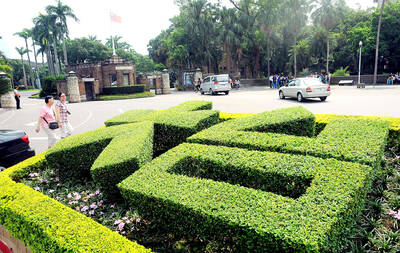
Taiwan has experienced its most significant improvement in the QS World University Rankings by Subject, data provided on Sunday by international higher education analyst Quacquarelli Symonds (QS) showed. Compared with last year’s edition of the rankings, which measure academic excellence and influence, Taiwanese universities made great improvements in the H Index metric, which evaluates research productivity and its impact, with a notable 30 percent increase overall, QS said. Taiwanese universities also made notable progress in the Citations per Paper metric, which measures the impact of research, achieving a 13 percent increase. Taiwanese universities gained 10 percent in Academic Reputation, but declined 18 percent
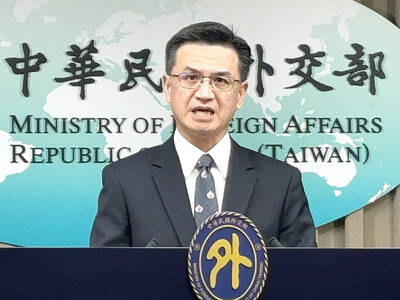
BULLY TACTICS: Beijing has continued its incursions into Taiwan’s airspace even as Xi Jinping talked about Taiwan being part of the Chinese family and nation China should stop its coercion of Taiwan and respect mainstream public opinion in Taiwan about sovereignty if its expression of goodwill is genuine, the Ministry of Foreign Affairs (MOFA) said yesterday. Ministry spokesman Jeff Liu (劉永健) made the comment in response to media queries about a meeting between former president Ma Ying-jeou (馬英九) and Chinese President Xi Jinping (習近平) the previous day. Ma voiced support for the so-called “1992 consensus,” while Xi said that although the two sides of the Taiwan Strait have “different systems,” this does not change the fact that they are “part of the same country,” and that “external

UNDER DISCUSSION: The combatant command would integrate fast attack boat and anti-ship missile groups to defend waters closest to the coastline, a source said The military could establish a new combatant command as early as 2026, which would be tasked with defending Taiwan’s territorial waters 24 nautical miles (44.4km) from the nation’s coastline, a source familiar with the matter said yesterday. The new command, which would fall under the Naval Command Headquarters, would be led by a vice admiral and integrate existing fast attack boat and anti-ship missile groups, along with the Naval Maritime Surveillance and Reconnaissance Command, said the source, who asked to remain anonymous. It could be launched by 2026, but details are being discussed and no final timetable has been announced, the source
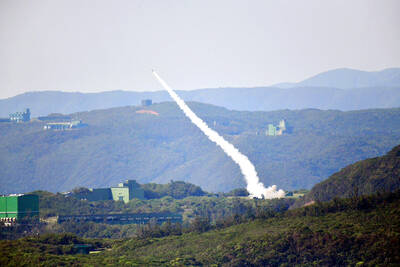
SHOT IN THE ARM: The new system can be integrated with Avenger and Stinger missiles to bolster regional air defense capabilities, a defense ministry report said Domestically developed Land Sword II (陸射劍二) missiles were successfully launched and hit target drones during a live-fire exercise at the Jiupeng Military Base in Pingtung County yesterday. The missiles, developed by the Chungshan Institute of Science and Technology (CSIST), were originally scheduled to launch on Tuesday last week, after the Tomb Sweeping Day holiday long weekend, but were postponed to yesterday due to weather conditions. Local residents and military enthusiasts gathered outside the base to watch the missile tests, with the first one launching at 9:10am. The Land Sword II system, which is derived from the Sky Sword II (天劍二) series, was turned


 RSS
RSS