


Thailand's central bank will ask banks to withhold 30 percent of money to be converted into baht and to lock it in for a year to curb speculation after the currency reached a nine-year high.
Investors will get back the full amount if they keep the money in Thailand for more than one year, central bank Governor Tarisa Watanagase told a briefing in Bangkok yesterday.
Those who withdraw the reserved amount in less than a year will be penalized one-third of that amount, she said.
The baht has risen by as much as 16.6 percent this year, the third-best performer among the world's 71 most active currencies, as a Sept. 19 coup broke a political stalemate and the government predicted the economy will accelerate.
Thai Union Frozen Products Plc, the world's second-biggest tuna canner, and other exporters on Nov. 16 asked the central bank to stem gains in the baht that are undermining their competitiveness.
The baht yesterday touched 35.08 against the greenback, the highest since Sept. 29, 1997.
The currency reversed yesterday's gains to fall 0.1 percent after Finance Minister Pridiyathorn Devakula said the central bank would make a "historic" announcement.
A rising currency hurts exporters by cutting the value of their baht-denominated profits and making their products more expensive compared with their Asian rivals'.
The Chinese yuan added 3.1 percent against the dollar this year, the Malaysian ringgit gained 6.3 percent and the Singaporean dollar climbed 7.9 percent.
"The baht has gained really quickly and sharply," said Koji Fukaya, chief economist and currency analyst in Tokyo at Bank of Tokyo-Mitsubishi UFJ Ltd. "That could put a brake on the nation's exports and the central bank may be really concerned about the pace of appreciation. So they have to do something to slow the move."
The baht has appreciated even though the central bank earlier this month introduced measures to limit its gains. The monetary authority on Dec. 4 asked companies and commercial lenders not to sell baht short-term debt securities to overseas investors. It also put restrictions on banking services for non-residents holding debt maturing in less than three months.
The baht earlier rose as overseas investors bought the nation's assets to profit from gains in the baht. The economy may expand 5 percent this year, exceeding an earlier estimate of as much as 4.7 percent and last year's pace of 4.5 percent, the government said on Dec. 4.
A military coup on Sept. 19 ousted prime minister Thaksin Shinawatra and ended seven months of political turmoil. Prime Minister Surayud Chulanont, installed by the military junta after the coup, is planning record spending on roads, subways and other infrastructures.
"Economic conditions are quite good and that encourages capital inflows," said Tsutomu Soma, a bond and currency dealer at Okasan Securities Co in Tokyo. "It's in a virtuous cycle now. People put money in and that boosts the value of the baht, which makes investments in Thailand more attractive."
It may rise to 35 by the end of the year, Soma said.
Foreign investors have bought US$587 million more Thai stocks than they sold this quarter, the second straight three-month period of net purchases, stock exchange data showed.
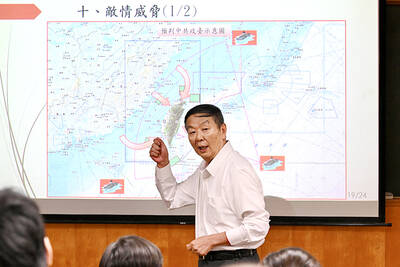
RETHINK? The defense ministry and Navy Command Headquarters could take over the indigenous submarine project and change its production timeline, a source said Admiral Huang Shu-kuang’s (黃曙光) resignation as head of the Indigenous Submarine Program and as a member of the National Security Council could affect the production of submarines, a source said yesterday. Huang in a statement last night said he had decided to resign due to national security concerns while expressing the hope that it would put a stop to political wrangling that only undermines the advancement of the nation’s defense capabilities. Taiwan People’s Party Legislator Vivian Huang (黃珊珊) yesterday said that the admiral, her older brother, felt it was time for him to step down and that he had completed what he

ROLLER-COASTER RIDE: More than five earthquakes ranging from magnitude 4.4 to 5.5 on the Richter scale shook eastern Taiwan in rapid succession yesterday afternoon Back-to-back weather fronts are forecast to hit Taiwan this week, resulting in rain across the nation in the coming days, the Central Weather Administration said yesterday, as it also warned residents in mountainous regions to be wary of landslides and rockfalls. As the first front approached, sporadic rainfall began in central and northern parts of Taiwan yesterday, the agency said, adding that rain is forecast to intensify in those regions today, while brief showers would also affect other parts of the nation. A second weather system is forecast to arrive on Thursday, bringing additional rain to the whole nation until Sunday, it

CONDITIONAL: The PRC imposes secret requirements that the funding it provides cannot be spent in states with diplomatic relations with Taiwan, Emma Reilly said China has been bribing UN officials to obtain “special benefits” and to block funding from countries that have diplomatic ties with Taiwan, a former UN employee told the British House of Commons on Tuesday. At a House of Commons Foreign Affairs Committee hearing into “international relations within the multilateral system,” former Office of the UN High Commissioner for Human Rights (OHCHR) employee Emma Reilly said in a written statement that “Beijing paid bribes to the two successive Presidents of the [UN] General Assembly” during the two-year negotiation of the Sustainable Development Goals. Another way China exercises influence within the UN Secretariat is
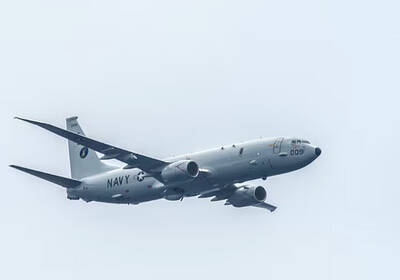
CHINA REACTS: The patrol and reconnaissance plane ‘transited the Taiwan Strait in international airspace,’ the 7th Fleet said, while Taipei said it saw nothing unusual The US 7th Fleet yesterday said that a US Navy P-8A Poseidon flew through the Taiwan Strait, a day after US and Chinese defense heads held their first talks since November 2022 in an effort to reduce regional tensions. The patrol and reconnaissance plane “transited the Taiwan Strait in international airspace,” the 7th Fleet said in a news release. “By operating within the Taiwan Strait in accordance with international law, the United States upholds the navigational rights and freedoms of all nations.” In a separate statement, the Ministry of National Defense said that it monitored nearby waters and airspace as the aircraft


 RSS
RSS