


Visa, the biggest credit card network in the US, said on Wednesday that it would sell shares to the public as early as next year, following in the footsteps of its smaller rival, MasterCard Inc.
By going public, Visa hopes to streamline its operations, invest more nimbly in emerging markets and new payment technologies like those using cellular phones, and insulate its member banks from potentially billions of dollars in legal damages over antitrust and unfair-pricing claims brought by merchants.
There has also been pressure from Wall Street analysts, who believe a profit-making structure would instill more disciplined management, and by the company's own employees, who have privately sniped at their MasterCard counterparts' rich stock option paydays for months.
"MasterCard's IPO raised stakes for Visa," said Kenneth Posner, an analyst with Morgan Stanley. "If Visa wants to attract and retain and compensate the best people, having currency might be very important."
MasterCard went public in late May at US$39 a share. It has since surged more than 78 percent, to US$69.50, even after falling 3 percent on Wednesday. MasterCard has a current market value of US$9.4 billion. Several analysts said they expect a Visa initial public offering to value the company at least double that, given its dominance.
Visa held about a 60 percent share of credit and debit purchases last year, compared with 27 percent for MasterCard, according to the Nilson Report, a newsletter for the credit card industry.
As of June 30, Visa reported US$771 billion in transactions this year, compared with US$411 billion for MasterCard.
"By any measurement, Visa looks more desirable than MasterCard as an IPO," said David Robertson, publisher of the Nilson Report.
"It has a better, more advanced network, and it sees a lot more traffic on that network," Robertson said.
The most immediate beneficiaries of a Visa stock offering could be its large member banks -- including Bank of America, Wells Fargo and J.P. Morgan Chase -- which could recognize hundreds of millions in capital gains if they sell part of their Visa ownership stake, even as the overall card industry continues to slow.
RETHINK? The defense ministry and Navy Command Headquarters could take over the indigenous submarine project and change its production timeline, a source said Admiral Huang Shu-kuang’s (黃曙光) resignation as head of the Indigenous Submarine Program and as a member of the National Security Council could affect the production of submarines, a source said yesterday. Huang in a statement last night said he had decided to resign due to national security concerns while expressing the hope that it would put a stop to political wrangling that only undermines the advancement of the nation’s defense capabilities. Taiwan People’s Party Legislator Vivian Huang (黃珊珊) yesterday said that the admiral, her older brother, felt it was time for him to step down and that he had completed what he

Taiwan has experienced its most significant improvement in the QS World University Rankings by Subject, data provided on Sunday by international higher education analyst Quacquarelli Symonds (QS) showed. Compared with last year’s edition of the rankings, which measure academic excellence and influence, Taiwanese universities made great improvements in the H Index metric, which evaluates research productivity and its impact, with a notable 30 percent increase overall, QS said. Taiwanese universities also made notable progress in the Citations per Paper metric, which measures the impact of research, achieving a 13 percent increase. Taiwanese universities gained 10 percent in Academic Reputation, but declined 18 percent
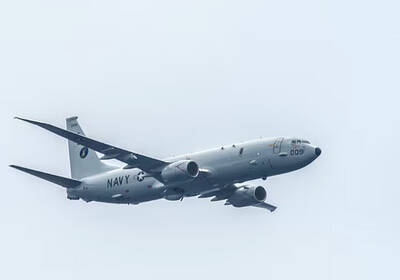
CHINA REACTS: The patrol and reconnaissance plane ‘transited the Taiwan Strait in international airspace,’ the 7th Fleet said, while Taipei said it saw nothing unusual The US 7th Fleet yesterday said that a US Navy P-8A Poseidon flew through the Taiwan Strait, a day after US and Chinese defense heads held their first talks since November 2022 in an effort to reduce regional tensions. The patrol and reconnaissance plane “transited the Taiwan Strait in international airspace,” the 7th Fleet said in a news release. “By operating within the Taiwan Strait in accordance with international law, the United States upholds the navigational rights and freedoms of all nations.” In a separate statement, the Ministry of National Defense said that it monitored nearby waters and airspace as the aircraft
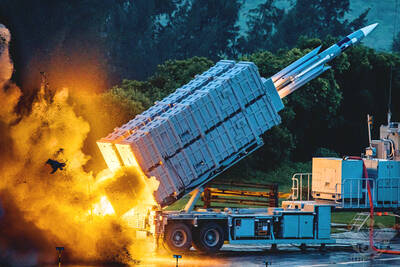
UNDER DISCUSSION: The combatant command would integrate fast attack boat and anti-ship missile groups to defend waters closest to the coastline, a source said The military could establish a new combatant command as early as 2026, which would be tasked with defending Taiwan’s territorial waters 24 nautical miles (44.4km) from the nation’s coastline, a source familiar with the matter said yesterday. The new command, which would fall under the Naval Command Headquarters, would be led by a vice admiral and integrate existing fast attack boat and anti-ship missile groups, along with the Naval Maritime Surveillance and Reconnaissance Command, said the source, who asked to remain anonymous. It could be launched by 2026, but details are being discussed and no final timetable has been announced, the source


 RSS
RSS