


The IMF, threatened with redundancy, wants to carve out a new role for itself as global economic policeman but Asian nations oppose any move by the institution to meddle in their affairs.
In the 1990s, the IMF was the linchpin of efforts to resolve global financial crises -- a role that earned it much criticism in Asia, Latin America and Africa for its bitter free market medicine.
Now, with no major crisis to manage, the Fund wants to enhance its role in financial surveillance, notably by focusing on the spillover effects of one country's policies on another.
This approach is strongly supported by US officials pressing for more forceful IMF action on China's exchange rate regime, which they argue gives Chinese goods an unfair advantage on export markets.
"Reforming the IMF's governance structure will not suffice. In revitalizing the IMF, we must also improve the Fund's effectiveness," US Treasury Secretary Henry Paulson told the IMF steering committee.
"This includes considering the consistency of exchange rate policies with the international system, and investigating misaligned currencies regardless of intent," he said.
But Asian economic heavyweights including China, Japan and India have expressed caution about the IMF's hopes of playing a more active role in monitoring exchange rates and trade imbalances.
The head of the Chinese central bank, Zhou Xiaochuan (
"Surveillance over exchange rates should focus on whether the adopted exchange rate regime is appropriate and consistent with a member's macroeconomic policies rather than on the exchange rate level," he said.
Japan, which is a major stakeholder in the IMF, also expressed reservations about an enhanced surveillance role.
"Efforts should be made not to hasten the discussions, which could lead to focusing too narrowly on specific issues or specific countries, thereby sending incorrect signals to the market," said Bank of Japan governor Toshihiko Fukui.
"The board should discuss this issue from the viewpoint of securing a consistency between exchange rate policies and other domestic economic policies, and not in the narrow context of attributing the global imbalance to a specific country's or region's exchange rate policies," he said.
Many Asian nations remain wary of the IMF because of the harsh medicine handed out to cure the ills of the 1997 financial crisis and have even talked of setting up their own Asian Monetary Fund instead.
Asian nations have built up large foreign currency reserves to protect against possible future crises while pressing ahead with regional initiatives like a currency swap arrangement launched in 2000.
Suspicious of the IMF, they have also reduced their IMF borrowings from a peak of US$17.8 billion in 1997 to US$300 million last year.
"The main issues of contention in Fund surveillance remain focused on how to improve its `even-handedness' and reduce its `intrusiveness,'" Indian Finance Minister Palaniappan Chidambaram said.
"Given the sensitivity of exchange rates for emerging markets, it would be desirable to keep the exchange rate assessment internal and continue with the Fund's role as a confidential adviser," he added.
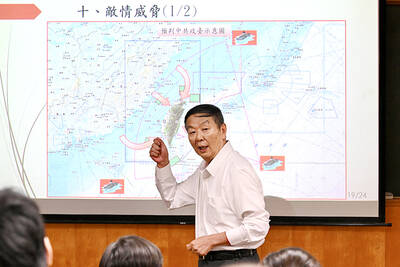
RETHINK? The defense ministry and Navy Command Headquarters could take over the indigenous submarine project and change its production timeline, a source said Admiral Huang Shu-kuang’s (黃曙光) resignation as head of the Indigenous Submarine Program and as a member of the National Security Council could affect the production of submarines, a source said yesterday. Huang in a statement last night said he had decided to resign due to national security concerns while expressing the hope that it would put a stop to political wrangling that only undermines the advancement of the nation’s defense capabilities. Taiwan People’s Party Legislator Vivian Huang (黃珊珊) yesterday said that the admiral, her older brother, felt it was time for him to step down and that he had completed what he
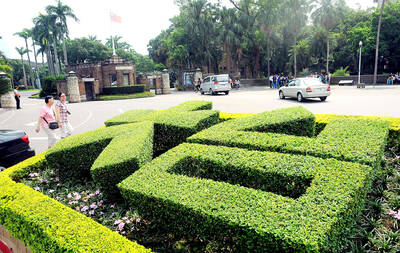
Taiwan has experienced its most significant improvement in the QS World University Rankings by Subject, data provided on Sunday by international higher education analyst Quacquarelli Symonds (QS) showed. Compared with last year’s edition of the rankings, which measure academic excellence and influence, Taiwanese universities made great improvements in the H Index metric, which evaluates research productivity and its impact, with a notable 30 percent increase overall, QS said. Taiwanese universities also made notable progress in the Citations per Paper metric, which measures the impact of research, achieving a 13 percent increase. Taiwanese universities gained 10 percent in Academic Reputation, but declined 18 percent
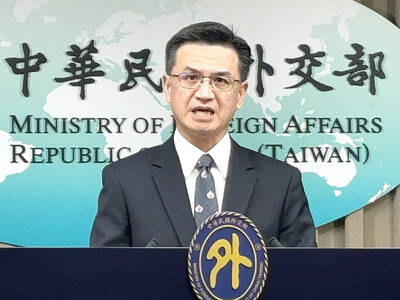
BULLY TACTICS: Beijing has continued its incursions into Taiwan’s airspace even as Xi Jinping talked about Taiwan being part of the Chinese family and nation China should stop its coercion of Taiwan and respect mainstream public opinion in Taiwan about sovereignty if its expression of goodwill is genuine, the Ministry of Foreign Affairs (MOFA) said yesterday. Ministry spokesman Jeff Liu (劉永健) made the comment in response to media queries about a meeting between former president Ma Ying-jeou (馬英九) and Chinese President Xi Jinping (習近平) the previous day. Ma voiced support for the so-called “1992 consensus,” while Xi said that although the two sides of the Taiwan Strait have “different systems,” this does not change the fact that they are “part of the same country,” and that “external
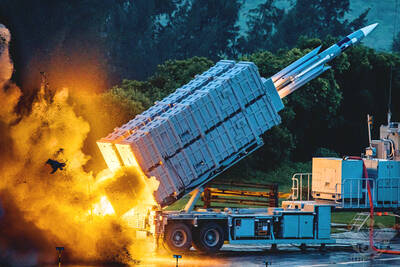
UNDER DISCUSSION: The combatant command would integrate fast attack boat and anti-ship missile groups to defend waters closest to the coastline, a source said The military could establish a new combatant command as early as 2026, which would be tasked with defending Taiwan’s territorial waters 24 nautical miles (44.4km) from the nation’s coastline, a source familiar with the matter said yesterday. The new command, which would fall under the Naval Command Headquarters, would be led by a vice admiral and integrate existing fast attack boat and anti-ship missile groups, along with the Naval Maritime Surveillance and Reconnaissance Command, said the source, who asked to remain anonymous. It could be launched by 2026, but details are being discussed and no final timetable has been announced, the source


 RSS
RSS