


Nothing on wheels more personifies Italian style than the Vespa scooter, whose carefree spirit was immortalized by Audrey Hepburn and Gregory Peck circling Rome's piazzas in the 1953 film Roman Holiday.
The Vespa's familiar curved frame has a found a place in design museums and in the hearts of Europeans, who first hopped aboard simply to get around after World War II and who still cling dearly to its handlebars as they zip through clogged streets.
Now, as the Italian icon turns 60, the company that makes the Vespa is about to go public.
The move is a sign of Piaggio & C SpA's return to health after being rescued from the verge of collapse by Roberto Colaninno, the former Telecom Italia chief executive whose holding company Immsi SpA bought Piaggio in 2003 and brought the company to record sales in two years.
Public debut
"The IPO is the conclusion of the rescue started at the end of 2003, and the result of agreements signed at the moment of the decision to save the company," Colaninno told reporters on Tuesday after presenting the company's portfolio to potential investors.
"We have a strong young boy who is now ready to walk on his own," he said.
Europe's largest scooter-maker by revenue, Piaggio is selling a 31 percent stake raising between 274 million euros and 348 million euros (US$346 million and US$440 million) during an initial public offering that ends on July 5. Shares are priced in a range of 2.30 euros to 3.00 euros, valuing the company at between 886.8 million euros and 1.16 billion euros.
Final pricing will take place on July 10, and the stock market debut is scheduled for July 11.
Immsi, the controlling shareholder, has already increased its stake to 49 percent before the offering and intends to raise its share to between 56 percent and 58 percent by the end of the IPO, Colaninno said on Tuesday, giving Piaggio a long-term industrial shareholder.
The sale capitalizes on Vespa's carefree image as much as fundamentals: Piaggio posted a net profit in the first quarter of this year of 10.2 million euros on revenue of 374.2 million euros, compared with a loss of 10.2 million euros a year earlier.
Cool image
An investor should be someone "who believes in a product that is a combination of technology, beauty, style, dreams and sport," Colaninno said. "We're not just about transportation, but about a particular concept of transportation, stylish, fun and luxurious."
Piaggio was founded in 1884 by Rinaldo Piaggio, a maker of ship interiors who later designed airplanes and helicopters. But the success of the Vespa, introduced in 1946, put the company's future firmly on the road.
The Vespa, paradoxically, was created for those who disliked motorcycles. Inspired by a woman's bicycle, the open design makes it possible to mount the Vespa without raising a leg and allows well-heeled women to sit easily behind the handlebars, where controls for the accelerator, clutch and brakes are located.
While the Vespa remains Piaggio's most recognized product, the firm now has seven well-known scooter and motorcycle brands. Next month, the world's first three-wheel scooter, the Piaggio MP3, will go on sale in Europe.
Global ambitions
Piaggio aims to be multinational, with operations targeting vastly different markets with selected products, Colaninno said.
Toward that goal, Piaggio has expanded into India, where Colaninno estimated it would take 50 years to fully exploit the market, and into China, through a joint venture with Zongshen in 2004.
The company also was considering entry into Brazil, South Africa and further into Asia.
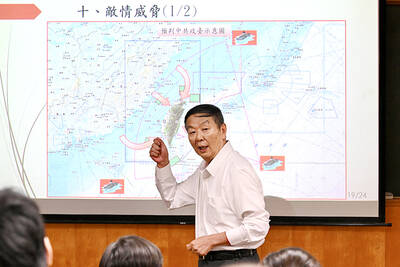
RETHINK? The defense ministry and Navy Command Headquarters could take over the indigenous submarine project and change its production timeline, a source said Admiral Huang Shu-kuang’s (黃曙光) resignation as head of the Indigenous Submarine Program and as a member of the National Security Council could affect the production of submarines, a source said yesterday. Huang in a statement last night said he had decided to resign due to national security concerns while expressing the hope that it would put a stop to political wrangling that only undermines the advancement of the nation’s defense capabilities. Taiwan People’s Party Legislator Vivian Huang (黃珊珊) yesterday said that the admiral, her older brother, felt it was time for him to step down and that he had completed what he
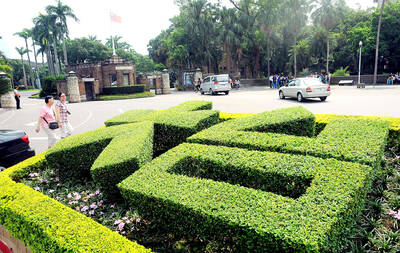
Taiwan has experienced its most significant improvement in the QS World University Rankings by Subject, data provided on Sunday by international higher education analyst Quacquarelli Symonds (QS) showed. Compared with last year’s edition of the rankings, which measure academic excellence and influence, Taiwanese universities made great improvements in the H Index metric, which evaluates research productivity and its impact, with a notable 30 percent increase overall, QS said. Taiwanese universities also made notable progress in the Citations per Paper metric, which measures the impact of research, achieving a 13 percent increase. Taiwanese universities gained 10 percent in Academic Reputation, but declined 18 percent
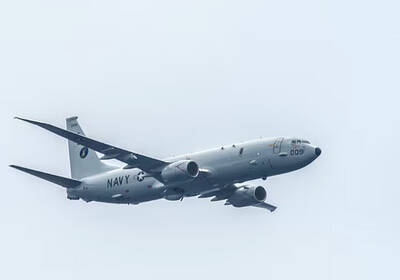
CHINA REACTS: The patrol and reconnaissance plane ‘transited the Taiwan Strait in international airspace,’ the 7th Fleet said, while Taipei said it saw nothing unusual The US 7th Fleet yesterday said that a US Navy P-8A Poseidon flew through the Taiwan Strait, a day after US and Chinese defense heads held their first talks since November 2022 in an effort to reduce regional tensions. The patrol and reconnaissance plane “transited the Taiwan Strait in international airspace,” the 7th Fleet said in a news release. “By operating within the Taiwan Strait in accordance with international law, the United States upholds the navigational rights and freedoms of all nations.” In a separate statement, the Ministry of National Defense said that it monitored nearby waters and airspace as the aircraft
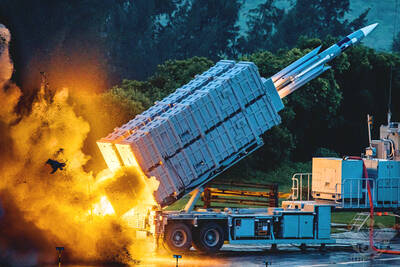
UNDER DISCUSSION: The combatant command would integrate fast attack boat and anti-ship missile groups to defend waters closest to the coastline, a source said The military could establish a new combatant command as early as 2026, which would be tasked with defending Taiwan’s territorial waters 24 nautical miles (44.4km) from the nation’s coastline, a source familiar with the matter said yesterday. The new command, which would fall under the Naval Command Headquarters, would be led by a vice admiral and integrate existing fast attack boat and anti-ship missile groups, along with the Naval Maritime Surveillance and Reconnaissance Command, said the source, who asked to remain anonymous. It could be launched by 2026, but details are being discussed and no final timetable has been announced, the source


 RSS
RSS