


Most people forget that mobile phones are actually small, portable computers capable of sending and receiving data.
Receiving data is good, but it's also possible to receive software that damages the phone or its user. In other words: viruses and worms, the bane of the PC world, are now being written for mobile phones too.
The first of these programs showed up around two years ago. A worm called Cabir took the dubious honor of being the first to be officially discovered, even if it represented more of a theoretical than a practical problem, since it did not really circulate in the real cellphone world.
"I don't want to spread a panic," says telecommunications expert Bjorn Brodersen from the online portal teltarif.de.
He has never personally encountered a cellphone virus. But he believes the problem is likely to increase in the future.
"In this case we should be taking the warnings of the virus experts seriously," he said.
It started with a bit of a practical joke, says Candit Wueest, virus expert at the antivirus software maker Symantec, which changes icons into skull-and-crossbones symbols.
"Now there are viruses making the rounds that overwrite a cellphone's system files," Wueest says.
Any cellphone which is put out of commission in this way must be sent back to the manufacturer for repairs.
There are also purported to be viruses that encrypt the cellphone's storage card with a password to prevent the actual owner from accessing it.
The attacks target primarily so-called smartphones. This is due to the fact that they offer a comparably larger number of ports and functions, which translates into more potential for attacks.
"Smartphones have stirred the interest of virus writers," Brodersen warns.
The ways in which a worm like Cabir disseminates itself highlight a weakness in the way in which cellphones communicate: programs are passed wirelessly using the phone's Bluetooth port.
Practically speaking, this means that the only models that can be affected by such viruses are those with the Symbian operating system and a Bluetooth port.
For this reason ports which are not required should be deactivated, recommends the German Federal Agency for Security in Information Technology (BSI) in Bonn.
When a Bluetooth port is activated, it can theoretically be misused by other cellphone users to gain access to the phone, even from a distance of several meters.
This might involve browsing through saved data or executing commands on the foreign phone, such as the sending of particularly expensive premium text messages.
"That can be very expensive for the person whose phone gets hacked," Brodersen says.
The experts recommend being careful when thinking about downloading software.
"You should have a close look at the source of the program," Brodersen recommends.
In Candit Wueest's view, users should be wary if a game that must normally be bought is offered for free, since a virus could be hidden in it.
Brodersen also recommends keeping track of cellphone bills to make sure that no unusual charges have appeared.
For now, cellphone viruses still represent a minor threat.
"You can't say that cellphone viruses are particularly prevalent," says Graham Cluley from antivirus software maker Sophos based in Abingdon, England.
"The cellphone viruses that we've seen up to this point originate from old-school virus writers," he says.
They are less concerned with causing damages that simply showing off their technical know-how. The viruses, spam, Trojans and worms currently making their way around the Internet are largely criminally motivated, Cluley says. They aim at making money.
"As long as they can keep doing that using PC viruses, their inventors will probably have no reason to program viruses for cellphones," he says.
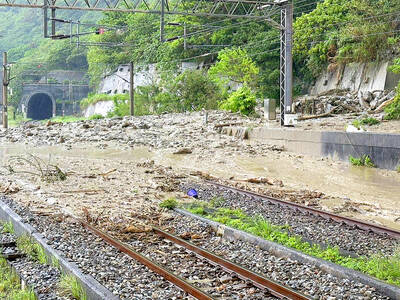
ROLLER-COASTER RIDE: More than five earthquakes ranging from magnitude 4.4 to 5.5 on the Richter scale shook eastern Taiwan in rapid succession yesterday afternoon Back-to-back weather fronts are forecast to hit Taiwan this week, resulting in rain across the nation in the coming days, the Central Weather Administration said yesterday, as it also warned residents in mountainous regions to be wary of landslides and rockfalls. As the first front approached, sporadic rainfall began in central and northern parts of Taiwan yesterday, the agency said, adding that rain is forecast to intensify in those regions today, while brief showers would also affect other parts of the nation. A second weather system is forecast to arrive on Thursday, bringing additional rain to the whole nation until Sunday, it
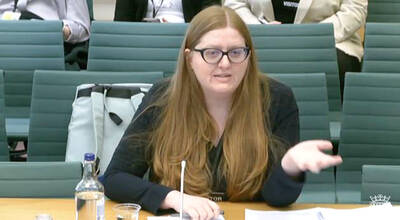
CONDITIONAL: The PRC imposes secret requirements that the funding it provides cannot be spent in states with diplomatic relations with Taiwan, Emma Reilly said China has been bribing UN officials to obtain “special benefits” and to block funding from countries that have diplomatic ties with Taiwan, a former UN employee told the British House of Commons on Tuesday. At a House of Commons Foreign Affairs Committee hearing into “international relations within the multilateral system,” former Office of the UN High Commissioner for Human Rights (OHCHR) employee Emma Reilly said in a written statement that “Beijing paid bribes to the two successive Presidents of the [UN] General Assembly” during the two-year negotiation of the Sustainable Development Goals. Another way China exercises influence within the UN Secretariat is

LANDSLIDES POSSIBLE: The agency advised the public to avoid visiting mountainous regions due to more expected aftershocks and rainfall from a series of weather fronts A series of earthquakes over the past few days were likely aftershocks of the April 3 earthquake in Hualien County, with further aftershocks to be expected for up to a year, the Central Weather Administration (CWA) said yesterday. Based on the nation’s experience after the quake on Sept. 21, 1999, more aftershocks are possible over the next six months to a year, the agency said. A total of 103 earthquakes of magnitude 4 on the local magnitude scale or higher hit Hualien County from 5:08pm on Monday to 10:27am yesterday, with 27 of them exceeding magnitude 5. They included two, of magnitude

Taiwan’s first drag queen to compete on the internationally acclaimed RuPaul’s Drag Race, Nymphia Wind (妮妃雅), was on Friday crowned the “Next Drag Superstar.” Dressed in a sparkling banana dress, Nymphia Wind swept onto the stage for the final, and stole the show. “Taiwan this is for you,” she said right after show host RuPaul announced her as the winner. “To those who feel like they don’t belong, just remember to live fearlessly and to live their truth,” she said on stage. One of the frontrunners for the past 15 episodes, the 28-year-old breezed through to the final after weeks of showcasing her unique


 RSS
RSS