


With losses at General Motors Corp (GM) mounting, US sales and market share plunging and other storm clouds raising the specter of bankruptcy, many have questioned the leadership of chief executive and chairman Rick Wagoner.
His primary goal at the automaker's annual shareholders meeting last week was to restore confidence. It was, all in all, a relatively good day for the 55-year-old.
Despite the anticipated critics -- one dissident shareholder suggested that he be indicted -- there were those praising Wagoner's "quiet confidence" and steady leadership during one of the roughest patches in GM's long history.
Strong first-quarter earnings have helped soften the skepticism that followed a US$10.6 billion loss last year.
And a series of public appearances has given Wagoner the chance to show himself as the man with the master plan.
"It's important to understand that our goal in this restructuring is not just to change GM's bottom line from red to black," Wagoner declared during the shareholders meeting last week.
"Our goal is to structure GM for sustained profitability and growth to set us up to be successful for years to come in this ever more global auto industry."
Whether Wagoner can pull it off is a question that divides many in the automotive community.
The ongoing problems with GM's former parts division, the now-bankrupt Delphi Corp, have not helped, and many cynics wonder whether there is enough time left to fix both the product portfolio and the automaker's myriad other problems.
But in recent months, Wagoner has garnered several votes of support. The GM board renewed his chairman's mandate. Then restated first-quarter results and the success of GM's employee buyout program transformed Merrill Lynch analyst John Murphy from bear to bull.
Issuing a "buy" recommendation on May 24, Murphy sent GM shares soaring more than 8 percent in a day.
Wagoner is significantly younger than the patriarchs who have traditionally ruled GM. Perhaps it is the impatience of his relative youth, but her also operates at a different pace, more in tune with Silicon Valley than the Motor City.
The combination of "bigness, bureaucracy and slowness [are] the absolute enemy of what you need to do in the business world," he is fond of saying.
There is no question GM is a lot smaller than the company Wagoner took control of as CEO on June 1, 2000. His top priority is to slash US$7 billion in costs by the end of this year, much of that by closing plants and cutting tens of thousands of hourly and salaried jobs.
It is not all about cost cutting, though. Wagoner sees tremendous opportunity for a more streamlined product development system integrating GM's varied global operations. The new approach is to develop a common "architecture," whose design details and content can be tweaked for a specific market.
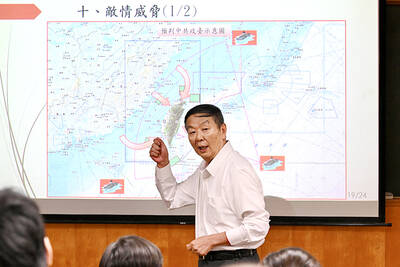
RETHINK? The defense ministry and Navy Command Headquarters could take over the indigenous submarine project and change its production timeline, a source said Admiral Huang Shu-kuang’s (黃曙光) resignation as head of the Indigenous Submarine Program and as a member of the National Security Council could affect the production of submarines, a source said yesterday. Huang in a statement last night said he had decided to resign due to national security concerns while expressing the hope that it would put a stop to political wrangling that only undermines the advancement of the nation’s defense capabilities. Taiwan People’s Party Legislator Vivian Huang (黃珊珊) yesterday said that the admiral, her older brother, felt it was time for him to step down and that he had completed what he
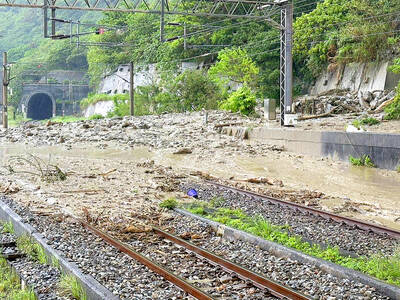
ROLLER-COASTER RIDE: More than five earthquakes ranging from magnitude 4.4 to 5.5 on the Richter scale shook eastern Taiwan in rapid succession yesterday afternoon Back-to-back weather fronts are forecast to hit Taiwan this week, resulting in rain across the nation in the coming days, the Central Weather Administration said yesterday, as it also warned residents in mountainous regions to be wary of landslides and rockfalls. As the first front approached, sporadic rainfall began in central and northern parts of Taiwan yesterday, the agency said, adding that rain is forecast to intensify in those regions today, while brief showers would also affect other parts of the nation. A second weather system is forecast to arrive on Thursday, bringing additional rain to the whole nation until Sunday, it

CONDITIONAL: The PRC imposes secret requirements that the funding it provides cannot be spent in states with diplomatic relations with Taiwan, Emma Reilly said China has been bribing UN officials to obtain “special benefits” and to block funding from countries that have diplomatic ties with Taiwan, a former UN employee told the British House of Commons on Tuesday. At a House of Commons Foreign Affairs Committee hearing into “international relations within the multilateral system,” former Office of the UN High Commissioner for Human Rights (OHCHR) employee Emma Reilly said in a written statement that “Beijing paid bribes to the two successive Presidents of the [UN] General Assembly” during the two-year negotiation of the Sustainable Development Goals. Another way China exercises influence within the UN Secretariat is
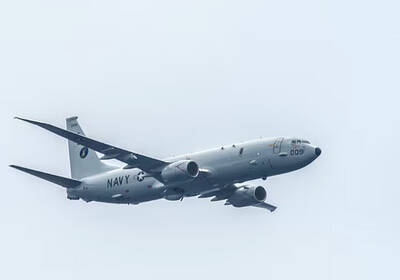
CHINA REACTS: The patrol and reconnaissance plane ‘transited the Taiwan Strait in international airspace,’ the 7th Fleet said, while Taipei said it saw nothing unusual The US 7th Fleet yesterday said that a US Navy P-8A Poseidon flew through the Taiwan Strait, a day after US and Chinese defense heads held their first talks since November 2022 in an effort to reduce regional tensions. The patrol and reconnaissance plane “transited the Taiwan Strait in international airspace,” the 7th Fleet said in a news release. “By operating within the Taiwan Strait in accordance with international law, the United States upholds the navigational rights and freedoms of all nations.” In a separate statement, the Ministry of National Defense said that it monitored nearby waters and airspace as the aircraft


 RSS
RSS