


After years of accusations that it caused the demise of thousands of smaller merchants, Wal-Mart Stores Inc is undertaking an unusual strategy -- helping competing local establishments stay in business.
Wal-Mart recasting itself as a friendly neighbor? It's the latest course change by the world's largest merchant as it tries to modify its corporate culture -- and the perception that it's a ruthless competitor obsessed with maintaining its dominance of the retail industry.
Wal-Mart's proposal to help rival small businesses, from bakeries to hardware stores, focuses on blighted urban markets where the retailer plans to open 50 stores within the next two years. The efforts will range from giving those businesses financial grants to producing free radio ads that will be broadcast on its stores' radio network.
And the company, which has long been shrouded in secrecy, is trying to appear more transparent. Late last year, it sponsored a debate among a group of economists about whether Wal-Mart is good or bad for the economy. And it's holding its second annual media conference starting today near its Bentonville, Arkansas, headquarters, to share information about the company, from its plans to improve its stores to updates on its employee health care proposals.
The changes are Wal-Mart's response to critics, particularly union-backed groups, who have long argued that the firm has exploited the business model of folksy founder Sam Walton, putting profits before its own employees and towns and cities where it does business.
"The notion that Sam Walton cared about its workers, and the community, those positive aspects have gone," said Chris Kofinis, spokesman for a campaign group funded by the United Food and Commercial Workers.
He described the recently announced moves as a series of public relations stunts.
Analysts say that although Wal-Mart is used to succeeding, it has no guarantees in this endeavor, especially since its core business model -- built around offering incredibly low prices -- won't change.
"The culture remains frugal and very focused on costs and price ... It is going to be very hard to change the culture of the company," said Charles Fishman, author of The Wal-Mart Effect, a book on the firm's impact on the national economy. "Their image of themselves is powerfully fixed, and our image as shoppers is very powerfully fixed."
In fact, as part of its ongoing cost-cutting campaign, Wal-Mart plans to become more reliant on part-time workers, which now account for about 20 percent of its workforce.
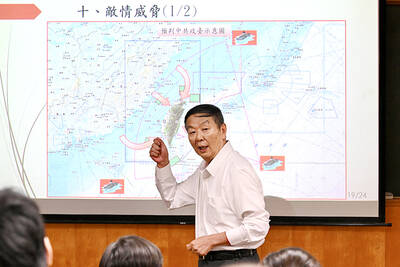
RETHINK? The defense ministry and Navy Command Headquarters could take over the indigenous submarine project and change its production timeline, a source said Admiral Huang Shu-kuang’s (黃曙光) resignation as head of the Indigenous Submarine Program and as a member of the National Security Council could affect the production of submarines, a source said yesterday. Huang in a statement last night said he had decided to resign due to national security concerns while expressing the hope that it would put a stop to political wrangling that only undermines the advancement of the nation’s defense capabilities. Taiwan People’s Party Legislator Vivian Huang (黃珊珊) yesterday said that the admiral, her older brother, felt it was time for him to step down and that he had completed what he

Taiwan has experienced its most significant improvement in the QS World University Rankings by Subject, data provided on Sunday by international higher education analyst Quacquarelli Symonds (QS) showed. Compared with last year’s edition of the rankings, which measure academic excellence and influence, Taiwanese universities made great improvements in the H Index metric, which evaluates research productivity and its impact, with a notable 30 percent increase overall, QS said. Taiwanese universities also made notable progress in the Citations per Paper metric, which measures the impact of research, achieving a 13 percent increase. Taiwanese universities gained 10 percent in Academic Reputation, but declined 18 percent

UNDER DISCUSSION: The combatant command would integrate fast attack boat and anti-ship missile groups to defend waters closest to the coastline, a source said The military could establish a new combatant command as early as 2026, which would be tasked with defending Taiwan’s territorial waters 24 nautical miles (44.4km) from the nation’s coastline, a source familiar with the matter said yesterday. The new command, which would fall under the Naval Command Headquarters, would be led by a vice admiral and integrate existing fast attack boat and anti-ship missile groups, along with the Naval Maritime Surveillance and Reconnaissance Command, said the source, who asked to remain anonymous. It could be launched by 2026, but details are being discussed and no final timetable has been announced, the source
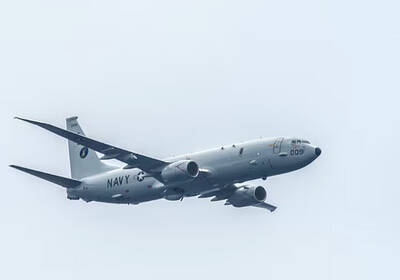
CHINA REACTS: The patrol and reconnaissance plane ‘transited the Taiwan Strait in international airspace,’ the 7th Fleet said, while Taipei said it saw nothing unusual The US 7th Fleet yesterday said that a US Navy P-8A Poseidon flew through the Taiwan Strait, a day after US and Chinese defense heads held their first talks since November 2022 in an effort to reduce regional tensions. The patrol and reconnaissance plane “transited the Taiwan Strait in international airspace,” the 7th Fleet said in a news release. “By operating within the Taiwan Strait in accordance with international law, the United States upholds the navigational rights and freedoms of all nations.” In a separate statement, the Ministry of National Defense said that it monitored nearby waters and airspace as the aircraft


 RSS
RSS