


With your first course, eat the plates. For your drink, sip out of a tulip. And if there's too much sun coming in, close the salami.
Welcome to the world of "food design" where, even if you are not what you eat, you eat where you are.
In Tokyo, home to thousands of restaurants serving cuisine from almost every nation, the food business hopes to tap a new upscale market by uniting the city's passions for eating and design.
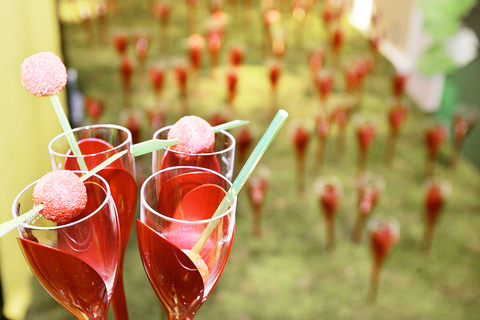
PHOTO: AFP
The concept launched in France four years ago has made its first foray into Tokyo with a five-day exhibition at an interior showroom in Omotesando district that drew thousands of people in for a peek.
Upon entering the "restaurant," guests are served their appetizers on what appear to be grape leaves instead of plates and which carry writing that says "Eat me". Despite the texture of cardboard, they are made of flour and edible.
On to the interior, where what appear to be mere curtains turn out to be made of silky ham and salami, which guests are invited to eat.
And the drinks are served in glasses that resemble red tulips, though these are inedible.
"It's a new way of eating, but it is not just about eating. It's also discovering all your senses," says Olivier Voisin, who supervised the food for the Tokyo event.
As seen in Andy Warhol's Campbell's soup can, food and art have always had an intimate relationship, he says.
"What we are trying to do is to get a chef and a designer work together to create a new way of eating," Voisin says.
The Japanese love their fish, but food design offers a rare experience for Tokyo. They can drop their fish into a large container and watch it "swim" in the sauce, as it sinks and then floats.
And for dessert, the guest can pull down a balloon -- and eat the macaroon hanging down from the string.
"I do `food design' on a plate every day but this type of event is a first for me," says Dominique Corby, a French chef who runs a restaurant in Tokyo's glitzy Ginza area who collaborated with a designer on the event's meat courses.
Even though "food design" originated in France, it exists primarily in galleries with little presence in restaurants.
The food industry hopes to develop it in Japan, a country that takes both eating and style seriously.
"A new challenge like this, with a fusion of food and high-level design, will stimulate the market," says Tomoyoshi Yokota, an executive chef at ANA Hotel Tokyo, one of Japan's leading hotels.
Although customers come first and foremost to a restaurant to eat, they can also prioritize things such as service and atmosphere, he says.
"It is difficult for a chef to seize all the elements. But the chef can create a concept for his restaurant and show the way for food design. And he can collaborate with someone professional in food design to add value," Yokota says.
Many countries can only dream of lavishing as much attention to how their food looks. And even in a wealthy country ready to splurge, some customers are bound to be turned off by the concept.
"If designers don't have enough understanding, or at least interest, in a type of food, the collaboration might turn out to be simply a design event," Yokota says.
Voisin says that the food design could spread in Japan by gradually introducing elements in restaurants, hotels and weddings -- not offering a full-set food-design meal.
"We want to provide something good but a little more fun," Voisin says.
Maia Maniglier, a kimono designer who was a media consultant for the Tokyo event, predicts food design will gradually develop in Japanese restaurants.
"It's not one pattern. It can evolve in many ways," she says.
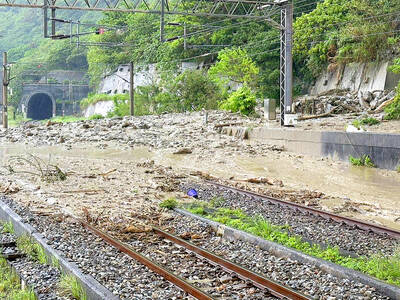
ROLLER-COASTER RIDE: More than five earthquakes ranging from magnitude 4.4 to 5.5 on the Richter scale shook eastern Taiwan in rapid succession yesterday afternoon Back-to-back weather fronts are forecast to hit Taiwan this week, resulting in rain across the nation in the coming days, the Central Weather Administration said yesterday, as it also warned residents in mountainous regions to be wary of landslides and rockfalls. As the first front approached, sporadic rainfall began in central and northern parts of Taiwan yesterday, the agency said, adding that rain is forecast to intensify in those regions today, while brief showers would also affect other parts of the nation. A second weather system is forecast to arrive on Thursday, bringing additional rain to the whole nation until Sunday, it

CONDITIONAL: The PRC imposes secret requirements that the funding it provides cannot be spent in states with diplomatic relations with Taiwan, Emma Reilly said China has been bribing UN officials to obtain “special benefits” and to block funding from countries that have diplomatic ties with Taiwan, a former UN employee told the British House of Commons on Tuesday. At a House of Commons Foreign Affairs Committee hearing into “international relations within the multilateral system,” former Office of the UN High Commissioner for Human Rights (OHCHR) employee Emma Reilly said in a written statement that “Beijing paid bribes to the two successive Presidents of the [UN] General Assembly” during the two-year negotiation of the Sustainable Development Goals. Another way China exercises influence within the UN Secretariat is
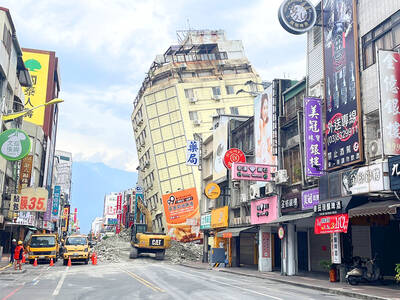
LANDSLIDES POSSIBLE: The agency advised the public to avoid visiting mountainous regions due to more expected aftershocks and rainfall from a series of weather fronts A series of earthquakes over the past few days were likely aftershocks of the April 3 earthquake in Hualien County, with further aftershocks to be expected for up to a year, the Central Weather Administration (CWA) said yesterday. Based on the nation’s experience after the quake on Sept. 21, 1999, more aftershocks are possible over the next six months to a year, the agency said. A total of 103 earthquakes of magnitude 4 on the local magnitude scale or higher hit Hualien County from 5:08pm on Monday to 10:27am yesterday, with 27 of them exceeding magnitude 5. They included two, of magnitude
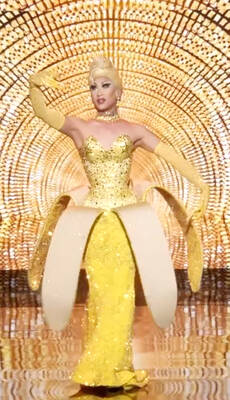
Taiwan’s first drag queen to compete on the internationally acclaimed RuPaul’s Drag Race, Nymphia Wind (妮妃雅), was on Friday crowned the “Next Drag Superstar.” Dressed in a sparkling banana dress, Nymphia Wind swept onto the stage for the final, and stole the show. “Taiwan this is for you,” she said right after show host RuPaul announced her as the winner. “To those who feel like they don’t belong, just remember to live fearlessly and to live their truth,” she said on stage. One of the frontrunners for the past 15 episodes, the 28-year-old breezed through to the final after weeks of showcasing her unique


 RSS
RSS