


Garry Evans has been a busy man lately, jetting off to meetings in the US to advise enthusiastic fund managers on one of the hottest topics in investing: this year's big rally in the Japanese stock market.
"There are two types of views on Japan -- there's bullish and there's very bullish," said Evans, a Hong Kong-based Asia equity analyst for HSBC Securities Inc.
"That is clearly where people's biggest interest is at the moment," he said.
Foreign money, nearly two-thirds of it from North America, has piled into Japan in recent months, fueling a 27 percent jump in the Tokyo Stock Exchange's benchmark NIKKEI 225 Index since May and feeding record-high trading volumes.
Overseas investors plowed a net ¥4.753 trillion (US$40.6 billion) into Japanese shares from July to September alone -- more than half of last year's total -- and now account for 60 percent of daily trading, according to Tokyo Stock Exchange data. A quarter of all shares listed in Tokyo are currently owned by non-Japanese investors.
The surge is supported by new optimism about the world's second-largest economy and may even sap momentum from Wall Street as investors look across the Pacific.
But analysts also warn the party could end with a hangover amid concerns about a global slowdown, the US dollar's rise and a suspicious absence of Japanese buyers.
Underscoring the rally, trading volume hit an all-time high of 4.558 billion shares on Tuesday for the 1,600 companies listed on the Tokyo exchange's first section -- more than that day's combined turnover on the New York Stock Exchange and the NASDAQ.
Japanese stocks had lost about 80 percent of their value between late 1989 and 2003, as the country struggled with a burst real-estate bubble, sluggish corporate earnings, rising unemployment and mountains of bad debt at the nation's banks.
Now, Japan's steady economic recovery makes the stock market seem like a bargain-priced safe haven, while concerns about inflation and interest rate hikes in the US undercut enthusiasm for Wall Street, which has mostly flatlined this year.
US and other foreign investors "are looking to diversify their risks," said Stuart Cox, who manages US$223 million invested in Tokyo through the JP Morgan Japan Equity Fund. And Japan's economy is "starting to stand on its own two feet."
Cox predicts the NIKKEI will approach 16,000 by the end of next year, compared with Wednesday's close of 14,072.20, which was just shy of a four-and-a-half-year high.
Japan's economic growth was recently upgraded to 3.3 percent in the April-June quarter from an earlier estimate of 1.1 percent. The banks' bad loans are largely behind them, and land prices are rising for the first time in 15 years.
Unemployment has ticked up a bit since dropping to 4.1 percent in June, its lowest since 1998, but rising wages have spurred consumer spending and companies have increased investment.
But Japanese investors, not fully convinced that the economy is really pulling out of its 15-year slump, have largely been absent from the market's rally.
Japanese were net sellers of about ¥1.258 trillion in shares in September, according to the Tokyo Stock Exchange.
To be sure, risks do abound, including growing competition with other Asian rivals like South Korea, particularly in electronics, and possible slackening demand from the US, a key export market.
"The Japanese stock market is very sensitive to the world economy," said Seiki Orimi, a strategist at UFJ Tsubasa Securities in Tokyo. "I believe the current movement is very much driven by short-term investors."
He predicts the stock boom will begin to taper in April, and that foreigners will start taking profits in the second half of next year.
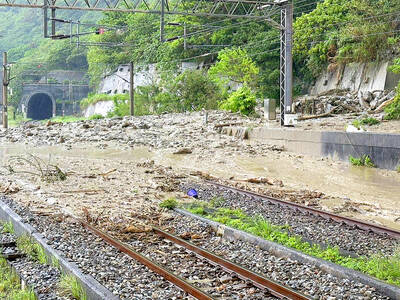
ROLLER-COASTER RIDE: More than five earthquakes ranging from magnitude 4.4 to 5.5 on the Richter scale shook eastern Taiwan in rapid succession yesterday afternoon Back-to-back weather fronts are forecast to hit Taiwan this week, resulting in rain across the nation in the coming days, the Central Weather Administration said yesterday, as it also warned residents in mountainous regions to be wary of landslides and rockfalls. As the first front approached, sporadic rainfall began in central and northern parts of Taiwan yesterday, the agency said, adding that rain is forecast to intensify in those regions today, while brief showers would also affect other parts of the nation. A second weather system is forecast to arrive on Thursday, bringing additional rain to the whole nation until Sunday, it

CONDITIONAL: The PRC imposes secret requirements that the funding it provides cannot be spent in states with diplomatic relations with Taiwan, Emma Reilly said China has been bribing UN officials to obtain “special benefits” and to block funding from countries that have diplomatic ties with Taiwan, a former UN employee told the British House of Commons on Tuesday. At a House of Commons Foreign Affairs Committee hearing into “international relations within the multilateral system,” former Office of the UN High Commissioner for Human Rights (OHCHR) employee Emma Reilly said in a written statement that “Beijing paid bribes to the two successive Presidents of the [UN] General Assembly” during the two-year negotiation of the Sustainable Development Goals. Another way China exercises influence within the UN Secretariat is
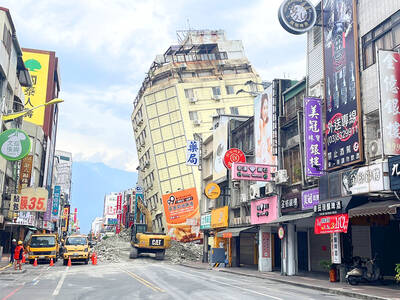
LANDSLIDES POSSIBLE: The agency advised the public to avoid visiting mountainous regions due to more expected aftershocks and rainfall from a series of weather fronts A series of earthquakes over the past few days were likely aftershocks of the April 3 earthquake in Hualien County, with further aftershocks to be expected for up to a year, the Central Weather Administration (CWA) said yesterday. Based on the nation’s experience after the quake on Sept. 21, 1999, more aftershocks are possible over the next six months to a year, the agency said. A total of 103 earthquakes of magnitude 4 on the local magnitude scale or higher hit Hualien County from 5:08pm on Monday to 10:27am yesterday, with 27 of them exceeding magnitude 5. They included two, of magnitude
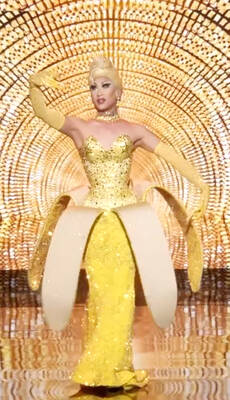
Taiwan’s first drag queen to compete on the internationally acclaimed RuPaul’s Drag Race, Nymphia Wind (妮妃雅), was on Friday crowned the “Next Drag Superstar.” Dressed in a sparkling banana dress, Nymphia Wind swept onto the stage for the final, and stole the show. “Taiwan this is for you,” she said right after show host RuPaul announced her as the winner. “To those who feel like they don’t belong, just remember to live fearlessly and to live their truth,” she said on stage. One of the frontrunners for the past 15 episodes, the 28-year-old breezed through to the final after weeks of showcasing her unique


 RSS
RSS