


The chiefs of five major oil companies defended the industry's huge profits on Wednesday at a US Senate hearing, where lawmakers said they should explain prices and assure people they're not being gouged.
There is a "growing suspicion that oil companies are taking unfair advantage," Senator Pete Domenici said as the hearing opened in a packed Senate committee room.
"The oil companies owe the country an explanation," he said.
Lee Raymond, chairman of Exxon Mobil Corp, said he recognizes that high gasoline prices "have put a strain on Americans' household budgets" but he defended his company's huge profits, saying petroleum earnings "go up and down" from year to year.
ExxonMobil, the worlds' largest publicly traded oil company, earned nearly US$10 billion in the third quarter. Raymond was joined at the witness table by the chief executives of Chevron, ConocoPhillips, BPAmerica and Shell Oil USA.
Together the companies earned more than US$25 billion in profits in the July-September quarter as the price of crude oil hit US$70 a barrel and gasoline surged to record levels after the disruptions of Hurricanes Katrina and Rita.
Raymond said the profits are in line with other industries when they are compared to the industry's enormous revenues.
Democrats had wanted the executives to testify under oath, but Republicans rejected the idea.
"If I were a witness I would demand to be put under oath," said Senator Daniel Inouye, a Democrat from Hawaii.
The soaring prices have sent shivers through a Congress worried about political fallout.
The White House said US President George W. Bush was concerned about energy prices.
"Energy prices have been too high and energy companies have realized significant increases in profits," spokesman Scott McClellan said.
"It's important that the private sector be good corporate citizens and invest in the energy infrastructure and support those who are in need," he said.
A number of Democrats, joined by a few Republicans, have called for a windfall profits tax on oil companies.
Domenici said he opposed such a move saying "it didn't work before and probably won't work again."
The government imposed taxes on oil company windfall profits in the 1970s, resulting in a drop in investment in oil development.
The executives hoped to dampen any further momentum for calls for taxing windfall oil company profits, something still viewed as a longshot but also no longer out of the question. Such a tax could inhibit investment in refineries or oil exploration and production, the industry argues.
James Mulla, chairman of ConocoPhillips, said "we are ready open our records" to dispute allegations of price gouging. ConocoPhillips earned US$3.8 billion in the third quarter, an 89 percent increase over a year earlier. But he said that represents only a 7.7 percent profit margin for every dollar of sales.
"We do not consider that a windfall," Mulva said.
David O'Reilly, chairman of Chevron, attributed the high energy prices to tight supplies even before the Gulf hurricanes hit and said his company is "investing aggressively in the development of new energy supplies."
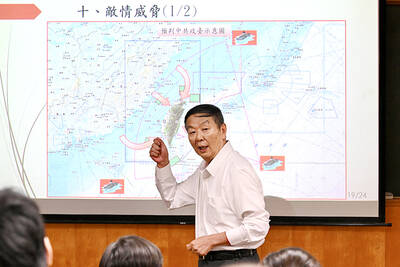
RETHINK? The defense ministry and Navy Command Headquarters could take over the indigenous submarine project and change its production timeline, a source said Admiral Huang Shu-kuang’s (黃曙光) resignation as head of the Indigenous Submarine Program and as a member of the National Security Council could affect the production of submarines, a source said yesterday. Huang in a statement last night said he had decided to resign due to national security concerns while expressing the hope that it would put a stop to political wrangling that only undermines the advancement of the nation’s defense capabilities. Taiwan People’s Party Legislator Vivian Huang (黃珊珊) yesterday said that the admiral, her older brother, felt it was time for him to step down and that he had completed what he
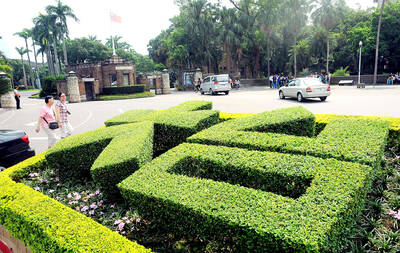
Taiwan has experienced its most significant improvement in the QS World University Rankings by Subject, data provided on Sunday by international higher education analyst Quacquarelli Symonds (QS) showed. Compared with last year’s edition of the rankings, which measure academic excellence and influence, Taiwanese universities made great improvements in the H Index metric, which evaluates research productivity and its impact, with a notable 30 percent increase overall, QS said. Taiwanese universities also made notable progress in the Citations per Paper metric, which measures the impact of research, achieving a 13 percent increase. Taiwanese universities gained 10 percent in Academic Reputation, but declined 18 percent
UNDER DISCUSSION: The combatant command would integrate fast attack boat and anti-ship missile groups to defend waters closest to the coastline, a source said The military could establish a new combatant command as early as 2026, which would be tasked with defending Taiwan’s territorial waters 24 nautical miles (44.4km) from the nation’s coastline, a source familiar with the matter said yesterday. The new command, which would fall under the Naval Command Headquarters, would be led by a vice admiral and integrate existing fast attack boat and anti-ship missile groups, along with the Naval Maritime Surveillance and Reconnaissance Command, said the source, who asked to remain anonymous. It could be launched by 2026, but details are being discussed and no final timetable has been announced, the source
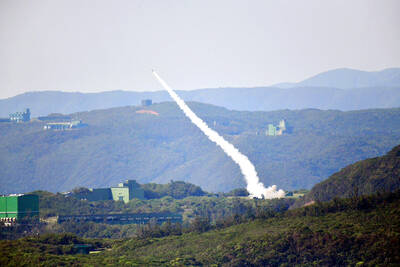
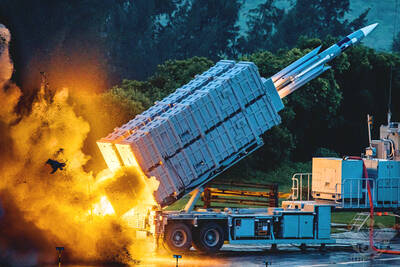
SHOT IN THE ARM: The new system can be integrated with Avenger and Stinger missiles to bolster regional air defense capabilities, a defense ministry report said Domestically developed Land Sword II (陸射劍二) missiles were successfully launched and hit target drones during a live-fire exercise at the Jiupeng Military Base in Pingtung County yesterday. The missiles, developed by the Chungshan Institute of Science and Technology (CSIST), were originally scheduled to launch on Tuesday last week, after the Tomb Sweeping Day holiday long weekend, but were postponed to yesterday due to weather conditions. Local residents and military enthusiasts gathered outside the base to watch the missile tests, with the first one launching at 9:10am. The Land Sword II system, which is derived from the Sky Sword II (天劍二) series, was turned


 RSS
RSS