


European executives including Skype Technologies SA's Niklas Zennstroem and Royal Philips Electronics NV's Frans Van Houten said the region's long holidays and work ethic are behind the growing shift of jobs to Asia.
About 550 executives from technology companies ranging from German software maker SAP AG to chipmaker Freescale Semiconductor Inc. gathered in Athens, Greece, for four days to discuss trends in their industry. Their verdict halfway through the event is that European workers take too much time off and lack the zeal of their Asian counterparts.
"I would like to see the same hunger in Europe to achieve as people in Asia have," said Van Houten, who heads the semiconductor division of Amsterdam-based Philips. "Europe would do well to return to the 40-hour-plus workweek."
Short work week
Rigid labor markets and wage costs in Western Europe that are among the highest in the world are prompting companies to build new factories in low-cost regions such as Eastern Europe or India and hire more people abroad than they do locally. Europeans work fewer hours as well. The average German employee worked 1,443 hours last year, while in Korea it was 2,380 hours, in Japan 1,789 hours and in the US 1,824 hours, according to OECD statistics.
SAP, the world's largest maker of business-management software, says most of the 4,500 people it plans to hire this year will be in Asia. German companies ranging from DaimlerChrysler AG to Siemens AG to have forced some employees to work longer hours for the same pay to avoid moving production abroad. Some Siemens workers making phones now work 40 hours a week again, up from 35.
Western German manufacturing wage costs are the world's highest after Denmark, weighing on growth prospects for Europe's largest economy, according to calculations by the Cologne-based IW economic institute. That's prompted executives to call on the country's politicians to ease their wage burden by cutting mandatory social security contributions.
Need for change
The business conference in Athens, called European Technology Roundtable Exhibition, or ETRE, brings together bankers, venture capitalists, executives from technology companies and politicians to discuss the future of the information technology industry. Athens mayor Dora Bakoyannis told ETRE visitors Greece is starting to embrace changes, making it easier for companies to invest.
"Nobody in Europe believes that we can think as we did 50 years ago, with a slow labor market," Bakoyannis said. "Things have changed, and most countries in Europe are aware of this."
People in France work an average of 39.1 hours per week, the least among the 25 EU countries, according to Eurostat, the EU's Luxembourg-based statistics office. That compares with 42.2 hours in the UK and 42.6 hours in Poland.
Over the past two years, France has watered down the 35-hour workweek, allowing employees to work as many as 48 hours a week for more pay. In December last year, the parliament approved a five-year plan of tax breaks and new spending to spur hiring.
"We have made mistakes in the past," Clara Gaymard, who runs a state agency promoting foreign investment in France, said at ETRE. "We are making a lot of reforms, but it takes time."
Too many demands
Zennstroem, the Swedish founder and chief executive of Internet telephony company Skype, said Europeans' reluctance to drop some of their privileges is making it harder for young companies to attract employees.
"In the US and in Asia, people are a lot more entrepreneurial and willing to take risks," Zennstroem said in a speech at the conference. "In Sweden, people still want to have their five-week vacation, which is impossible in a start-up."
Still, the demands by Zenn-stroem's fellow countrymen haven't prevented Sweden from ranking as one of the three most competitive economies besides Finland and the US, according to a report by the World Economic Forum published last month.
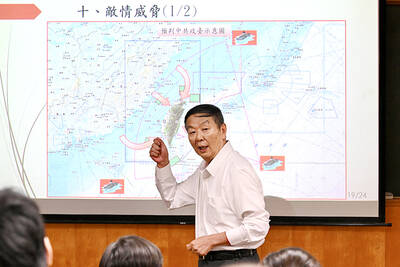
RETHINK? The defense ministry and Navy Command Headquarters could take over the indigenous submarine project and change its production timeline, a source said Admiral Huang Shu-kuang’s (黃曙光) resignation as head of the Indigenous Submarine Program and as a member of the National Security Council could affect the production of submarines, a source said yesterday. Huang in a statement last night said he had decided to resign due to national security concerns while expressing the hope that it would put a stop to political wrangling that only undermines the advancement of the nation’s defense capabilities. Taiwan People’s Party Legislator Vivian Huang (黃珊珊) yesterday said that the admiral, her older brother, felt it was time for him to step down and that he had completed what he

Taiwan has experienced its most significant improvement in the QS World University Rankings by Subject, data provided on Sunday by international higher education analyst Quacquarelli Symonds (QS) showed. Compared with last year’s edition of the rankings, which measure academic excellence and influence, Taiwanese universities made great improvements in the H Index metric, which evaluates research productivity and its impact, with a notable 30 percent increase overall, QS said. Taiwanese universities also made notable progress in the Citations per Paper metric, which measures the impact of research, achieving a 13 percent increase. Taiwanese universities gained 10 percent in Academic Reputation, but declined 18 percent
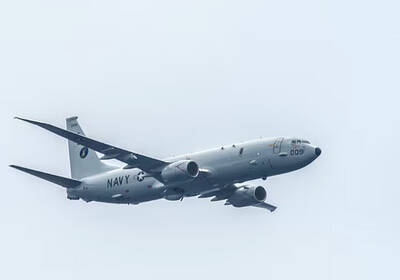
CHINA REACTS: The patrol and reconnaissance plane ‘transited the Taiwan Strait in international airspace,’ the 7th Fleet said, while Taipei said it saw nothing unusual The US 7th Fleet yesterday said that a US Navy P-8A Poseidon flew through the Taiwan Strait, a day after US and Chinese defense heads held their first talks since November 2022 in an effort to reduce regional tensions. The patrol and reconnaissance plane “transited the Taiwan Strait in international airspace,” the 7th Fleet said in a news release. “By operating within the Taiwan Strait in accordance with international law, the United States upholds the navigational rights and freedoms of all nations.” In a separate statement, the Ministry of National Defense said that it monitored nearby waters and airspace as the aircraft
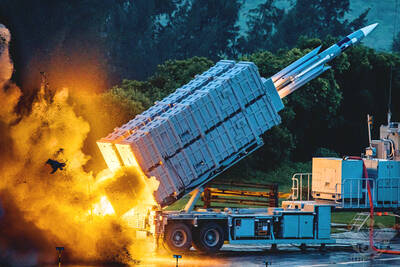
UNDER DISCUSSION: The combatant command would integrate fast attack boat and anti-ship missile groups to defend waters closest to the coastline, a source said The military could establish a new combatant command as early as 2026, which would be tasked with defending Taiwan’s territorial waters 24 nautical miles (44.4km) from the nation’s coastline, a source familiar with the matter said yesterday. The new command, which would fall under the Naval Command Headquarters, would be led by a vice admiral and integrate existing fast attack boat and anti-ship missile groups, along with the Naval Maritime Surveillance and Reconnaissance Command, said the source, who asked to remain anonymous. It could be launched by 2026, but details are being discussed and no final timetable has been announced, the source


 RSS
RSS