


Only a handful of companies got the majority of payments from a controversial US anti-dumping law that aims to compensate industries affected by unfair trade, a congressional report showed on Monday, prompting new calls for repeal.
The Government Accountability Report found a number of problems with the so-called Byrd Amendment, which was found in violation of global trade agreements by the WTO.
The report said two-thirds of the payments went to three industries -- ball bearings, iron and steel, and candles -- and that over a third went to bearing and steel maker Timken and a group it acquired, the Torrington Co.
The GAO report highlighted concerns about the US law, which has provoked ire from major trading partners, leading to a threat of retaliatory sanctions from Japan, the EU and Canada.
"The irony is that the program actually creates unfair competition," said Senator Charles Grassley, head of the finance committee, after the report was issued.
"Unlike our trade remedy laws, where all producers of an unfairly traded product get relief, [the Byrd Amendment] funnels money to a select few."
Grassley said the program "lines corporate coffers for a select few, and too many innocent companies and workers end up paying the tab. We need to end this unfair subsidization as soon as possible."
The National Retail Federation (NRF) said the report shows a need to urgently repeal the law, named for Senator Robert Byrd.
"This report confirms everything we've ever said about why the Byrd Amendment should be overturned," NRF vice president Erik Autor said.
"It's a violation of international trade rules that's drawing retaliation from our trade partners and undermines our ability to force other nations to play by the rules, it encourages the filing of frivolous anti-dumping cases, and it does nothing to create or protect US jobs," he said.
"The Byrd Amendment virtually defines corporate welfare," he said. "This is a massive payola scheme that takes money out of the US Treasury and uses it to line the pockets of private companies that have done nothing to earn it except sign on to anti-dumping petitions that drive up prices for American consumers."
The report said the law is saddled with other problems, including a lack of accountability from the firms and the Customs and Border Protection (CBP), which disburses the money.
"Most companies are not accountable for the claims they file because they do not have to support their claims and CBP does not systematically verify the claims," the report said.
As to the intended effect of compensating for unfair trade, the GAO said there were "mixed effects" reported by companies.
"Top recipients we surveyed said that [the Byrd Amendment] had beneficial effects, but the degree varied," it said.
"In four of seven industries we examined, recipients reported benefits, but some non-recipients noted ... payments gave their competitors an unfair advantage," it said.
Timken received 20 percent of the funds, or US$205 million, and Torrington was paid US$135 million.
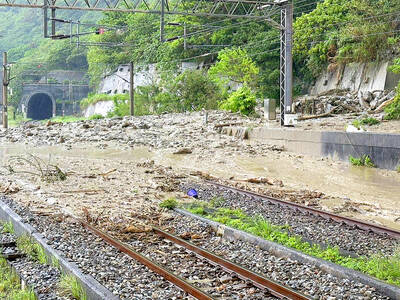
ROLLER-COASTER RIDE: More than five earthquakes ranging from magnitude 4.4 to 5.5 on the Richter scale shook eastern Taiwan in rapid succession yesterday afternoon Back-to-back weather fronts are forecast to hit Taiwan this week, resulting in rain across the nation in the coming days, the Central Weather Administration said yesterday, as it also warned residents in mountainous regions to be wary of landslides and rockfalls. As the first front approached, sporadic rainfall began in central and northern parts of Taiwan yesterday, the agency said, adding that rain is forecast to intensify in those regions today, while brief showers would also affect other parts of the nation. A second weather system is forecast to arrive on Thursday, bringing additional rain to the whole nation until Sunday, it
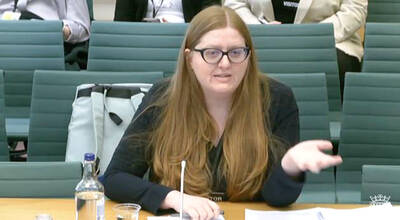
CONDITIONAL: The PRC imposes secret requirements that the funding it provides cannot be spent in states with diplomatic relations with Taiwan, Emma Reilly said China has been bribing UN officials to obtain “special benefits” and to block funding from countries that have diplomatic ties with Taiwan, a former UN employee told the British House of Commons on Tuesday. At a House of Commons Foreign Affairs Committee hearing into “international relations within the multilateral system,” former Office of the UN High Commissioner for Human Rights (OHCHR) employee Emma Reilly said in a written statement that “Beijing paid bribes to the two successive Presidents of the [UN] General Assembly” during the two-year negotiation of the Sustainable Development Goals. Another way China exercises influence within the UN Secretariat is
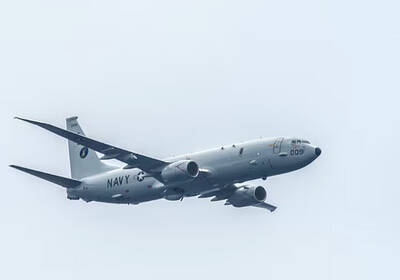
CHINA REACTS: The patrol and reconnaissance plane ‘transited the Taiwan Strait in international airspace,’ the 7th Fleet said, while Taipei said it saw nothing unusual The US 7th Fleet yesterday said that a US Navy P-8A Poseidon flew through the Taiwan Strait, a day after US and Chinese defense heads held their first talks since November 2022 in an effort to reduce regional tensions. The patrol and reconnaissance plane “transited the Taiwan Strait in international airspace,” the 7th Fleet said in a news release. “By operating within the Taiwan Strait in accordance with international law, the United States upholds the navigational rights and freedoms of all nations.” In a separate statement, the Ministry of National Defense said that it monitored nearby waters and airspace as the aircraft
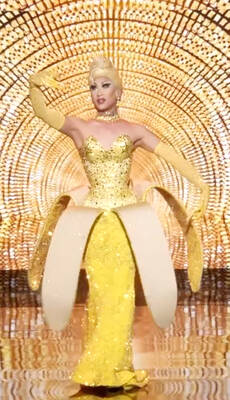
Taiwan’s first drag queen to compete on the internationally acclaimed RuPaul’s Drag Race, Nymphia Wind (妮妃雅), was on Friday crowned the “Next Drag Superstar.” Dressed in a sparkling banana dress, Nymphia Wind swept onto the stage for the final, and stole the show. “Taiwan this is for you,” she said right after show host RuPaul announced her as the winner. “To those who feel like they don’t belong, just remember to live fearlessly and to live their truth,” she said on stage. One of the frontrunners for the past 15 episodes, the 28-year-old breezed through to the final after weeks of showcasing her unique


 RSS
RSS