


IMF officials want Beijing to make China's exchange rate more flexible, although they differ on how quickly this should be done.
In an economic snapshot of China, the IMF said that "many directors supported a gradual, cautious approach to further increasing exchange-rate flexibility ... to allow time for the economy to adjust."
"However, a number of other directors recommended that the authorities allow the exchange rate to move more quickly toward a level that better reflects underlying market forces," the written assessment said.
The assessment is part of ongoing evaluations of countries conducted by the 184-nation IMF, which seeks to keep a pulse on the world economy.
China announced in late July that it was allowing its currency to rise slightly against the US dollar.
In Monday's assessment, IMF officials also said that "protectionist sentiments" have increased in recent months from some of China's trading partners as Chinese-made clothing and textiles shipments abroad has surged.
In response, the US has imposed limits on certain Chinese apparel and textiles that can flow into this country.
On other matters, IMF officials projected China's economic would grow by a blistering 9 percent this year, down slightly from 9.5 percent growth logged in both 2003 and last year.
Rapid growth, however, brings its own challenges. The IMF has long been concerned that China is at risk of overheating from excess investment, which could trigger rampant inflation and undo some of the progress of recent years.
The IMF forecast consumer prices would moderate to an average increase of 3.0 percent this year from 3.9 percent last.
"The overall economy looks very strong. But there's a few potential risks there, the key one being with regard to investment," the IMF's mission chief for China, Steven Dunaway, told reporters.
"The government was quite successful in slowing down the rate of investment last year, but there's still a lot of liquidity in the banking system ... which could spur another spurt in lending," he said.
The IMF has warned that massive investment is being directed willy-nilly in China, with the property market for instance booming while more needs to be spent on electricity and transport networks to sustain growth.
China needs to implement more structural reform, particularly in the financial sector, government finances and the labor market, to underpin its solid prospects, the IMF report said.
While "generally favorable," China's medium-term prospects could be undermined by high oil prices, a "disorderly resolution" of global imbalances and foreign trade restrictions against its rocketing exports, the report said.
The IMF report called also for the central bank to be given "more discretion" over setting interest rates to promote economic stability.
At present, all decisions on rates by the People's Bank of China (PBC) have to be approved by the country's Cabinet, the State Council.
"At least as an interim step, there may be a range of movement in interest rates that could be done at the discretion of the PBC without going to the State Council," Dunaway said.
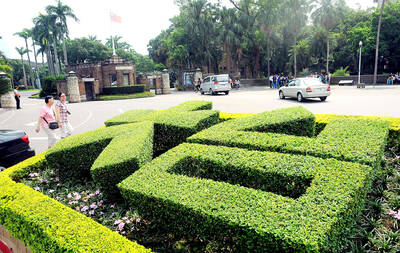
Taiwan has experienced its most significant improvement in the QS World University Rankings by Subject, data provided on Sunday by international higher education analyst Quacquarelli Symonds (QS) showed. Compared with last year’s edition of the rankings, which measure academic excellence and influence, Taiwanese universities made great improvements in the H Index metric, which evaluates research productivity and its impact, with a notable 30 percent increase overall, QS said. Taiwanese universities also made notable progress in the Citations per Paper metric, which measures the impact of research, achieving a 13 percent increase. Taiwanese universities gained 10 percent in Academic Reputation, but declined 18 percent

Chinese President Xi Jinping (習近平) yesterday met with former president Ma Ying-jeou (馬英九) at the Great Hall of the People in Beijing, with Xi’s opening statement once more emphasizing that people on both sides of the Taiwan Strait are Chinese and that foreign intervention cannot change their inevitable unification. Xi said that 5,000 years of history of zhonghua minzu (中華民族, ethnic Chinese group) have seen their ancestors move to Taiwan to establish new lives, while also documenting them fighting side-by-side against foreign forces and finally freeing Taiwan. “Both sides are Chinese,” and there are no issues that cannot be worked through, he
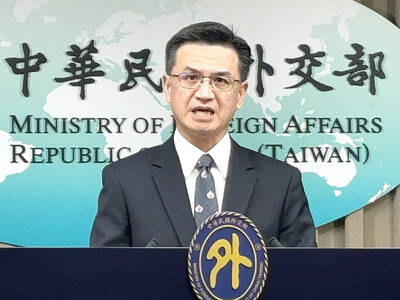
BULLY TACTICS: Beijing has continued its incursions into Taiwan’s airspace even as Xi Jinping talked about Taiwan being part of the Chinese family and nation China should stop its coercion of Taiwan and respect mainstream public opinion in Taiwan about sovereignty if its expression of goodwill is genuine, the Ministry of Foreign Affairs (MOFA) said yesterday. Ministry spokesman Jeff Liu (劉永健) made the comment in response to media queries about a meeting between former president Ma Ying-jeou (馬英九) and Chinese President Xi Jinping (習近平) the previous day. Ma voiced support for the so-called “1992 consensus,” while Xi said that although the two sides of the Taiwan Strait have “different systems,” this does not change the fact that they are “part of the same country,” and that “external
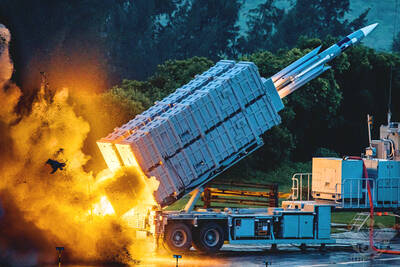
UNDER DISCUSSION: The combatant command would integrate fast attack boat and anti-ship missile groups to defend waters closest to the coastline, a source said The military could establish a new combatant command as early as 2026, which would be tasked with defending Taiwan’s territorial waters 24 nautical miles (44.4km) from the nation’s coastline, a source familiar with the matter said yesterday. The new command, which would fall under the Naval Command Headquarters, would be led by a vice admiral and integrate existing fast attack boat and anti-ship missile groups, along with the Naval Maritime Surveillance and Reconnaissance Command, said the source, who asked to remain anonymous. It could be launched by 2026, but details are being discussed and no final timetable has been announced, the source


 RSS
RSS