


A bid by China National Petroleum Corporation (CNPC, 中國石油天然氣) to buy Calgary-based Petro-Kazakhstan Inc for US$4.18 billion reflects China's continued thirst for overseas energy sources, analysts said yesterday.
Asia's second-largest economy has roared ahead since the beginning of the year, expanding by 9.5 percent in the first half compared with the same period last year, and energy supplies are reaching exhaustion point.
"Oil has become a bottleneck and it will affect the development of the Chinese economy," said Wang Zhao, an economist with the State Council's Development Research Center, a government think tank.
"The United States has the same problem and has actively been buying oil from other countries. In future, China will do as the United States has done," he said.
The bid for PetroKazakhstan and its 550 million barrels of proved and probable oil equivalent reserves appears to have trumped a rival offer from India's Oil and Natural Gas Corp.
This may suggest the beginnings of a race for scarce energy resources between Asia's two largest emerging economies, according to analysts.
"India's needs for energy or oil imports are much smaller than China's, but India's economy is growing and they need, too, to buy resources," said David Zweig, a China expert at the Hong Kong University of Science and Technology.
"To continue to grow, both of these countries need to gain access to resources," he said.
This time around, at least, analysts said CNPC had a much stronger case than the Indian rival.
This is not only because of its higher bid but also because PetroKazakhstan's reserves are closer geographically to China, which also works to Kazakhstan's advantage.
"There is a synergy effect. CNPC will invest a lot in the infrastruc-ture," said Gideon Lo, oil analyst with DBS Vickers in Hong Kong.
CNPC has already invested in the region and earlier acquired a 60 percent stake in Aktobemuaigaz, which operates the Aktobe field in northwest Kazakhstan.
Analysts also argued transporting PetroKazakstan's oil to China will be easier and cheaper.
China and Kazakhstan are already in the process of exploiting this geographic proximity, developing a 3,000km pipeline that is to bring Central Asian oil to Chinese homes and factories.
"The Kazakhstan-China crude-oil pipeline is also an important catalyst to push oil business cooperation between the two countries," said Ma Shang, an oil analyst from Fitch Ratings.
CNPC's bid for PetroKazakhstan follows an unsuccessful US$18.5 billion bid by China National Overseas Oil Corporation (CNOOC,
The price CNPC is willing to pay, with its 24.2 percent premium over PetroKazakhstan's share price in New York, could have been prompted by the recent debacle, according to observers.
CNPC itself was eager to signal that this deal was different, and better thought through, than CNOOC's take-over attempt.
"We have been involved in talks with PetroKazakhstan about the purchase for a long time, and gradually worked out the successful bid," said Han Xuegong, a veteran senior analyst with CNPC, according to the China Daily.
"[It's] not like CNOOC's sudden intrusion into the highly China-sensitive US energy market," he said.
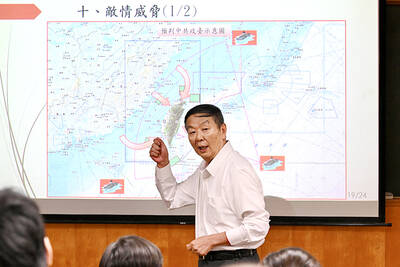
RETHINK? The defense ministry and Navy Command Headquarters could take over the indigenous submarine project and change its production timeline, a source said Admiral Huang Shu-kuang’s (黃曙光) resignation as head of the Indigenous Submarine Program and as a member of the National Security Council could affect the production of submarines, a source said yesterday. Huang in a statement last night said he had decided to resign due to national security concerns while expressing the hope that it would put a stop to political wrangling that only undermines the advancement of the nation’s defense capabilities. Taiwan People’s Party Legislator Vivian Huang (黃珊珊) yesterday said that the admiral, her older brother, felt it was time for him to step down and that he had completed what he

Taiwan has experienced its most significant improvement in the QS World University Rankings by Subject, data provided on Sunday by international higher education analyst Quacquarelli Symonds (QS) showed. Compared with last year’s edition of the rankings, which measure academic excellence and influence, Taiwanese universities made great improvements in the H Index metric, which evaluates research productivity and its impact, with a notable 30 percent increase overall, QS said. Taiwanese universities also made notable progress in the Citations per Paper metric, which measures the impact of research, achieving a 13 percent increase. Taiwanese universities gained 10 percent in Academic Reputation, but declined 18 percent
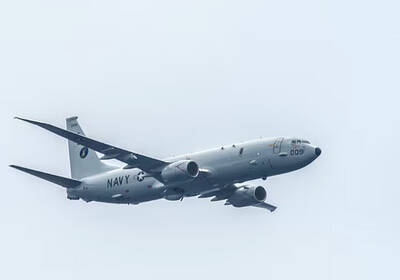
CHINA REACTS: The patrol and reconnaissance plane ‘transited the Taiwan Strait in international airspace,’ the 7th Fleet said, while Taipei said it saw nothing unusual The US 7th Fleet yesterday said that a US Navy P-8A Poseidon flew through the Taiwan Strait, a day after US and Chinese defense heads held their first talks since November 2022 in an effort to reduce regional tensions. The patrol and reconnaissance plane “transited the Taiwan Strait in international airspace,” the 7th Fleet said in a news release. “By operating within the Taiwan Strait in accordance with international law, the United States upholds the navigational rights and freedoms of all nations.” In a separate statement, the Ministry of National Defense said that it monitored nearby waters and airspace as the aircraft
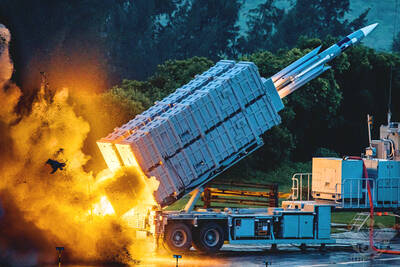
UNDER DISCUSSION: The combatant command would integrate fast attack boat and anti-ship missile groups to defend waters closest to the coastline, a source said The military could establish a new combatant command as early as 2026, which would be tasked with defending Taiwan’s territorial waters 24 nautical miles (44.4km) from the nation’s coastline, a source familiar with the matter said yesterday. The new command, which would fall under the Naval Command Headquarters, would be led by a vice admiral and integrate existing fast attack boat and anti-ship missile groups, along with the Naval Maritime Surveillance and Reconnaissance Command, said the source, who asked to remain anonymous. It could be launched by 2026, but details are being discussed and no final timetable has been announced, the source


 RSS
RSS