


China's currency closed higher against the US dollar on the second trading day after the country last Thursday let the yuan rise for the first time in a decade.
The yuan was fixed at today's closing rate of 8.1097 per dollar as of 3:30pm on the Foreign Exchange Trading System, according to the State Administration of Foreign Exchange's Web site. The currency was fixed at 8.1111 on Friday.
Under its new currency regime, the People's Bank of China allowed the yuan to gain 2.1 percent to 8.11 on July 21, ending the peg of 8.3 introduced in 1995.
The central bank sets the fixing price of the yuan, which then becomes the mid-rate for trading on the next working day. It allows a daily movement of 0.3 percent either side of the rate.
"In the near term, the pressure is for the yuan to increase in value against other currencies," said Michael Thomas, an economist and fixed-income strategist in Sydney at ICAP Australia Ltd. "The strength of the Chinese economy and the strength of the Chinese trade balance argue strongly for a stronger currency."
China's growth unexpectedly picked up in the second quarter as exports surged and investment gathered pace. The economy expanded 9.5 percent from a year earlier, the National Bureau of Statistics said on July 20, beating the median 9.2 percent gain forecast in a Bloomberg survey.
China's trade surplus reached US$39.6 billion in the first half, surpassing the US$32 billion reported for last year, the commerce ministry reported on July 11.
The yuan today closed at 9.8660 per euro, from 10.0141 on July 22, at 0.072440 against the yen, from 0.073059, and at 1.0425 against the Hong Kong dollar, from 1.048.
China's currency would rise to 7.7275 against the dollar in a year if freely traded, a gain of 4.9 percent from today's closing price, according to forward contracts. The contracts allow investors to bet on the value of a currency that isn't fully convertible or hedge investments denominated in it.
China's exports may decline if the yuan appreciates by more than 5 percent, Huo Jianguo, deputy head of the foreign trade department, said on Sunday.
"According to our calculations, under the current foreign-trade situation, an appreciation by 5 percent or less is affordable to export growth," Huo said. "The government must take into consideration trade growth when deciding the appreciation margin this year." In the first half, total export volume accounted for more than 40 percent of the nation's gross domestic product, Wu Xiaoling (吳曉靈), vice central bank governor, said on Saturday.
China won't make its currency fully convertible for at least five years because it worries hedge funds may force the yuan to plunge, Li Deshui, a member of the central bank's monetary committee, said in an interview in Beijing on July 22.
"There's more than US$800 billion to US$1 trillion of hedge funds in the world and the Chinese financial system is relatively weak," Li said. "If the [yuan] becomes fully convertible it would be attacked by these hedge funds."
Li, one of 13 members of the monetary policy committee and also commissioner of China's National Bureau of Statistics, said the state of the country's banks is a key reason why the government won't allow the yuan to be fully tradable anytime soon.
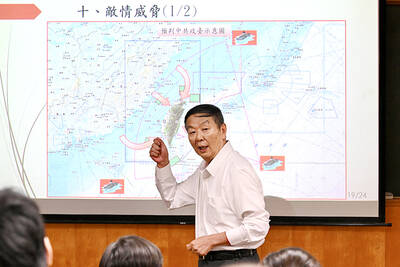
RETHINK? The defense ministry and Navy Command Headquarters could take over the indigenous submarine project and change its production timeline, a source said Admiral Huang Shu-kuang’s (黃曙光) resignation as head of the Indigenous Submarine Program and as a member of the National Security Council could affect the production of submarines, a source said yesterday. Huang in a statement last night said he had decided to resign due to national security concerns while expressing the hope that it would put a stop to political wrangling that only undermines the advancement of the nation’s defense capabilities. Taiwan People’s Party Legislator Vivian Huang (黃珊珊) yesterday said that the admiral, her older brother, felt it was time for him to step down and that he had completed what he

Taiwan has experienced its most significant improvement in the QS World University Rankings by Subject, data provided on Sunday by international higher education analyst Quacquarelli Symonds (QS) showed. Compared with last year’s edition of the rankings, which measure academic excellence and influence, Taiwanese universities made great improvements in the H Index metric, which evaluates research productivity and its impact, with a notable 30 percent increase overall, QS said. Taiwanese universities also made notable progress in the Citations per Paper metric, which measures the impact of research, achieving a 13 percent increase. Taiwanese universities gained 10 percent in Academic Reputation, but declined 18 percent
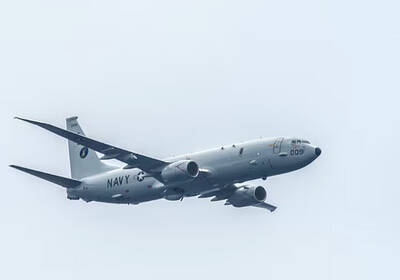
CHINA REACTS: The patrol and reconnaissance plane ‘transited the Taiwan Strait in international airspace,’ the 7th Fleet said, while Taipei said it saw nothing unusual The US 7th Fleet yesterday said that a US Navy P-8A Poseidon flew through the Taiwan Strait, a day after US and Chinese defense heads held their first talks since November 2022 in an effort to reduce regional tensions. The patrol and reconnaissance plane “transited the Taiwan Strait in international airspace,” the 7th Fleet said in a news release. “By operating within the Taiwan Strait in accordance with international law, the United States upholds the navigational rights and freedoms of all nations.” In a separate statement, the Ministry of National Defense said that it monitored nearby waters and airspace as the aircraft
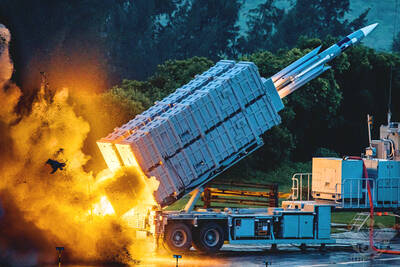
UNDER DISCUSSION: The combatant command would integrate fast attack boat and anti-ship missile groups to defend waters closest to the coastline, a source said The military could establish a new combatant command as early as 2026, which would be tasked with defending Taiwan’s territorial waters 24 nautical miles (44.4km) from the nation’s coastline, a source familiar with the matter said yesterday. The new command, which would fall under the Naval Command Headquarters, would be led by a vice admiral and integrate existing fast attack boat and anti-ship missile groups, along with the Naval Maritime Surveillance and Reconnaissance Command, said the source, who asked to remain anonymous. It could be launched by 2026, but details are being discussed and no final timetable has been announced, the source


 RSS
RSS