


Toyota's president said yesterday that a tie-up with US rival General Motors on fuel-cell vehicles is in its final stages -- but promised to do his best to beat GM and Ford.
"They are good competition. We don't want to lose," Katsuaki Watanabe said of GM and Ford Motor Co in a group interview with foreign media.
Watanabe, 63, whose appointment was approved at a shareholders meeting last month, is taking the helm as the Japanese automaker is on a pace to potentially surpass GM, the world's largest carmaker, in global sales.
Toyota, based in the central city of Toyota, aims to capture 15 percent of the world's market in the years following 2010. Depending on how the rivals fare, that could put Toyota ahead of GM.
Watanabe said it's just a matter of time before details can be hammered out for a deal with Detroit-based General Motors Corp on fuel cells -- a clean technology that is still largely experimental.
Fuel-cell vehicles emit virtually no pollution because they run on the energy produced when hydrogen stored in the fuel tank combines with oxygen in the air to make water.
GM and Toyota Motor Corp have a longtime partnership that does not involve stakes in each other. They run a plant together in California and have a 1999 pact to share technology. A deal on fuel-cell vehicles would be an important expansion of that agreement.
"We are in the final stages of the talks. It's better not to let the talks drag on," Watanabe said at the company's Tokyo office.
Toyota's continued growth at a time when both GM and Ford are stumbling has set off some concerns here about a possible backlash reminiscent of the trade tensions that emerged about two decades ago.
Watanabe brushed off the idea that Toyota may become the world's top-selling automaker during his tenure, laughing that he hasn't thought about it and he isn't even really expecting it, either.
His main mission is to keep stable growth going without compromising on day-to-day efforts, including improving quality control, training workers around the world and cutting costs, he said.
He denied that fears of a backlash were behind Toyota's recent decision to raise prices on several models in the US, including the hot-selling Camry compact. Watanabe has a reputation for being both a cost-cutter and price-cutter, so the higher US prices appear to run counter to his overall strategy.
Toyota looked at various factors such as costs, market conditions and profitability to make the decision, and the recent heavy discounting by US automakers was also studied, he said. Toyota decided such discounts weren't appropriate for their own cars, he said.
"We looked at the total picture and made the decision. And we think we can put up the numbers" in sales, he said.
Watanabe -- who is a karaoke and baseball fan -- said Toyota sees increasing hybrid production as key to expanding global sales.
Toyota is considering making a hybrid pickup truck, and the ideal would be an entire lineup of models in hybrids, he said.
Hybrids aren't as clean as fuel-cell vehicles, but they deliver better mileage than gas-engine vehicles by switching between an electric motor and gasoline engine. Toyota leads in the sector with its Prius and other models it has introduced as hybrids.
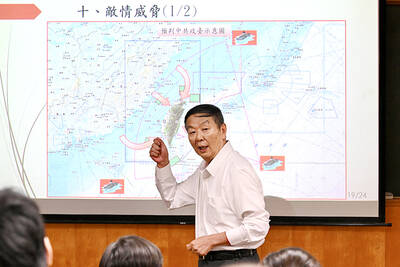
RETHINK? The defense ministry and Navy Command Headquarters could take over the indigenous submarine project and change its production timeline, a source said Admiral Huang Shu-kuang’s (黃曙光) resignation as head of the Indigenous Submarine Program and as a member of the National Security Council could affect the production of submarines, a source said yesterday. Huang in a statement last night said he had decided to resign due to national security concerns while expressing the hope that it would put a stop to political wrangling that only undermines the advancement of the nation’s defense capabilities. Taiwan People’s Party Legislator Vivian Huang (黃珊珊) yesterday said that the admiral, her older brother, felt it was time for him to step down and that he had completed what he
Taiwan has experienced its most significant improvement in the QS World University Rankings by Subject, data provided on Sunday by international higher education analyst Quacquarelli Symonds (QS) showed. Compared with last year’s edition of the rankings, which measure academic excellence and influence, Taiwanese universities made great improvements in the H Index metric, which evaluates research productivity and its impact, with a notable 30 percent increase overall, QS said. Taiwanese universities also made notable progress in the Citations per Paper metric, which measures the impact of research, achieving a 13 percent increase. Taiwanese universities gained 10 percent in Academic Reputation, but declined 18 percent
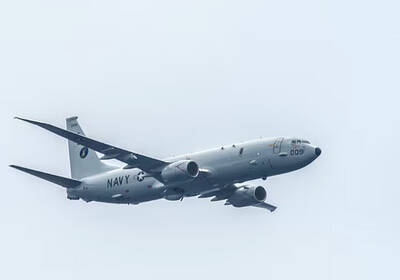
CHINA REACTS: The patrol and reconnaissance plane ‘transited the Taiwan Strait in international airspace,’ the 7th Fleet said, while Taipei said it saw nothing unusual The US 7th Fleet yesterday said that a US Navy P-8A Poseidon flew through the Taiwan Strait, a day after US and Chinese defense heads held their first talks since November 2022 in an effort to reduce regional tensions. The patrol and reconnaissance plane “transited the Taiwan Strait in international airspace,” the 7th Fleet said in a news release. “By operating within the Taiwan Strait in accordance with international law, the United States upholds the navigational rights and freedoms of all nations.” In a separate statement, the Ministry of National Defense said that it monitored nearby waters and airspace as the aircraft
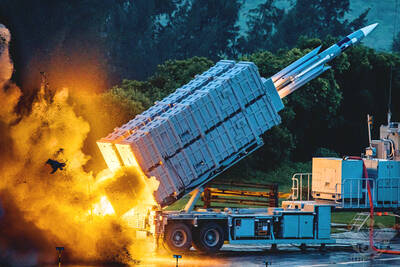
UNDER DISCUSSION: The combatant command would integrate fast attack boat and anti-ship missile groups to defend waters closest to the coastline, a source said The military could establish a new combatant command as early as 2026, which would be tasked with defending Taiwan’s territorial waters 24 nautical miles (44.4km) from the nation’s coastline, a source familiar with the matter said yesterday. The new command, which would fall under the Naval Command Headquarters, would be led by a vice admiral and integrate existing fast attack boat and anti-ship missile groups, along with the Naval Maritime Surveillance and Reconnaissance Command, said the source, who asked to remain anonymous. It could be launched by 2026, but details are being discussed and no final timetable has been announced, the source


 RSS
RSS