


Japan's government and entertainment industry are urging other countries to tighten customs inspections to combat the counterfeit goods trade, proposing a treaty to plug loopholes in WTO rules.
Tokyo said this month it would propose an international treaty by the end of March next year which should complement World Trade Organization rules under the Agreement on Trade-related Aspects of Intellectual Property Rights (TRIPS).
The move comes when Japan is promoting exports of award-winning contents -- from <

PHOTO: AFP
Prime Minister Junichiro Koizumi kicked off the current parliamentary session in January by saying the government would "promote businesses that capitalize on contents such as films and animation."
"With the aim of realizing a `nation founded on intellectual property,' the government will tighten measures against counterfeit and pirated copies, which is increasingly becoming a serious issue overseas," he promised.
Japan's proposal calls for a total ban on exports or imports of pirated goods by either firms or individuals.
The only area currently banned under the WTO accord is imports by firms.
"The spread of pirated goods through exports to nations other than Japan has been increasing recently, so are alleged individual trades," said a senior official at the premier's office in charge of intellectual property protection.
The official, who declined to be named, said Japan would make its proposal at a meeting of either the Organization for Economic Development and Cooperation (OECD) or the Asia Pacific Economic Cooperation (APEC).
Japan expects support from "like-minded industrialized countries", he said.
Michael O'Keeffe, an intellectual property expert at the American Chamber of Commerce in Japan, broadly agreed with the proposal after being informally briefed by Japanese officials recently.
"The US is equally troubled by counterfeit goods and cross-border trading of counterfeits," he told reporters. "It is a worthwhile suggestion to ban exports from a country to other countries."
"Falsified goods made in China are exported to another country and then re-exported to another country," he said.
Meanwhile, the Content Overseas Distribution Association (CODA), a semi-public body jointly set up by Japanese contents businesses and the trade ministry, has been helping China crack down on the illegal trade.
Its staff visited Shanghai, Beijing, Hong Kong and Shenzhen last year in its first-ever project to train Chinese customs inspectors to improve their methods of detecting counterfeit goods, with some results.
A total of 107 cases or 700,000 pieces of DVDs and other software were seized in Hong Kong, Taiwan and China in the first four months of this year.
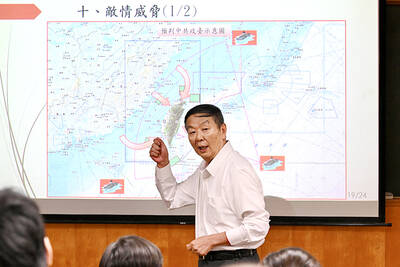
RETHINK? The defense ministry and Navy Command Headquarters could take over the indigenous submarine project and change its production timeline, a source said Admiral Huang Shu-kuang’s (黃曙光) resignation as head of the Indigenous Submarine Program and as a member of the National Security Council could affect the production of submarines, a source said yesterday. Huang in a statement last night said he had decided to resign due to national security concerns while expressing the hope that it would put a stop to political wrangling that only undermines the advancement of the nation’s defense capabilities. Taiwan People’s Party Legislator Vivian Huang (黃珊珊) yesterday said that the admiral, her older brother, felt it was time for him to step down and that he had completed what he
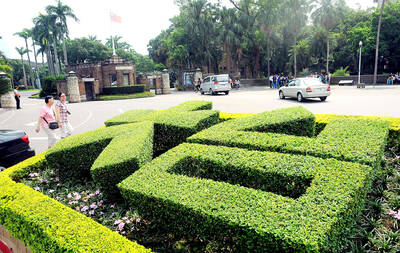
Taiwan has experienced its most significant improvement in the QS World University Rankings by Subject, data provided on Sunday by international higher education analyst Quacquarelli Symonds (QS) showed. Compared with last year’s edition of the rankings, which measure academic excellence and influence, Taiwanese universities made great improvements in the H Index metric, which evaluates research productivity and its impact, with a notable 30 percent increase overall, QS said. Taiwanese universities also made notable progress in the Citations per Paper metric, which measures the impact of research, achieving a 13 percent increase. Taiwanese universities gained 10 percent in Academic Reputation, but declined 18 percent
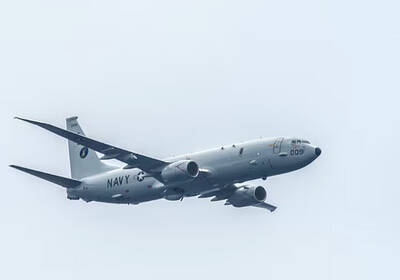
CHINA REACTS: The patrol and reconnaissance plane ‘transited the Taiwan Strait in international airspace,’ the 7th Fleet said, while Taipei said it saw nothing unusual The US 7th Fleet yesterday said that a US Navy P-8A Poseidon flew through the Taiwan Strait, a day after US and Chinese defense heads held their first talks since November 2022 in an effort to reduce regional tensions. The patrol and reconnaissance plane “transited the Taiwan Strait in international airspace,” the 7th Fleet said in a news release. “By operating within the Taiwan Strait in accordance with international law, the United States upholds the navigational rights and freedoms of all nations.” In a separate statement, the Ministry of National Defense said that it monitored nearby waters and airspace as the aircraft
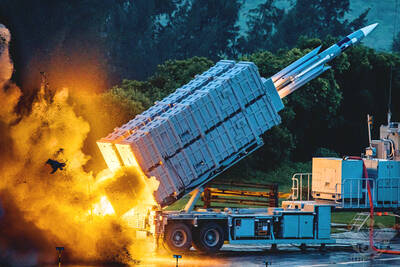
UNDER DISCUSSION: The combatant command would integrate fast attack boat and anti-ship missile groups to defend waters closest to the coastline, a source said The military could establish a new combatant command as early as 2026, which would be tasked with defending Taiwan’s territorial waters 24 nautical miles (44.4km) from the nation’s coastline, a source familiar with the matter said yesterday. The new command, which would fall under the Naval Command Headquarters, would be led by a vice admiral and integrate existing fast attack boat and anti-ship missile groups, along with the Naval Maritime Surveillance and Reconnaissance Command, said the source, who asked to remain anonymous. It could be launched by 2026, but details are being discussed and no final timetable has been announced, the source


 RSS
RSS