


Foreign investors who set up shop in China after 2007 will face a steep increase in corporate tax, as the government enforces rules to make everyone pay the same rates, state media said yesterday.
Foreign companies that arrive in China before 2007 will be given a five-year transition period to gradually adjust to the higher rates, the China Daily reported.
Equal treatment
"Our goal is to treat every investor equally, no matter if they are from home or abroad, private or state-owned," said Jia Kang, president of the Institute of Fiscal Science under the Ministry of Finance.
This will mark the end of preferential tax rates that Beijing has offered since the mid-1980s to lure foreign investment.
On average, the income tax rate for domestic companies is 33 percent while foreign firms only pay half that, the paper said.
It did not mention that many well-connected state enterprises are also believed to get away with paying much less than they should.
Statistics show that foreign enterprises get an annual tax break of approximately US$50 billion in China.
Jia did not reveal where the unified rate will be set but earlier forecasts suggested a 24 or 25 percent level.
China has to unify the tax code to cater to the new business environment brought about by China's entry to the WTO in 2001 as well as encourage fair competition among all businesses, Jia told the paper.
Still attractive
Jia dismissed concerns rife in business circles that foreign direct investment would slump if the preferential taxes were scrapped.
"I don't think so because the income tax rates for some sectors are still attractive and low," Jia said.
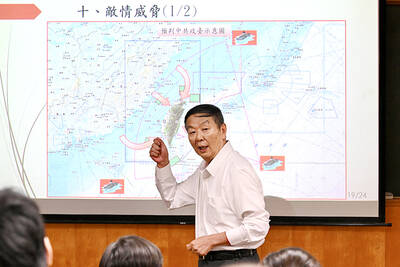
RETHINK? The defense ministry and Navy Command Headquarters could take over the indigenous submarine project and change its production timeline, a source said Admiral Huang Shu-kuang’s (黃曙光) resignation as head of the Indigenous Submarine Program and as a member of the National Security Council could affect the production of submarines, a source said yesterday. Huang in a statement last night said he had decided to resign due to national security concerns while expressing the hope that it would put a stop to political wrangling that only undermines the advancement of the nation’s defense capabilities. Taiwan People’s Party Legislator Vivian Huang (黃珊珊) yesterday said that the admiral, her older brother, felt it was time for him to step down and that he had completed what he
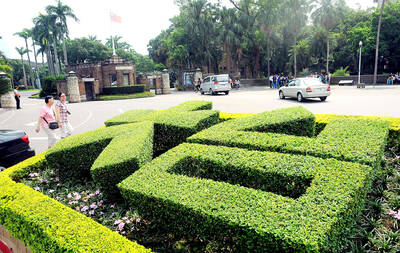
Taiwan has experienced its most significant improvement in the QS World University Rankings by Subject, data provided on Sunday by international higher education analyst Quacquarelli Symonds (QS) showed. Compared with last year’s edition of the rankings, which measure academic excellence and influence, Taiwanese universities made great improvements in the H Index metric, which evaluates research productivity and its impact, with a notable 30 percent increase overall, QS said. Taiwanese universities also made notable progress in the Citations per Paper metric, which measures the impact of research, achieving a 13 percent increase. Taiwanese universities gained 10 percent in Academic Reputation, but declined 18 percent
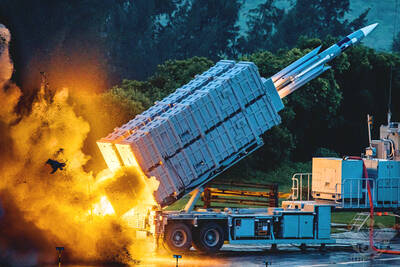
UNDER DISCUSSION: The combatant command would integrate fast attack boat and anti-ship missile groups to defend waters closest to the coastline, a source said The military could establish a new combatant command as early as 2026, which would be tasked with defending Taiwan’s territorial waters 24 nautical miles (44.4km) from the nation’s coastline, a source familiar with the matter said yesterday. The new command, which would fall under the Naval Command Headquarters, would be led by a vice admiral and integrate existing fast attack boat and anti-ship missile groups, along with the Naval Maritime Surveillance and Reconnaissance Command, said the source, who asked to remain anonymous. It could be launched by 2026, but details are being discussed and no final timetable has been announced, the source
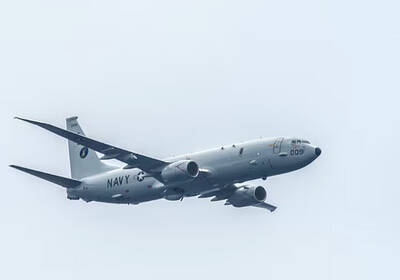
CHINA REACTS: The patrol and reconnaissance plane ‘transited the Taiwan Strait in international airspace,’ the 7th Fleet said, while Taipei said it saw nothing unusual The US 7th Fleet yesterday said that a US Navy P-8A Poseidon flew through the Taiwan Strait, a day after US and Chinese defense heads held their first talks since November 2022 in an effort to reduce regional tensions. The patrol and reconnaissance plane “transited the Taiwan Strait in international airspace,” the 7th Fleet said in a news release. “By operating within the Taiwan Strait in accordance with international law, the United States upholds the navigational rights and freedoms of all nations.” In a separate statement, the Ministry of National Defense said that it monitored nearby waters and airspace as the aircraft


 RSS
RSS