


The first round of historic free-trade agreement (FTA) talks between China and Australia began yesterday, with Beijing's second-highest ranking official saying ties between the two nations had never been closer.
Wu Bangguo (吳邦國), chairman of China's National People's Congress, told a forum in Sydney that the trade talks were "a significant development in our relations."
"It will help expand bilateral cooperation in trade, investment and services and provide even greater horizon for our economic partnership," he said.
Wu, second only to Chinese President Hu Jintao (
"China and Australia enjoy unprecedented interaction and cooperation in science, technology, education, culture, tourism and other fields and frequent contacts between the two peoples," he told the China-Australia Economic and Trade Cooperation Forum.
Australian Trade Minister Mark Vaile also welcomed the negotiations, saying they marked "an historic period in our bilateral relationship."
"As from today, senior trade officials will map the way forward for the negotiations operating on the principle that they will be comprehensive, covering goods, services and investment, and be completed as a single undertaking," Vaile said.
The two governments agreed to begin the free trade talks during a meeting in Beijing last month between Chinese Premier Wen Jiabao (
The breakthrough came after Australia recognized China as a market economy, a key issue for Beijing.
The negotiations are expected to be lengthy and controversial, with Australian trade unions fearing that a trade pact will lead to a flood of cheap Chinese imports, notably clothing, footwear and car parts.
Jemma Bailey, from the Australian Fair Trade and Investment Network, said the deal would also hurt 90 million Chinese workers.
"Basically it leads to a race to the bottom with a downward spiral in wages and environmental standards," she told ABC radio.
Vaile acknowledged there will be some "sensitive issues" in the discussions but said it was important for Australia to take advantage of the healthy Canberra-Beijing relationship to "move through this negotiation as quickly as possible."
China is Australia's third largest trading partner, with two-way trade valued at nearly US$22.5 billion. Key Australian exports include iron ore, wheat, petroleum and coal. China supplies consumer goods and clothing.
Vaile pointed to tourism and education as possible growth areas.
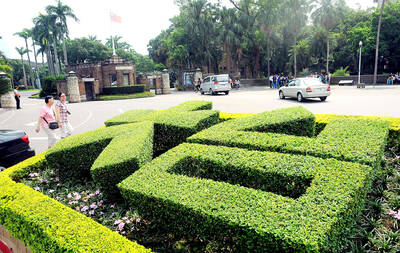
Taiwan has experienced its most significant improvement in the QS World University Rankings by Subject, data provided on Sunday by international higher education analyst Quacquarelli Symonds (QS) showed. Compared with last year’s edition of the rankings, which measure academic excellence and influence, Taiwanese universities made great improvements in the H Index metric, which evaluates research productivity and its impact, with a notable 30 percent increase overall, QS said. Taiwanese universities also made notable progress in the Citations per Paper metric, which measures the impact of research, achieving a 13 percent increase. Taiwanese universities gained 10 percent in Academic Reputation, but declined 18 percent

Chinese President Xi Jinping (習近平) yesterday met with former president Ma Ying-jeou (馬英九) at the Great Hall of the People in Beijing, with Xi’s opening statement once more emphasizing that people on both sides of the Taiwan Strait are Chinese and that foreign intervention cannot change their inevitable unification. Xi said that 5,000 years of history of zhonghua minzu (中華民族, ethnic Chinese group) have seen their ancestors move to Taiwan to establish new lives, while also documenting them fighting side-by-side against foreign forces and finally freeing Taiwan. “Both sides are Chinese,” and there are no issues that cannot be worked through, he
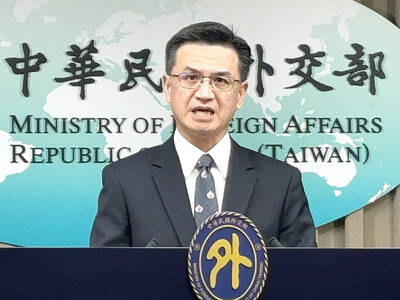
BULLY TACTICS: Beijing has continued its incursions into Taiwan’s airspace even as Xi Jinping talked about Taiwan being part of the Chinese family and nation China should stop its coercion of Taiwan and respect mainstream public opinion in Taiwan about sovereignty if its expression of goodwill is genuine, the Ministry of Foreign Affairs (MOFA) said yesterday. Ministry spokesman Jeff Liu (劉永健) made the comment in response to media queries about a meeting between former president Ma Ying-jeou (馬英九) and Chinese President Xi Jinping (習近平) the previous day. Ma voiced support for the so-called “1992 consensus,” while Xi said that although the two sides of the Taiwan Strait have “different systems,” this does not change the fact that they are “part of the same country,” and that “external
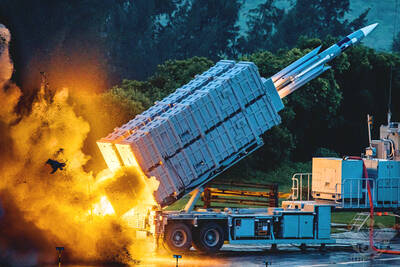
UNDER DISCUSSION: The combatant command would integrate fast attack boat and anti-ship missile groups to defend waters closest to the coastline, a source said The military could establish a new combatant command as early as 2026, which would be tasked with defending Taiwan’s territorial waters 24 nautical miles (44.4km) from the nation’s coastline, a source familiar with the matter said yesterday. The new command, which would fall under the Naval Command Headquarters, would be led by a vice admiral and integrate existing fast attack boat and anti-ship missile groups, along with the Naval Maritime Surveillance and Reconnaissance Command, said the source, who asked to remain anonymous. It could be launched by 2026, but details are being discussed and no final timetable has been announced, the source


 RSS
RSS