


With Windows-powered mobile devices lagging behind the Palms and BlackBerrys of the world, the Microsoft Corp has brought an electrical engineer from China -- a master of the strategy game Go -- to put them back in the race.
He is Zhang Ya-Qin, 39, an experienced computer systems researcher who helped start Microsoft's Beijing research laboratory in 1999. He was tapped in January 2004 to come to Redmond, where Microsoft is based, to lead the turnaround of the Windows Mobile software business, which has hemorrhaged money for years.
Now the first results of Zhang's efforts are scheduled to be unveiled at a conference on May 9 and May 10 in Las Vegas, at which Microsoft plans to introduce the next version of its Windows Mobile software, code-named Magneto, with new productivity and multimedia features.
Industry speculation is that Microsoft has been fashioning the software as a "RIM-killer," a reference to Research In Motion, the Canadian company that dominates the corporate hand-held computing market with its BlackBerry.
That claim elicits a polite demurral from Zhang, a one-time math prodigy who entered college in China at 12 and graduated first in his class before going to the US to earn his doctorate.
Magneto will test what Zhang said was his attempt to create a new focus on quality software -- a break from the Microsoft practice of emphasizing a cascade of new features in each successive product release.
"Now the first thing is quality," he said, adding his second priority is building partnerships for the Windows Mobile business, which has so far failed to replicate Microsoft's impact in the desktop computer world.
He will need all the skills at his disposal if Microsoft is to prevail in the mobile-software arena.
Although revenue from its mobile and embedded software -- that is, software for devices other than PCs -- increased last year by 58 percent, to US$247 million, over 2003, Microsoft nonetheless lost US$224 million in the category last year. That was the third consecutive year of losses and a performance that would almost certainly have destroyed any independent competitor.
Microsoft has made inroads into the software market for hand-held devices and more limited progress in finding customers to use its software in so-called smart phones. They include Motorola and Samsung, along with some lower-profile handset makers that allow cellular carriers to brand their own phones. But Microsoft faces challenges in trying to replicate the PC business model in the world of mobile devices.
It must contend with cellular telephone operators who control sales channels as well as technical specifications for products. And it is coming late to the software market for smart phones -- cellphones with PC functions like e-mail, multimedia, Web browsing, instant messaging and games. On that front, it faces powerful competitors like Symbian, owned by a consortium of cellular handset makers, and PalmOne and PalmSource, the scrappy Silicon Valley companies behind the hit cellphone organizer called the Treo.
"I haven't seen anything out of Microsoft that makes me believe that they're going to have any magic sauce," said Andrew Seybold, a veteran industry wireless and mobile consultant who publishes Outlook 4Mobility, a newsletter.
The choice of Zhang is also an intriguing window into the strategy and values of Ballmer and Bill Gates, Microsoft's chairman. In contrast to many of its competitors, Microsoft is a company that values IQ points over years on the job.
"We're more likely to take a chance on someone who is really smart rather than someone who is an experienced manager," said Richard Rashid, Microsoft's senior vice president for research.

ROLLER-COASTER RIDE: More than five earthquakes ranging from magnitude 4.4 to 5.5 on the Richter scale shook eastern Taiwan in rapid succession yesterday afternoon Back-to-back weather fronts are forecast to hit Taiwan this week, resulting in rain across the nation in the coming days, the Central Weather Administration said yesterday, as it also warned residents in mountainous regions to be wary of landslides and rockfalls. As the first front approached, sporadic rainfall began in central and northern parts of Taiwan yesterday, the agency said, adding that rain is forecast to intensify in those regions today, while brief showers would also affect other parts of the nation. A second weather system is forecast to arrive on Thursday, bringing additional rain to the whole nation until Sunday, it
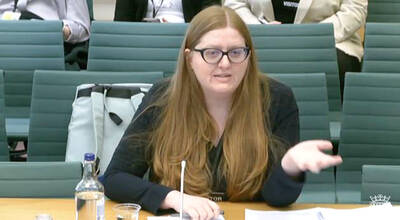
CONDITIONAL: The PRC imposes secret requirements that the funding it provides cannot be spent in states with diplomatic relations with Taiwan, Emma Reilly said China has been bribing UN officials to obtain “special benefits” and to block funding from countries that have diplomatic ties with Taiwan, a former UN employee told the British House of Commons on Tuesday. At a House of Commons Foreign Affairs Committee hearing into “international relations within the multilateral system,” former Office of the UN High Commissioner for Human Rights (OHCHR) employee Emma Reilly said in a written statement that “Beijing paid bribes to the two successive Presidents of the [UN] General Assembly” during the two-year negotiation of the Sustainable Development Goals. Another way China exercises influence within the UN Secretariat is

LANDSLIDES POSSIBLE: The agency advised the public to avoid visiting mountainous regions due to more expected aftershocks and rainfall from a series of weather fronts A series of earthquakes over the past few days were likely aftershocks of the April 3 earthquake in Hualien County, with further aftershocks to be expected for up to a year, the Central Weather Administration (CWA) said yesterday. Based on the nation’s experience after the quake on Sept. 21, 1999, more aftershocks are possible over the next six months to a year, the agency said. A total of 103 earthquakes of magnitude 4 on the local magnitude scale or higher hit Hualien County from 5:08pm on Monday to 10:27am yesterday, with 27 of them exceeding magnitude 5. They included two, of magnitude
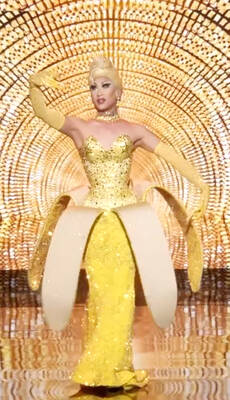
Taiwan’s first drag queen to compete on the internationally acclaimed RuPaul’s Drag Race, Nymphia Wind (妮妃雅), was on Friday crowned the “Next Drag Superstar.” Dressed in a sparkling banana dress, Nymphia Wind swept onto the stage for the final, and stole the show. “Taiwan this is for you,” she said right after show host RuPaul announced her as the winner. “To those who feel like they don’t belong, just remember to live fearlessly and to live their truth,” she said on stage. One of the frontrunners for the past 15 episodes, the 28-year-old breezed through to the final after weeks of showcasing her unique


 RSS
RSS