


Central Japan's Aichi region, cradle of the samurai and silent force of the nation's economy, will be under a rare global spotlight that could help it grow even further when it hosts the World Exposition which opens tomorrow.
Aichi prefecture, known as "the manufacturers' kingdom," has long been a locomotive for Japan's economy by fostering textile industries before World War II and afterward shifting its focus to automobiles led by titan Toyota.
The usually low-key province is expected to see some 15 million visitors during the Expo, a showcase of technology and innovation with exhibits from more than 120 countries in a forest park.
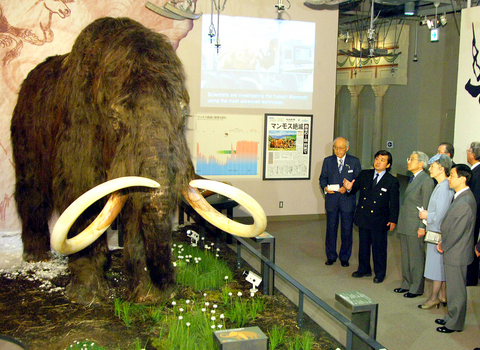
PHOTO: AP
"The Aichi economy is literally the dynamo of the Japanese economy as its earnings and spending have enriched not only the region but the entire country," said Toshihiro Uchida, an analyst at UFJ Research Institute.
The GDP of Aichi, some 250km west of Tokyo, is estimated at US$270 billion, a near match for that of Taiwan or Russia.
The region's trade surplus in 2003 stood at ?7.6 trillion (US$72 billion), accounting for 60 percent of that of the nation. Aichi shipped a record ?35 trillion in manufactured goods in 2003, the 27th straight year it was Japan's top industrial region.
The prefecture, whose capital is Nagoya, has the nation's fourth largest population at 7.3 million and an economically ideal infrastructure with a fertile plain and well-placed harbors.
Aichi produced some of Japan's key samurai knights including Tokugawa Ieyasu, the shogun who emerged from Japan's civil war era in the late 16th century to found a seat of power in what is now the capital Tokyo.
But modern-day Aichi -- halfway between Japan's two largest cities, Tokyo and Osaka -- has been in the shadows and will relish the attention that comes with the expo.
"Aichi has a great chance to appeal to the world and give an extra boost to its powerful economy by hosting the expo," Uchida said.
The economic impact of the exposition, the region's first major international event, is forecast to top ?2.2 trillion.
The figure includes the positive influence from the construction of Centrair, Japan's third major international airport, which opened last month as a gateway to the exhibition venue.
"Taking advantage of the World Expo, we aim to develop [Aichi] further in a bid to become a Mecca of manufacturing in the world," said Katsuhiro Nakagawa, vice chairman of Toyota Motor Corp, Japan's largest company.
One factor seen in Aichi's economic strength is its historically conservative management, which largely avoided the speculation during Japan's economic "bubble" which burst in the early 1990s,triggering a decade of recession.
"Rock-solid management prevented a lot of countries in the region from going on a spree during the bubble," said Yoshihiro Yasui, chairman of Brother Industries Ltd, another of the prefecture's leading companies.
But the counter side is less investment from the rest of the world.
"Traditionally, we have not been good at being appealing," Yasui said. "So our next challenge is to be able to send out a message to the world to introduce our solid spirit as great manufacturers."
The Nagoya Chamber of Commerce and Industry, Aichi's biggest business lobby, has taken an initiative to welcome foreign investment in the region.
"An important task before us is to emphasize our presence a bit to survive amid global competition with other cities," chairman Sokichi Minoura said.
Uchida said diversification was key for the region: "Aichi either swims or sinks with Toyota."
"As long as Toyota remains strong, the region is safe. But no one can tell what will happen to Toyota in a decade," he said. "Aichi has to take action now. Prevention now is better than a cure later."
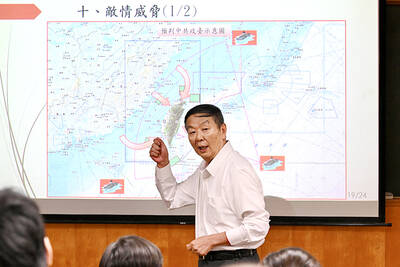
RETHINK? The defense ministry and Navy Command Headquarters could take over the indigenous submarine project and change its production timeline, a source said Admiral Huang Shu-kuang’s (黃曙光) resignation as head of the Indigenous Submarine Program and as a member of the National Security Council could affect the production of submarines, a source said yesterday. Huang in a statement last night said he had decided to resign due to national security concerns while expressing the hope that it would put a stop to political wrangling that only undermines the advancement of the nation’s defense capabilities. Taiwan People’s Party Legislator Vivian Huang (黃珊珊) yesterday said that the admiral, her older brother, felt it was time for him to step down and that he had completed what he
Taiwan has experienced its most significant improvement in the QS World University Rankings by Subject, data provided on Sunday by international higher education analyst Quacquarelli Symonds (QS) showed. Compared with last year’s edition of the rankings, which measure academic excellence and influence, Taiwanese universities made great improvements in the H Index metric, which evaluates research productivity and its impact, with a notable 30 percent increase overall, QS said. Taiwanese universities also made notable progress in the Citations per Paper metric, which measures the impact of research, achieving a 13 percent increase. Taiwanese universities gained 10 percent in Academic Reputation, but declined 18 percent
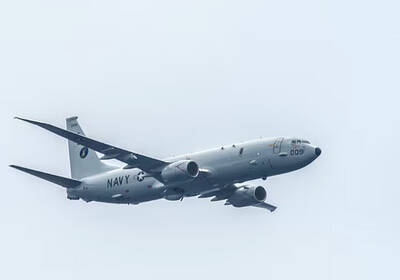
CHINA REACTS: The patrol and reconnaissance plane ‘transited the Taiwan Strait in international airspace,’ the 7th Fleet said, while Taipei said it saw nothing unusual The US 7th Fleet yesterday said that a US Navy P-8A Poseidon flew through the Taiwan Strait, a day after US and Chinese defense heads held their first talks since November 2022 in an effort to reduce regional tensions. The patrol and reconnaissance plane “transited the Taiwan Strait in international airspace,” the 7th Fleet said in a news release. “By operating within the Taiwan Strait in accordance with international law, the United States upholds the navigational rights and freedoms of all nations.” In a separate statement, the Ministry of National Defense said that it monitored nearby waters and airspace as the aircraft
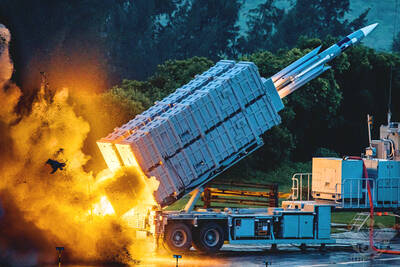
UNDER DISCUSSION: The combatant command would integrate fast attack boat and anti-ship missile groups to defend waters closest to the coastline, a source said The military could establish a new combatant command as early as 2026, which would be tasked with defending Taiwan’s territorial waters 24 nautical miles (44.4km) from the nation’s coastline, a source familiar with the matter said yesterday. The new command, which would fall under the Naval Command Headquarters, would be led by a vice admiral and integrate existing fast attack boat and anti-ship missile groups, along with the Naval Maritime Surveillance and Reconnaissance Command, said the source, who asked to remain anonymous. It could be launched by 2026, but details are being discussed and no final timetable has been announced, the source


 RSS
RSS